

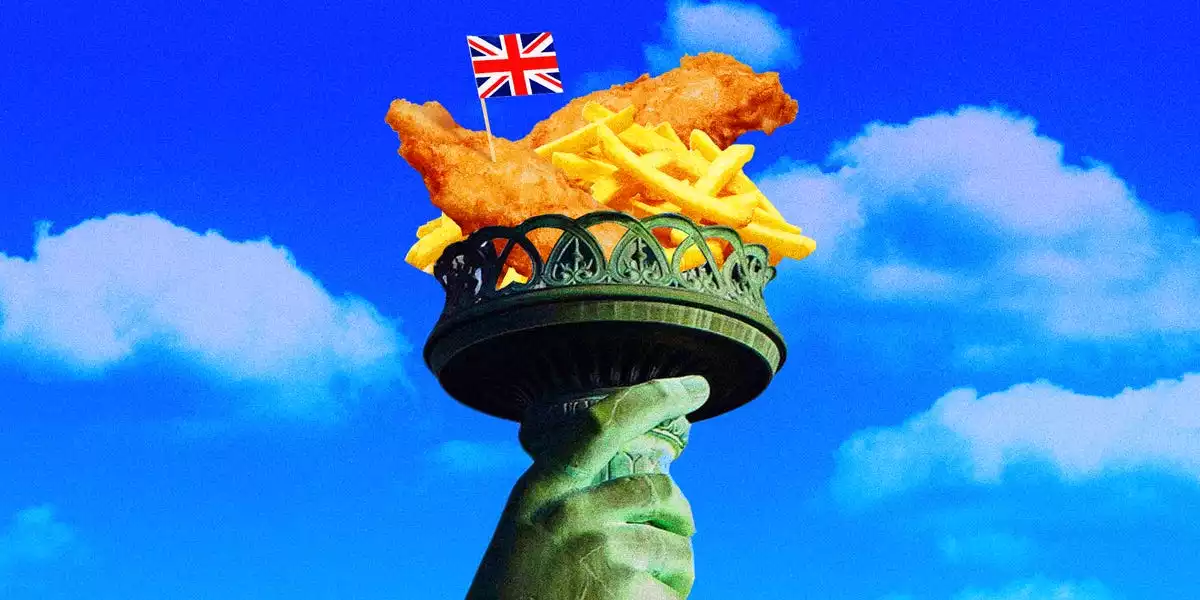

New York’s British dining revival signals a recalibration of “premium comfort”
A noticeable new wave of British dining in New York City is reshaping how American diners perceive the UK’s culinary identity. Restaurants such as Dame (opened 2021) and Dean’s pub in SoHo are not merely importing classics like fish and chips, Sunday roasts, and stargazey pie—they are reengineering them for a market that increasingly prizes familiarity with finesse. The result is a style of hospitality that feels at once nostalgic and contemporary: recognizable dishes served with elevated technique, sharper sourcing narratives, and a room designed for modern social rituals.
This matters because it challenges a long-standing stereotype that British cuisine is bland or purely utilitarian. The current momentum reflects London’s own culinary evolution, shaped by regional British traditions and immigrant influences that broadened the national palate. In New York, that evolution is being translated into a dining proposition with clear commercial logic: comfort food that reads as a treat, without the price signaling of fine dining.
Key consumer draws are straightforward but powerful:
- Emotional resonance: fish fries, roast dinners, and sticky toffee pudding offer a direct line to comfort and memory—even for diners without British roots.
- Polished accessibility: the atmosphere is “special” without being intimidating, aligning with the city’s appetite for casual prestige.
- Communal cues: pub-style service, shareable formats, and beverage pairings encourage longer stays and repeat visits.
Inflation-era dining economics: why British staples fit the “affordable indulgence” moment
The resurgence is also a story about macroeconomics and consumer psychology. With many urban households still navigating lingering inflationary pressures, diners are recalibrating what value looks like. They are not necessarily dining out less; they are dining out more selectively—seeking experiences that feel rewarding while remaining defensible on a budget.
British comfort cuisine fits this niche unusually well. Its core dishes are historically mid-price, hearty, and communal, which makes them adaptable to today’s “value-plus-experience” expectations. A well-executed fish and chips or Sunday roast can deliver the emotional payoff of indulgence while avoiding the sticker shock of tasting menus and high-touch luxury concepts.
From a category-performance perspective, comfort food has repeatedly shown resilience when consumers tighten discretionary spending. The current British wave adds an important twist: it pairs comfort with culinary credibility—better frying technique, higher-grade seafood, more thoughtful sides, and desserts that feel iconic rather than generic. That combination helps explain why the trend is not confined to Manhattan. Similar concepts are appearing in Los Angeles and Chicago, and the pipeline includes heavyweight entrants such as Gordon Ramsay’s forthcoming gastropub, suggesting the model is becoming legible to both independent operators and global hospitality brands.
For operators and investors, the economic takeaway is clear: British dining is emerging as a recession-resistant positioning that can still support margin through beverage programs, premium add-ons, and brand-led ambiance.
From proof-of-concept to scalable brand playbooks—Dishoom and the export of hospitality models
As early New York successes validate demand, the next phase is less about culinary novelty and more about repeatability. The strategic question becomes: can British-styled dining be codified into a scalable operating system without losing the warmth and authenticity that make it work?
That is where brand expansion and “culinary soft power” enter the picture. The planned U.S. arrival of Dishoom, the UK-born group inspired by Bombay-style café culture, is especially instructive. Dishoom is betting that New York’s diversity and openness to narrative-driven dining will translate into strong adoption. But the deeper signal is that UK hospitality groups increasingly view the U.S. as a market for exporting complete experiences—design language, service choreography, communal table culture, and a coherent story that travels.
Scaling this category will likely depend on operational discipline in areas that can be standardized without flattening the concept:
- Ingredient specifications and sourcing standards (e.g., cod quality, potato varieties, bread programs)
- Kitchen workflows that protect consistency during peak volume
- Front-of-house scripts and training that preserve the pub-like ease while maintaining polish
- Site selection logic that favors neighborhoods where “destination casual” performs well
If the playbook is written effectively, the British comfort model can expand into secondary U.S. markets—places like Boston, Miami, Denver, or Atlanta—where diners often want distinctive concepts that remain broadly crowd-pleasing.
The technology stack behind modern comfort food: provenance, personalization, and labor efficiency
Under the surface, this trend is also being enabled by a maturing restaurant technology ecosystem. Elevated comfort food is deceptively demanding: it requires consistency, throughput, and ingredient integrity. That pushes operators toward tools that reduce variance and protect margins.
Several technology and operations themes are becoming central to competitive advantage:
- Supply-chain traceability and provenance marketing: Premium comfort depends on reliable inputs—seafood, frying oils, potatoes, and baked goods. Tools that support provenance claims (including blockchain-backed documentation in some cases) and IoT-monitored cold chains can reduce spoilage while strengthening authenticity messaging.
- Digital guest engagement as a retention engine: Platforms like Resy and Tock are now baseline infrastructure in major cities. The next layer is AI-driven personalization—using preference signals to target offers, promote limited items, and increase visit frequency without discounting the brand.
- Operational automation for consistency: Standardized menus are well-suited to smart ovens, temperature-controlled holding, and semi-automated fry workflows. In high-wage urban markets, even modest labor-hour reductions can materially improve unit economics.
The strategic implication is that British dining’s rise is not just a cultural correction; it is a systems-friendly format. It lends itself to replication, delivery partnerships, and brand extensions—such as curated “pub night” subscriptions, beverage collaborations (cask ales, gin flights), and even digital-only offshoots that preserve the brand voice beyond the dining room.
What’s unfolding in New York is a broader signal about the experience economy: diners are increasingly trading pure novelty for nuanced authenticity—stories they can taste, rooms they want to linger in, and classics that feel newly relevant. British dining, once an easy punchline in American food culture, is now being rebuilt as a credible, scalable, and tech-enabled business proposition—one that may travel far beyond the five boroughs.

 By
By
 By
By


 By
By

 By
By
 By
By







