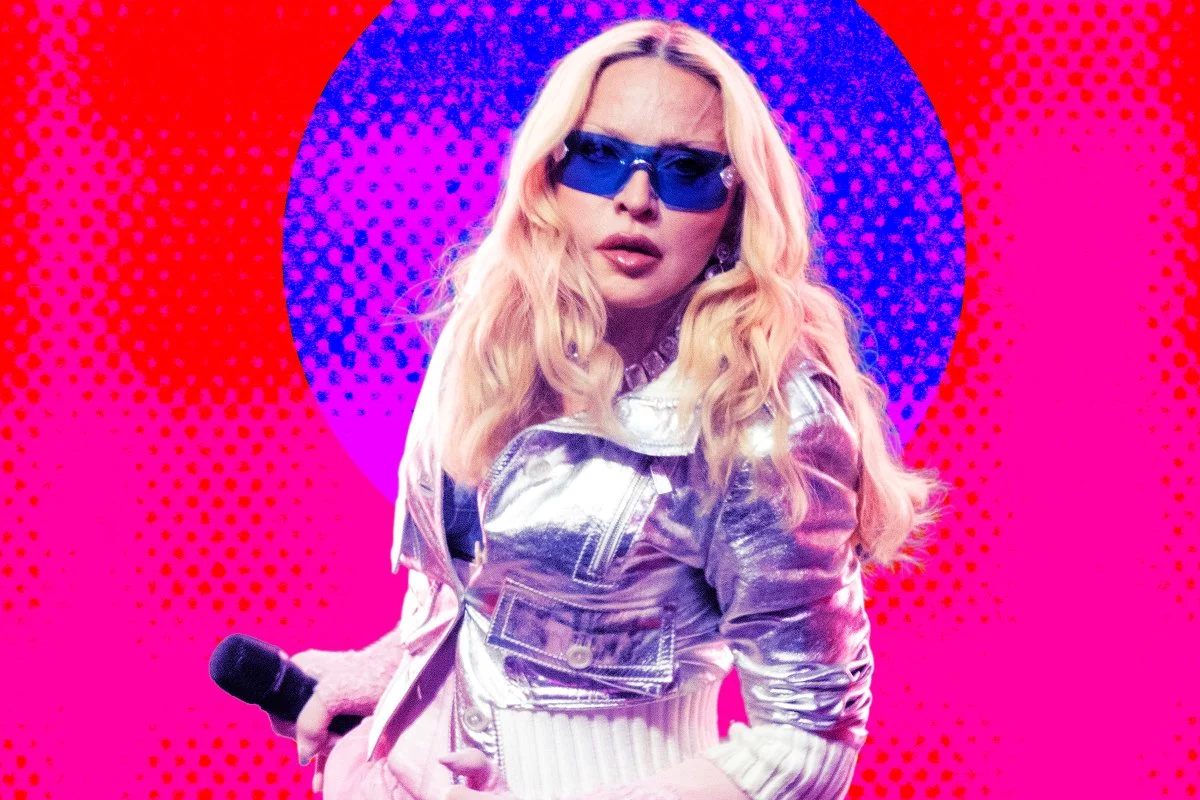

Madonna’s Vogue Italia critique spotlights a widening fault line in generative AI and culture
Madonna Ciccone’s remarks in *Vogue Italia* land as more than a celebrity soundbite; they function as a high-visibility case study in the growing tension between generative AI efficiency and human-led artistic risk. Her central argument—that artificial intelligence tends to produce *predictable*, *risk-averse* outputs—targets the very premise on which many AI creative tools are marketed: speed, scalability, and “good enough” iteration.
From a business and technology perspective, Madonna’s position is notable precisely because it is not a blanket rejection of tools. She acknowledges experimentation with AI for ancillary visuals and promotional materials, while drawing a firm boundary around what she considers the core of artistic creation: the messy, collaborative, and often inefficient process where accidents, missteps, and interpersonal friction can become the raw material for originality. That distinction matters for executives and creators alike, because it reframes the debate from “AI vs. humans” to where automation belongs in the creative value chain—and where it may quietly erode differentiation.
Her critique also taps into a broader cultural anxiety: as AI-generated content becomes abundant, the scarcity that once defined artistic value shifts from distribution to authenticity, provenance, and intent. In that environment, the question is no longer whether AI can generate content; it is whether AI-generated content can carry the same *meaning*—and command the same *premium*—as work rooted in lived experience and human collaboration.
Algorithmic aesthetics vs. human serendipity: why predictability can be a strategic liability
Generative AI models are, by design, pattern engines. They learn statistical relationships across vast corpora of existing works—music, images, text—and recombine those patterns into outputs that resemble what has historically “worked.” This is a feature, not a bug, for many commercial applications. It enables:
- Rapid iteration and lower production costs
- Style emulation at scale (brand consistency, genre adherence)
- Compression of creative cycles, especially for marketing assets and content variants
Madonna’s concern is that the same mechanism that makes AI productive can also make it conservative. When systems are optimized to predict what comes next—what is most likely, most legible, most engaging—they can narrow the space for the exploratory “dead ends” that often precede breakthroughs. In innovation terms, AI can overweight exploitation (refining known patterns) at the expense of exploration (testing unfamiliar ones).
This is not merely an artistic philosophy; it is a competitive issue. In saturated markets, differentiation often comes from what is *unexpected*—a new sound, a new visual language, a new performance grammar. If AI tools are deployed as default creative engines rather than as accelerators under human direction, organizations risk converging on the same aesthetic center of gravity. The result is a paradox: more content, less distinctiveness.
Madonna’s emphasis on authenticity also highlights a subtle but important point for AI strategy: audiences do not only consume outputs; they consume narratives about how outputs were made. The “handcrafted” story—human struggle, collaboration, intent—can be part of the product. As generative AI floods channels with competent material, human provenance may become a stronger signal of value, not a weaker one.
Social media metrics and recommendation loops are reshaping creative risk—and the economics behind it
Madonna’s indictment extends beyond AI tooling into the platform environment that increasingly governs cultural production. Social media metrics—followers, streams, engagement rates—have become proxies for artistic merit and commercial viability. That shift changes behavior upstream: creators and labels may optimize for what performs predictably, because predictability is what the system rewards.
AI-driven recommendation engines intensify this dynamic. When platforms learn what retains attention, they tend to amplify content that fits established engagement profiles. Over time, this creates a data feedback loop:
- Engagement signals train recommendation models
- Recommendation models amplify familiar formats
- Familiar formats generate more engagement
- Experimental work is deprioritized, reducing its chance to find an audience
For business leaders, this matters because it alters the traditional economics of creative risk. Historically, labels, studios, and collectives could underwrite experimentation—sometimes as loss leaders—because they controlled distribution and could balance portfolios. Today, platform-controlled ecosystems increasingly mediate discovery and monetization, compressing budgets while concentrating leverage.
At the same time, generative AI platforms enable direct-to-consumer production at unprecedented speed, which can democratize creation and distribution. Yet democratization does not automatically mean equitable value capture. If the tools, channels, and monetization rails are owned by a small number of technology providers, bargaining power can migrate away from creators—even as output volume rises.
What leaders can do now: hybrid creativity, IP traceability, and collaboration as a competitive moat
Madonna’s stance aligns with a pragmatic strategic posture emerging across the creative industries: treat AI as a force multiplier, not a replacement for human originality. For organizations navigating generative AI in music, media, advertising, fashion, and design, several imperatives stand out:
- Adopt human-in-the-loop workflows: Use AI for drafts, variations, and production acceleration, while reserving final authorship and creative direction for expert teams.
- Invest in collaborative ecosystems: Multidisciplinary studios—artists, technologists, data scientists—can recreate the “in-person” synergy Madonna points to, countering the isolating pull of metric-driven production.
- Build provenance and traceability: As IP disputes intensify around training data and derivative outputs, companies that can document lineage—through watermarking, registries, or robust audit logs—will be better positioned for licensing, compliance, and consumer trust.
- Prepare for evolving regulation and standards: Transparency, data sourcing, and copyright-safe training are moving targets globally; proactive governance will become a competitive advantage rather than a cost center.
Madonna’s critique ultimately frames a question that extends beyond pop culture: in an era where machines can generate endless “content,” the scarce asset is not production capacity—it is meaningful difference. The organizations that win will be those that use AI to accelerate craft without surrendering the human unpredictability that makes audiences stop, feel, and remember.

 By
By
 By
By
 By
By
 By
By
 By
By
 By
By