

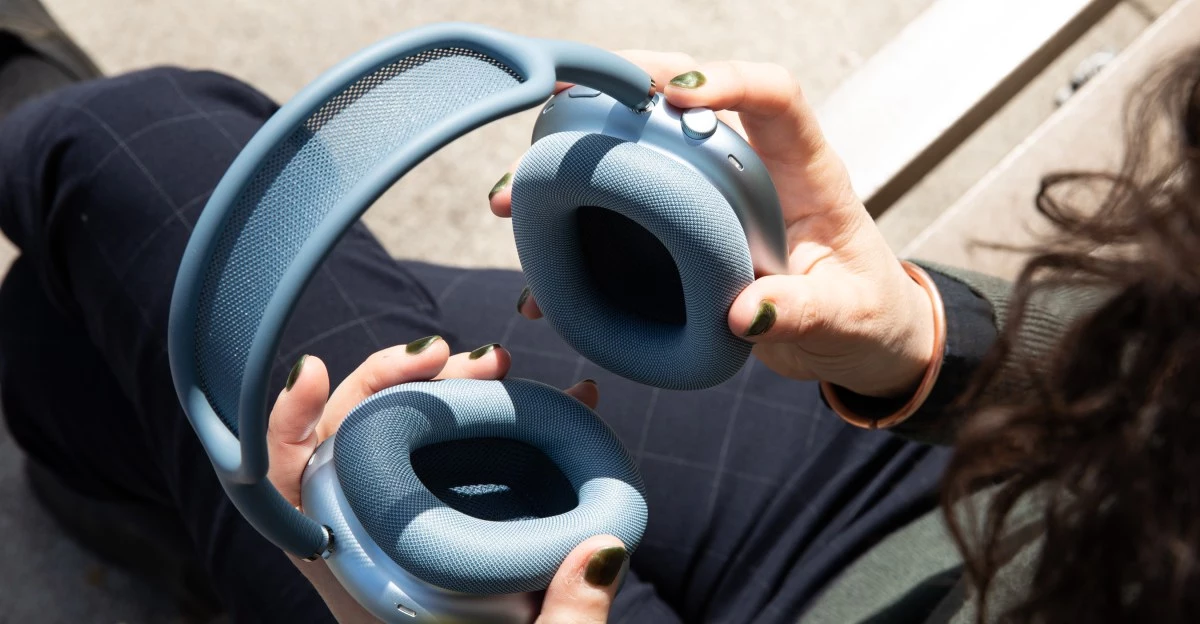

Prime Day pricing shockwaves: Walmart’s $399 AirPods Max 2 and what it signals
Walmart’s decision to price Apple AirPods Max 2 at $399—a $150 discount during the Prime Day shopping window—lands as more than a routine promotion. It is a pointed demonstration of how major retailers increasingly use marquee events to reframe premium electronics as “attainable luxury” for a narrow, high-intent moment. The fact that Amazon has reportedly sold through its inventory adds a second layer: scarcity, whether incidental or engineered, amplifies urgency and can convert browsing into immediate purchase behavior.
What makes this discount especially notable is the surrounding price landscape. With other large retailers largely holding the $549 list price, Walmart’s markdown stands out as one of the steepest cuts seen for this tier of Apple hardware. For consumers, it reads as a rare opportunity. For the market, it reads as a test: how elastic is demand for ultra-premium headphones when the price drops into the upper midrange?
Several dynamics converge here:
- Promotional pricing as a demand accelerant: Premium hardware carries margin room that can be selectively deployed to drive unit velocity during high-traffic retail events.
- Inventory signaling: Amazon’s sell-through, paired with limited availability elsewhere, functions as a real-time indicator of demand—and a catalyst for “buy now” behavior.
- Competitive pressure at the top end: Aggressive discounting in the flagship segment forces rivals to decide whether to defend price, bundle value, or accelerate refresh cycles.
The H2 chip turns headphones into edge-AI devices, not just audio accessories
Beyond the price, the AirPods Max 2 story is fundamentally about product direction: Apple is pushing premium headphones toward on-device intelligence. With the H2 chip at the center, the headset is positioned less as a passive playback tool and more as a standalone, context-aware peripheral capable of handling sophisticated processing close to the user.
Key capabilities associated with this shift include:
- Adaptive audio and conversation awareness: Features that sense context and adjust sound behavior dynamically, moving headphones toward ambient computing interfaces.
- Enhanced noise cancellation and refined tuning: Continuous improvements that rely on tight integration between silicon, sensors, and software.
- Live translation use cases: A particularly strategic feature category because it expands the product’s value beyond entertainment into travel, work, and real-time communication.
The broader implication is that premium headphones are becoming edge-compute platforms: devices that can interpret environment, prioritize voices, and potentially support multilingual interaction without leaning as heavily on a phone for every function. For business and technology leaders, this matters because it expands the addressable market from “audiophiles and commuters” to include:
- Remote and hybrid workers seeking clearer calls and reduced cognitive load in noisy environments
- Frequent travelers who value translation and situational awareness
- Enterprise and education contexts where real-time communication enhancements can translate into productivity gains
This is also where Apple’s ecosystem strategy becomes more visible. As intelligence moves into wearables, the value of Apple’s integrated stack—hardware, silicon, operating systems, and services—becomes harder for competitors to replicate quickly.
Premium design, real-world ergonomics: the trade-offs customers keep surfacing
User feedback around AirPods Max 2 underscores a persistent tension in luxury electronics: industrial design as brand signal versus comfort as daily utility. The product’s premium materials and signature aesthetic reinforce Apple’s positioning, but repeated critiques point to ergonomic friction—particularly weight and clamping force—that can limit long-session wear.
Commonly cited drawbacks include:
- Discomfort over time due to heft and pressure distribution
- Design omissions such as the lack of a dedicated power button
- Questions around portability and protection, including expectations for a more robust protective case
These critiques are not merely consumer nitpicks; they are market signals. As the high-end headphone category remains robust—supported by audiophile demand, remote work habits, and appetite for luxury devices—comfort becomes a differentiator that can sway buyers deciding between Apple, Sony, Bose, and emerging premium entrants.
Expect this to accelerate an industry-wide materials and ergonomics race, with likely investment in:
- Lighter structural materials (e.g., magnesium alloys, composites)
- Adaptive fit systems (pressure-modulating foams, improved headband architectures)
- Durability and travel-first design that matches premium pricing expectations
Competitive and monetization implications: discounts today, services tomorrow
Walmart’s pricing move also hints at how premium consumer electronics may be sold going forward: dynamic pricing tied to events, inventory, and analytics, rather than static discount calendars. For Apple, selective channel flexibility can preserve momentum without permanently re-anchoring the perceived value of the product—especially if discounts are time-boxed and retailer-specific.
Strategically, several forward-looking implications stand out:
- Ecosystem lock-in deepens: Advanced H2-driven features reinforce the value of staying within Apple’s device environment, raising switching costs for premium users.
- Rivals face a tightening vise: Competitors may need to respond with deeper promotions, differentiated form factors, or faster AI feature rollouts—each with margin and roadmap consequences.
- Services become the next frontier: As translation, spatial audio, and adaptive sound mature, the industry may explore monetization beyond hardware—through premium presets, advanced language packs, or enterprise-grade audio features.
The $399 AirPods Max 2 moment is therefore not just a deal story; it is a snapshot of where the premium audio market is heading: headphones as intelligent wearables, priced with algorithmic precision, and increasingly evaluated as much for software capabilities and comfort as for sound quality alone.

 By
By
 By
By

 By
By
 By
By

 By
By
 By
By







