


A rare breach of Beijing’s low-altitude perimeter—and why it matters
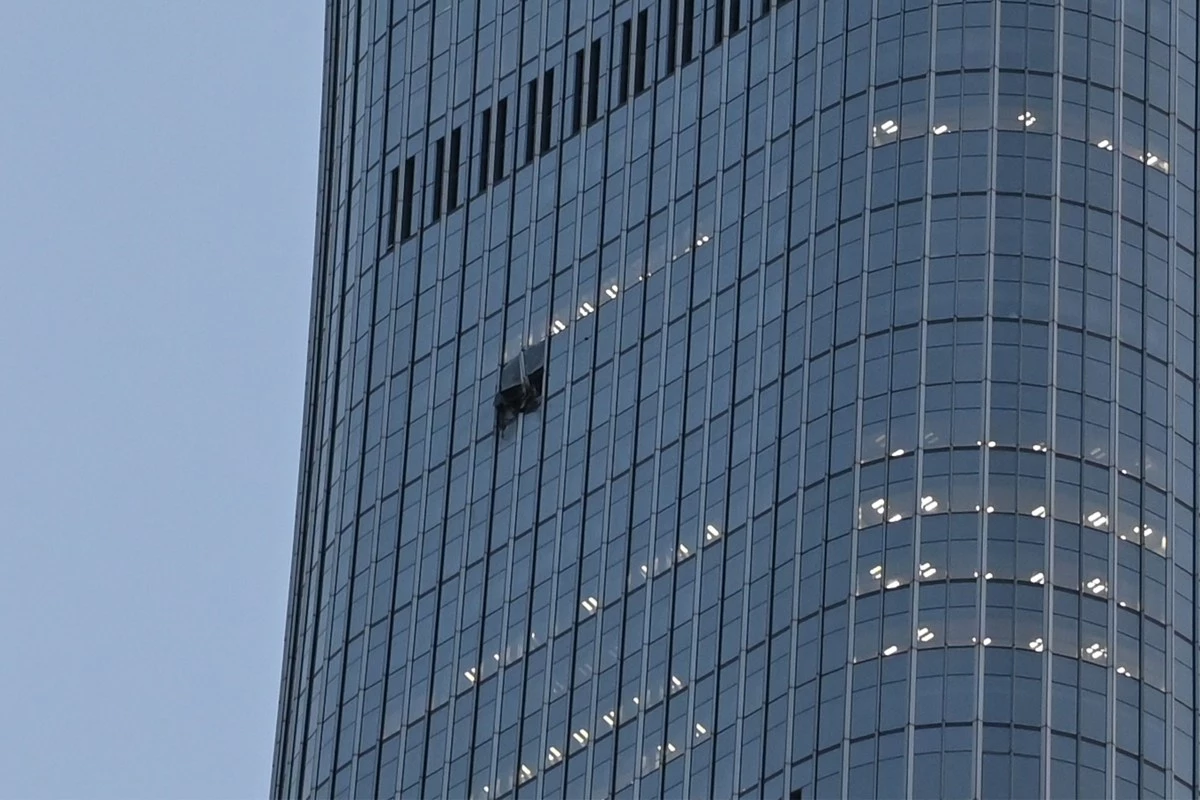
A two-seat general aviation aircraft registered to Shuangyue General Aviation crash-landed into Beijing’s CITIC Tower, striking and shattering part of the building’s glass curtain wall. Video circulating online shows debris falling toward street level and pedestrians scattering; reports of injuries have not been confirmed in the public domain. Authorities have cordoned off the area and opened an investigation, while key uncertainties remain unresolved: the pilot’s identity, the chain of events leading to the impact, and whether the incident was accidental or intentional.
The flight reportedly departed Pinggu airfield east of Beijing on what was described as a training sortie, yet public flight-tracking observers flagged an atypical flight pattern. That combination—training context, anomalous track, and an impact in the capital’s most symbolically and economically sensitive district—turns the event into more than a localized emergency response story. It becomes a stress test of urban airspace governance, general aviation (GA) oversight, and critical-infrastructure risk management in a city where low-altitude control is typically stringent.
For business leaders, insurers, regulators, and aviation stakeholders, the immediate question is not only “how did this happen?” but “what does it reveal about the system’s ability to detect, deter, and contain low-probability, high-impact events over dense commercial cores?”
The operational and technology gap: surveillance, training, and the “last mile” of enforcement
China’s urban airspace is widely understood to be tightly controlled, including restrictions on recreational drones without approval. Against that backdrop, the aircraft’s arrival at a downtown skyscraper points to a potential mismatch between policy strictness and real-time enforcement capability, especially in the “last mile” of low-altitude monitoring.
Several technical and operational dimensions now come into focus:
- Airspace surveillance and anomaly detection
– If the aircraft’s track was indeed unusual, the incident raises questions about how effectively current systems fuse radar, ADS-B signals, and other sensors to flag deviations early enough for intervention.
– Densely built environments can create coverage and clutter challenges for traditional surveillance, increasing the value of multi-sensor approaches that include optical or other low-altitude tracking.
- Training-flight governance and safety culture
– A training sortie that ends in a central business district collision would be a severe outlier under standard training parameters.
– If pilot error is implicated, scrutiny will likely extend beyond the cockpit to instructor oversight, curriculum rigor, and the adequacy of simulator-based preparation for abnormal situations.
– If mechanical or avionics malfunction is suspected, attention will shift to maintenance standards, component traceability, and the quality controls of private airfields and GA operators.
- Interdiction and automated constraints
– Even with detection, the harder question is response: what tools exist to prevent entry into no-fly zones or to compel a safe outcome when an aircraft deviates?
– The episode may accelerate interest in geofencing, automated warnings, and—more controversially—fail-safe mechanisms that can guide an aircraft away from restricted areas when conditions permit.
Importantly, the CITIC Tower’s limited structural damage also highlights a parallel story: the resilience of modern high-rise engineering. Curtain-wall systems are designed to manage wind loads and localized impacts, but they are not typically framed as frontline defenses against airborne collisions. The building’s performance, and the speed of emergency response, will likely be studied as part of a broader urban risk model—one that increasingly includes low-altitude aviation.
Market repercussions: insurance repricing, regulatory recoil, and the trajectory of China’s general aviation sector
Even before investigators establish causality, the economic aftershocks are predictable. A collision involving a landmark skyscraper in Beijing’s financial ecosystem is the kind of event that can reprice risk rapidly—especially where actuarial data is thin and uncertainty is high.
Key business implications include:
- Insurance and liability
– Property insurers may reassess aerial-impact exposure for premium office towers, potentially driving higher premiums, revised exclusions, or new requirements for risk mitigation.
– GA operators and flight schools could face tighter underwriting, higher deductibles, and stricter conditions for operations near urban corridors.
- Regulatory tightening and sector growth
– China has promoted general aviation as part of economic diversification, yet the sector remains heavily regulated. A high-visibility incident in the capital could trigger a regulatory backlash—more restrictive routing, higher compliance costs, and slower approvals for training and private operations.
– That would ripple into adjacent industries: pilot training, maintenance and MRO, avionics, and airport/airfield services, potentially dampening investment momentum.
- Urban real estate and infrastructure planning
– Developers and major tenants may push for updated safety covenants, enhanced façade specifications, or revised emergency protocols.
– Municipal authorities could incorporate airspace risk into zoning and permitting, complicating future approvals for skyscraper-dense districts and increasing the cost of compliance for new projects.
For China’s broader aviation ambitions—including efforts to build global confidence in its aerospace ecosystem—highly publicized incidents carry reputational weight. Even rare events can influence international perceptions of aviation safety governance, which in turn affects partnerships, procurement sentiment, and the narrative surrounding China’s aviation modernization.
What to watch next: investigation signals and policy moves that will reshape urban airspace
The investigation’s early signals will matter as much as its final conclusions. Markets and regulators will watch for whether authorities frame the incident primarily as human factors, mechanical failure, procedural breach, or security anomaly—each pathway implies different remedies and different costs.
Likely policy and industry responses—some already implicit in the public debate—include:
- Integrated low-altitude surveillance upgrades, using sensor fusion to improve detection of anomalous tracks near critical infrastructure.
- Mandatory equipage and compliance measures for GA aircraft operating near major cities, potentially including geofencing or enhanced transponder requirements.
- Stricter training and certification audits, with clearer performance metrics for instructors and independent proficiency checks.
- Revised urban airspace design, such as buffer corridors and differentiated restrictions based on building density and economic criticality.
- More transparent risk communication, where timely, data-driven briefings reduce speculation and stabilize confidence among residents, investors, and insurers.
Ultimately, the CITIC Tower incident is a reminder that modern cities are not only vertical—they are increasingly three-dimensional operating environments, where aviation, real estate, security, and technology converge. How Beijing responds will signal whether China’s next phase of general aviation development is defined by contraction and caution, or by a more sophisticated model of controlled growth built on measurable, enforceable safety architecture.

 By
By
 By
By

 By
By
 By
By

 By
By
 By
By







