
Networking as Relationship Capital in a Data-Driven Labor Market
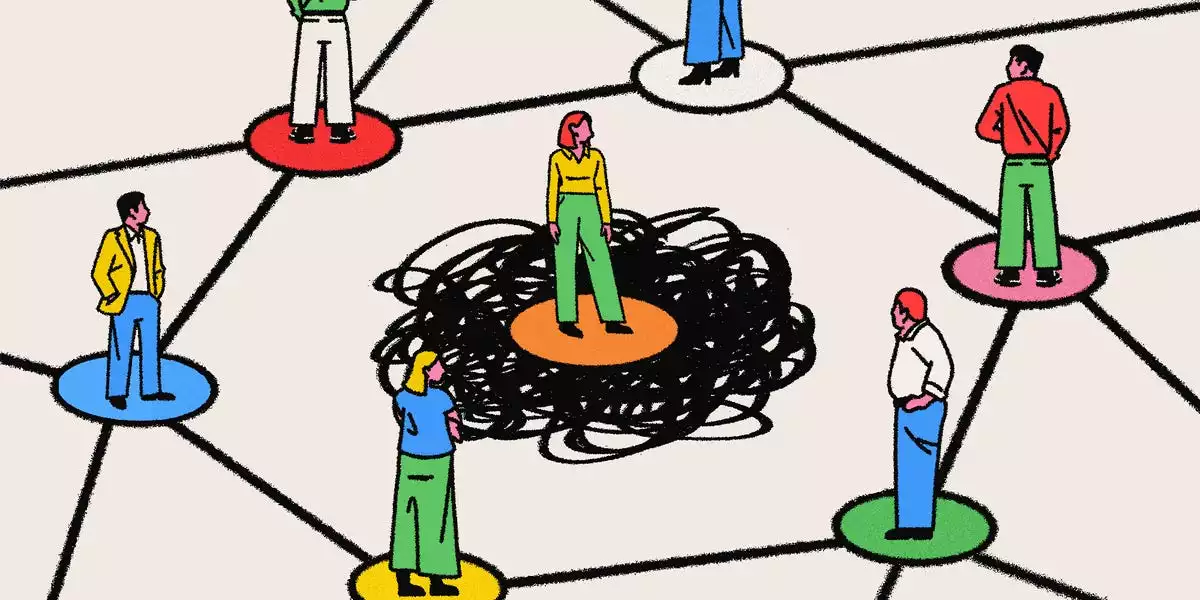
Networking has long been treated as a career “nice-to-have,” but the current labor economy—defined by skill shortages, project-based work, and rapid role redefinition—has turned it into a form of relationship capital with measurable returns. The guidance from Pamela Eyring and Stayce Wagner lands squarely in this reality: the old model of collecting contacts like a Rolodex is increasingly misaligned with how opportunity actually moves.
In modern hiring and business development, value flows through trust, context, and recall. A large contact list with thin ties rarely produces meaningful referrals, introductions, or collaboration. By contrast, a smaller network built through authentic engagement tends to generate a higher “network multiplier”—the practical yield of opportunities per relationship.
This mirrors what enterprises learned through CRM and customer retention economics:
- High volume, low engagement produces weak loyalty and low conversion
- Fewer, deeper relationships create durable advocacy and repeat interaction
- Context-rich touchpoints (shared projects, mutual interests, remembered details) outperform generic outreach
For professionals, the implication is direct: networking is no longer a social activity adjacent to work—it is a strategic capability that compounds over time, shaping visibility, credibility, and career agility.
The Micro-Behaviors That Quietly Define Professional Reputation
Eyring and Wagner’s critique of common networking missteps reads like a field guide to reputation management. Many errors are not overtly “wrong” in the moment, but they send subtle signals that accumulate: impatience, self-focus, or social inattentiveness. In environments where first impressions are compressed into seconds, these signals can determine whether someone is remembered as a peer, a prospect, or a passerby.
Several behaviors stand out for how disproportionately they affect outcomes:
- Prioritizing quantity over quality: Rapid-fire introductions can look energetic, but often register as transactional. People remember how you made them feel, not how efficiently you rotated through the room.
- Interrupting closed conversations: Social dynamics operate like traffic systems; cutting in without an opening can mark someone as opportunistic rather than collaborative.
- Staying in comfort zones: Clustering with familiar colleagues may feel natural, yet it defeats the purpose of attending. It also signals risk-aversion—an underrated career limiter.
- Underestimating small talk: Light conversation is not filler; it is a trust-building protocol. It establishes warmth, shared reference points, and psychological safety before business topics land well.
- Mishandling name-tag etiquette: Wearing a name tag consistently reduces cognitive friction and invites approachability. It’s a small act with outsized impact—akin to clear labeling in product design.
- Secluding at food stations: Hovering near refreshments is a classic self-protective move, but it can read as disengagement. In crowded events, physical positioning becomes a form of communication.
- Skipping thank-you notes: Follow-up is where intent becomes credible. Without it, even a strong conversation can dissolve into noise.
What emerges is a consistent theme: networking is less about charisma than about deliberate social design—knowing how to enter, contribute, and exit interactions in ways that respect others and reinforce your own professional brand.
Virtual Networking and Hybrid Etiquette as the New First Impression Layer
As video calls and hybrid events become default, networking competence now includes a technical and behavioral layer that didn’t exist a decade ago. The “handshake moment” has been replaced by camera framing, lighting, audio clarity, and background choices—elements that function as digital stagecraft.
Eyring’s observation that even a car interior can be optimized is telling: professionalism is increasingly portable, and the baseline expectations are rising. In virtual settings, small lapses can carry more weight because the medium compresses context. A distracted gaze, poor lighting, or noisy audio can unintentionally signal low investment.
For professionals navigating hybrid ecosystems, several norms are becoming career-relevant:
- Camera positioning and eye line that simulate direct engagement
- Background and lighting that support credibility without appearing performative
- Platform fluency (knowing when to mute, how to use chat strategically, how to enter breakout rooms smoothly)
- Turn-taking discipline to avoid talking over others in latency-prone environments
Hybrid events also introduce a new social inequality: in-room participants often access richer informal moments, while remote attendees risk becoming spectators. Those who learn to bridge this gap—by inviting remote voices in, following up asynchronously, or using digital channels to extend conversations—become valuable connectors in their organizations and industries.
Where Networking Is Headed: AI, Metrics, and Trust as Competitive Differentiators
Networking is also being reshaped by the same forces transforming talent acquisition and business development: analytics, AI-assisted discovery, and structured relationship management. Corporate recruiting teams increasingly use tools that map networks, identify referral pathways, and surface candidates through inferred connections. In that environment, networking best practices don’t just help socially—they improve discoverability.
The forward-looking shift is toward intentional relationship operations, supported by lightweight systems:
- Using a simple personal CRM (Airtable, Notion, Contactually-style workflows) to tag contacts by context and schedule follow-ups
- Tracking relationship momentum through practical indicators such as:
– collaborations initiated
– introductions exchanged
– referrals generated
– repeat interactions over time
- Participating in communities and events that use AI matchmaking to suggest relevant peers—then doing the human work of turning matches into trust
Yet as networking becomes more data-enabled, it also becomes more sensitive. The next competitive edge will include privacy-aware professionalism: transparent consent when sharing contact details, careful handling of personal information, and a reputation for discretion. Trust is not only interpersonal now; it is also procedural.
In a market where opportunity often travels through informal channels before it ever reaches a job board or public announcement, networking remains a cornerstone—but the winners will be those who treat it as a craft: genuine engagement, situational awareness, disciplined follow-up, and a modern understanding of how relationships are discovered, evaluated, and sustained.
 By
By
 By
By
 By
By
 By
By
 By
By
 By
By
 By
By