

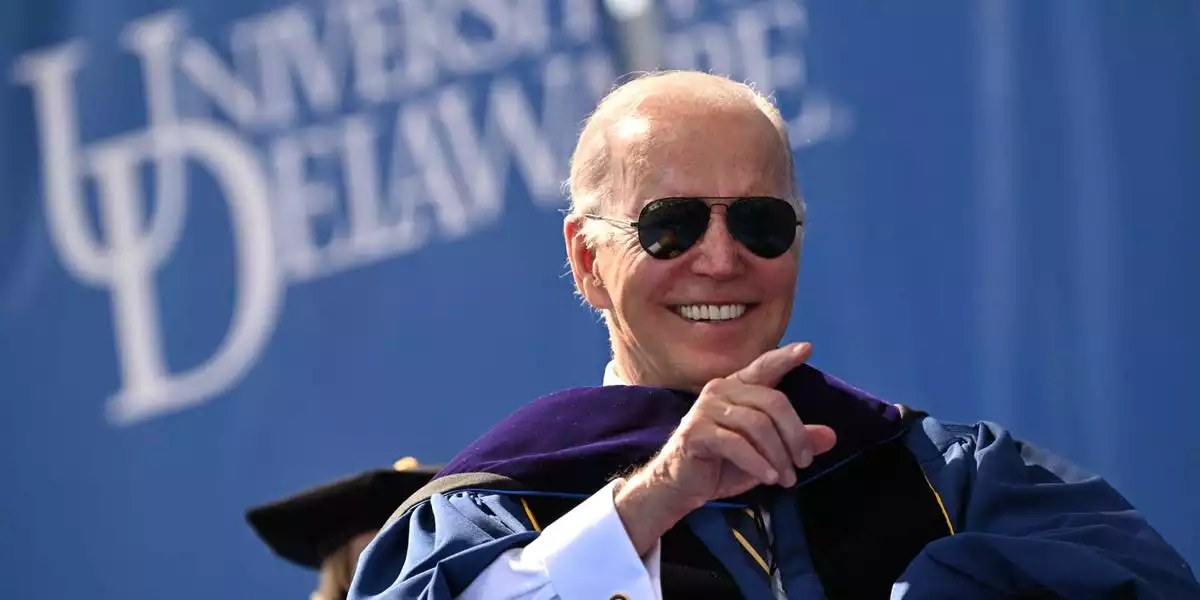

Elite campuses as enduring “operating systems” for political power
A scan of U.S. presidents’ alma maters shows a striking pattern: national leadership has repeatedly emerged from a narrow band of institutions. Harvard stands out with five presidents, while Yale, Princeton, and the College of William & Mary each account for three—numbers that are statistically hard to dismiss as coincidence. Even without implying causation, the concentration signals something structural about how American leadership is identified, credentialed, and elevated.
In business terms, these universities behave less like schools and more like multi-decade leadership platforms—complete with distribution channels (alumni networks), capital access (donors and fellowships), and brand trust (credential signaling). Their advantage is not simply academic rigor; it is the density of relationships that form early and compound over time. The same dynamics that help a startup founder secure introductions to investors can, in politics, translate into access to campaign talent, policy advisors, and institutional legitimacy.
Several reinforcing mechanisms make these ecosystems unusually durable:
- Network compounding: alumni connections mature into a lifelong web spanning law, finance, media, and government.
- Credential signaling: elite degrees function as shorthand for competence in high-stakes selection environments—elections, appointments, and donor ecosystems.
- Institutional proximity to power: internships, visiting speakers, and policy-adjacent programs create early exposure to governance and national issues.
- Cultural fluency: shared norms—how to argue, write, persuade, and lead—become a kind of “soft interoperability” among future decision-makers.
For technology and business leaders, the parallel is familiar: many organizations still recruit disproportionately from a handful of “target schools,” not purely for skill, but for predictability, social proof, and pipeline efficiency. The presidential alma mater pattern is a public-sector mirror of private-sector talent concentration.
Military academies and liberal-arts routes: different training, different instincts
The list is not exclusively Ivy League. Military academies such as West Point have produced commanders-in-chief as well, underscoring that the U.S. leadership pipeline has multiple lanes—each shaping temperament and governing style in distinct ways. Where elite private universities often emphasize debate, theory, and institutional navigation, military academies emphasize discipline, hierarchy, operational planning, and mission clarity.
These educational environments can influence how leaders interpret national priorities—especially when those priorities intersect with technology, security, and industrial capacity. A military-academy background may predispose leaders toward:
- systems thinking under constraint (logistics, readiness, chain-of-command execution)
- defense innovation and procurement focus (R&D pipelines, strategic deterrence, infrastructure resilience)
- risk framing through national security (cybersecurity, critical infrastructure, geopolitical competition)
By contrast, liberal-arts and interdisciplinary settings tend to cultivate:
- persuasive communication and coalition-building
- cross-domain synthesis (economics, history, law, ethics)
- comfort with ambiguity—a useful trait in fast-moving policy debates such as AI governance, antitrust, and climate-tech incentives
Neither pathway is inherently superior; they are different operating philosophies. In an era where the presidency increasingly sits at the intersection of technology policy, industrial strategy, and geopolitical competition, these formative differences can echo through decisions on issues like data privacy, platform regulation, semiconductor supply chains, defense-tech funding, and energy transition incentives.
Transfers, brand recalibration, and the modern logic of credential strategy
The presence of presidents who transferred institutions—driven by finances, personal circumstances, or strategic specialization—adds a modern dimension to the story. Transfers such as Barack Obama’s move from Occidental to Columbia or Donald Trump’s shift to Wharton illustrate a pattern that resonates strongly with today’s labor market: credential pathways are often iterative, not linear.
In the corporate world, this resembles a high-performing professional who pivots into a more specialized or higher-signaling program—an MBA, a technical master’s, or an accelerated reskilling track—to match ambition with market perception. In politics, where legitimacy is continuously contested, educational branding can become part of a broader narrative of capability, seriousness, and readiness.
This matters because the U.S. is simultaneously experiencing macro forces that may disrupt traditional pipelines:
- rising tuition and student debt, which can narrow who can afford elite pathways
- demographic and geographic shifts, changing where talent originates and how it mobilizes
- alternative credential growth (online degrees, boot camps, micro-certifications), expanding the definition of “qualified”
- new prestige centers globally, as universities outside the U.S. scale AI, biotech, and clean-energy programs
The implication is not that elite institutions will lose influence overnight, but that the credential market is becoming more modular. Over time, leadership legitimacy may be assembled from stacked experiences—public service, entrepreneurship, military service, technical expertise, and nontraditional education—rather than a single canonical pedigree.
What business and technology leaders should take from the presidential alma mater pattern
For executives, investors, and policy strategists, the educational history of U.S. presidents is more than trivia; it is a map of how influence is manufactured and circulated. It suggests practical moves for organizations that want to compete in a world where regulation, innovation, and national strategy are increasingly intertwined.
Key strategic takeaways include:
- Diversify leadership pipelines: recruit beyond legacy institutions using performance data, project portfolios, and demonstrated problem-solving—especially in AI, cybersecurity, and climate-tech.
- Build internal “leadership academies”: combine liberal-arts style reasoning and communication with technical labs and policy literacy.
- Partner with universities and ed-tech platforms: co-design curricula and capstones aligned to emerging regulatory realities (AI safety, privacy, critical infrastructure resilience).
- Engage policy through credible thought leadership: contribute expertise to commissions, standards bodies, and industry consortia shaping credential recognition and workforce development.
The enduring concentration of presidents from a few elite schools reveals how power tends to reproduce itself—through networks, signaling, and institutional proximity. Yet the growing legitimacy of alternative pathways hints at a future where leadership formation becomes more distributed, more technical, and more contested—exactly the environment in which business and technology strategy now operates.

 By
By
 By
By
 By
By
 By
By
 By
By


 By
By







