
A polar heat shock that is rewriting the baseline for Antarctic risk
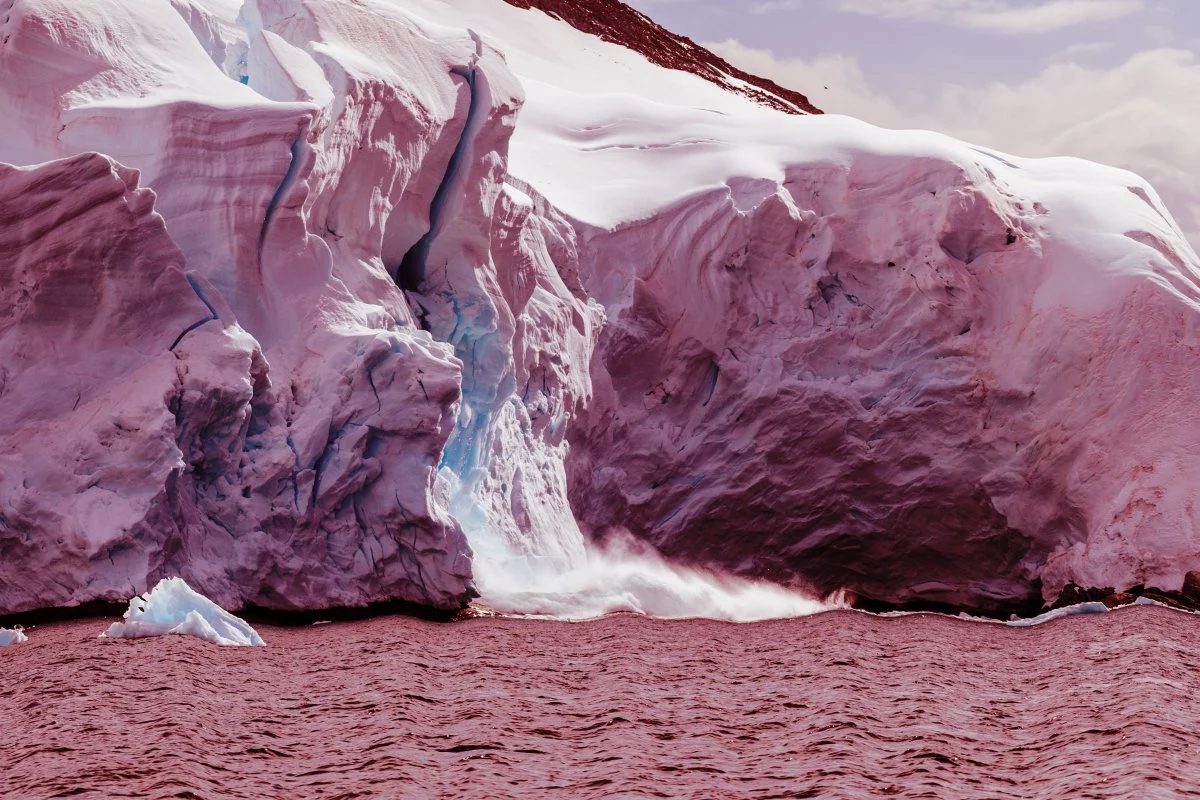
Early June’s Antarctic temperature spike—up to 15.4°C, roughly 36°F above historical norms—is not merely a startling meteorological datapoint. It is a stress test of the physical systems that stabilize global coastlines and the economic systems that price long-term risk. Reports from the Trinity Peninsula indicating a ~20°C departure from typical winter conditions, alongside rain-driven melting at Collins Glacier where snowpack is expected, underscore a shift from “rare anomaly” toward “repeatable pattern.”
The timing matters. These events arrive as the planet posts the second-warmest May on record, reinforcing the broader signal: warming is not distributed evenly, and polar regions can experience outsized swings that cascade through ice dynamics. Since the 1980s, Antarctic ice loss has accelerated, and episodes like this sharpen the concern that the cryosphere is entering a regime where short-lived heat intrusions can produce long-lived structural consequences—particularly when meltwater, rain, and surface warming interact with ice shelves that act as buttresses for inland ice.
For business and technology leaders, the key takeaway is not the headline temperature itself, but what it implies about volatility: a climate system increasingly capable of delivering extreme deviations that challenge infrastructure assumptions, insurance models, and the reliability of historical baselines used in planning.
Thwaites Glacier and the monitoring gap: when the “doomsday glacier” outpaces our instrumentation
The difficulties in deploying persistent sensor arrays beneath Thwaites Glacier—often labeled the “doomsday glacier” because of its potential contribution to sea-level rise—highlight a less-discussed constraint: our ability to observe critical systems is lagging behind their rate of change. Field efforts have “largely faltered,” a phrase that should resonate beyond polar science. It signals a technology bottleneck in environments where data continuity is essential but operational failure is common.
Yet even partial success has delivered a warning: preliminary subglacial readings indicate temperatures higher than anticipated. That matters because subglacial and ocean-driven melt processes can destabilize ice shelves from below, weakening the structural “brakes” that slow glacier flow into the sea.
From a technology and industrial perspective, the Thwaites challenge clarifies where innovation is most needed:
- Extreme-environment robotics and autonomy capable of operating for long durations under ice with minimal human intervention
- Energy storage and power management designed for ultra-cold, low-maintenance deployments
- Satellite-linked telemetry and low-power communications that can tolerate intermittent connectivity and harsh conditions
- Sensor fusion architectures that combine in-situ measurements with satellite imagery and ocean-atmosphere datasets to reduce single-point failure risk
This is not a niche R&D problem. It is foundational to climate risk governance. Without robust observation networks, both public agencies and private markets are forced to make high-stakes decisions with incomplete visibility—an uncomfortable parallel to managing financial risk without reliable accounting.
The business exposure map: sea-level risk, insurance repricing, and supply-chain recalibration
Antarctic melt is often framed as a distant, scientific concern. In practice, it is a balance-sheet issue that will increasingly surface in capital allocation, underwriting, and regulatory disclosure. A recent Antarctic Research Center study warning that melt rates could increase tenfold by 2100 without deep emissions cuts—and that ice shelves may become prone to catastrophic collapse under 3.5–4°C warming—is the kind of scenario that can reprice assets well before the physical impacts fully materialize.
Several channels of economic transmission stand out:
- Coastal real estate and infrastructure finance: Rising sea levels translate into higher expected losses, which can drive systematic repricing of coastal property, municipal bonds, and long-lived infrastructure projects.
- Insurance and reinsurance: Catastrophe models depend on assumptions about frequency and severity. As polar melt accelerates, insurers may respond with higher premiums, narrower coverage, and stricter exclusions, pushing more risk onto households, developers, and local governments.
- Data center and cloud resilience: Coastal concentration of critical digital infrastructure creates a quiet vulnerability. Sea-level rise and storm surge risk can force expensive retrofits, relocations, or redundancy investments—particularly for hyperscalers and enterprises with latency-sensitive architectures.
- Shipping and trade routes: While polar melting is sometimes linked to new navigable corridors, the business reality is complex: potential route shortening comes with sovereignty disputes, environmental compliance burdens, and demand for ice-class fleets—and does not eliminate the volatility of extreme weather.
- Antarctic tourism and liability: A warming, wetter Antarctic environment increases operational risk. Expect tighter oversight, evolving safety standards, and potentially higher liability and insurance costs for operators in this growing niche sector.
For corporate boards and CFOs, the strategic question becomes how quickly to embed polar-driven sea-level scenarios into enterprise risk management—especially across 2030–2050 horizons where investment decisions made today will still be on the books.
AI, digital twins, and the race to turn climate volatility into decision-grade intelligence
As anomalies become more frequent, the limitations of traditional modeling approaches become more visible—particularly around feedback loops such as surface melt reducing albedo, which can accelerate warming. This is where AI and advanced analytics move from “nice to have” to operational necessity.
A credible path forward is emerging around the concept of a digital twin of the Antarctic cryosphere: a continuously updated, decision-support system integrating atmospheric, oceanographic, and glaciological data. Done well, it could support:
- Near-term risk forecasting for ice-shelf stability and meltwater dynamics
- Scenario planning for sea-level rise pathways that inform infrastructure and insurance strategies
- Policy and compliance tooling for climate disclosure regimes (TCFD-aligned reporting, ISSB-oriented frameworks, and evolving securities mandates)
- Public-private coordination by standardizing datasets and reducing duplication across national programs and research institutions
The commercial opportunity is real, but so is the governance challenge: data integrity, model transparency, and uncertainty communication will determine whether these tools improve decision-making or simply add another layer of complexity.
Antarctica’s early June heat event is a reminder that climate risk is no longer a slow-moving variable. It is becoming a high-variance driver of physical disruption and financial repricing—one that will increasingly reward organizations capable of pairing decarbonization action with measurement-grade intelligence, resilient infrastructure design, and disciplined scenario planning.

 By
By
 By
By
 By
By
 By
By
 By
By


 By
By