

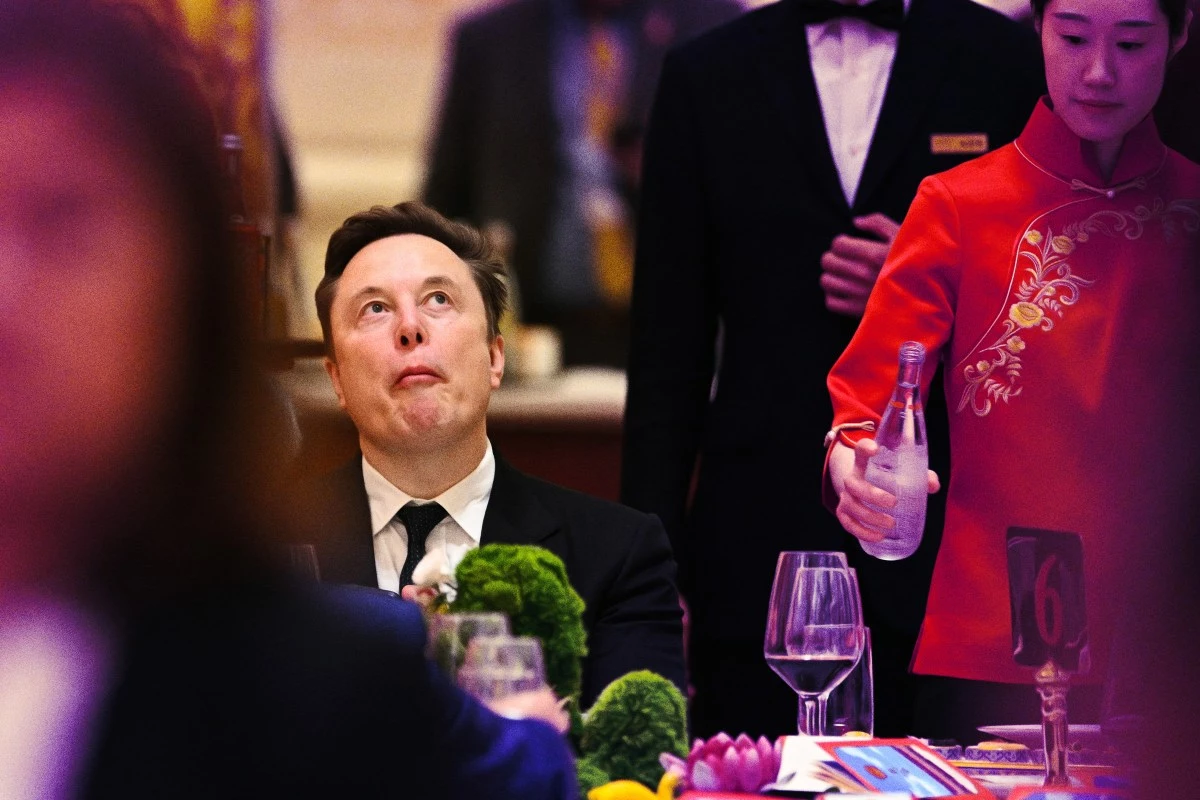

A courtroom drama collides with executive power and judicial authority
Elon Musk’s decision to depart the United States for an official diplomatic mission to China—alongside former President Donald Trump—while serving as a recalled witness in the OpenAI v. Altman trial has injected a volatile new variable into an already consequential legal contest. The central tension is not merely procedural; it is institutional. A US District Judge’s directive that a recalled witness remain available is designed to protect the integrity of testimony and the court’s ability to test credibility in real time. When a high-profile executive chooses international travel without clear judicial blessing, the move inevitably becomes a referendum on compliance, accountability, and the limits of celebrity influence in litigation.
Musk’s lead counsel, Steven Molo, reportedly struck an unusually conciliatory tone in addressing the absence—an implicit acknowledgment that the optics are difficult to defend even before the legal merits are weighed. For corporate America, the episode underscores a practical reality: courts are not stage-managed arenas, and the reputational calculus that often governs executive behavior in public markets can collide sharply with the judiciary’s expectation of deference and availability.
The judge’s reported curtailment of Musk’s public commentary adds another layer. In high-stakes technology litigation—especially cases involving AI governance and fiduciary duties—judicial efforts to limit extrajudicial narratives are increasingly common. The restraint, so far respected, signals a court attempting to keep the dispute anchored in evidence rather than social-media amplification, a dynamic that has become a recurring stress test in modern corporate trials.
What Musk’s testimony reveals about AI governance, term sheets, and board discipline
Beyond the travel controversy, court observers describe trial momentum shifting toward OpenAI, with Musk appearing combative at times and uncertain at others. The most consequential thread is not personality; it is governance competence under pressure. Reports that Musk contradicted earlier claims about Tesla’s AI ambitions and admitted gaps in understanding key term-sheet details tied to OpenAI’s restructuring illuminate a broader vulnerability across deep-tech ventures: the gap between visionary narratives and the granular mechanics of control.
In the AI sector, term sheets are not mere financing paperwork—they encode power: voting rights, board composition, IP treatment, commercialization constraints, and mission-lock provisions. If a prominent founder can be portrayed as unclear on critical provisions, it strengthens the opposing side’s argument that governance outcomes were intentional, understood, and properly executed—or, alternatively, that a challenger’s later objections are revisionist.
For boards and investors, the case spotlights several governance imperatives that extend well beyond OpenAI:
- Board-level literacy in AI commercialization structures: Non-traditional entities, hybrid nonprofit/for-profit models, and mission-driven covenants require directors who can interrogate incentives and enforcement mechanisms.
- Documentation discipline: In AI and frontier-tech disputes, credibility often turns on contemporaneous records—emails, drafts, meeting minutes, and signed acknowledgments of key terms.
- Founder risk containment: The “hyper-public founder” can be a strategic asset, but litigation exposes how quickly brand-driven leadership can become a governance liability when testimony, travel, or public statements create avoidable friction.
Notably, the reported stumbling around personal-life questions linked to a former OpenAI director may seem tangential, but such moments can matter in court because they affect perceived reliability. In complex AI litigation, where jurists and juries must evaluate technical and contractual nuance, witness credibility becomes a form of evidence multiplier.
China, Tesla, and the geopolitics of AI and electric vehicles
The destination—China—is not incidental. It is arguably the most strategically loaded market in the world for both electric vehicles (EVs) and AI-enabled mobility. Tesla’s competitive environment there is shaped by fast-moving domestic champions, policy support, and consumer expectations that increasingly treat software and autonomy features as core product attributes. A high-profile diplomatic mission can be interpreted as an attempt to secure regulatory clarity, protect market access, or manage bilateral friction that could affect supply chains and sales.
Yet the optics of traveling with a polarizing US political figure complicate the signaling. In Beijing, the presence of prominent American business leaders can be read as pragmatic engagement; in the US, it can be framed through the lens of national security, industrial policy, and technology competition. For multinational tech firms, this is the new baseline: market strategy is inseparable from geopolitical interpretation.
This episode also reflects a broader convergence of private-sector leadership and statecraft. When tech executives participate in quasi-official diplomacy, they are no longer merely corporate emissaries; they become perceived extensions of national positioning in AI, semiconductors, and advanced manufacturing. That blurring of roles can create advantages—access, dialogue, influence—but it also raises compliance and governance questions, especially when legal obligations at home are simultaneously in play.
Investor implications: litigation volatility, founder exposure, and the new cost of capital
For capital markets, the immediate issue is uncertainty: a recalled witness leaving the country amid an active trial invites questions about process risk, potential sanctions, and the durability of courtroom strategy. Even absent a direct operational impact, governance instability can translate into volatility—particularly for companies whose valuations embed confidence in leadership execution and regulatory navigation.
Investors and underwriters are increasingly pricing “founder exposure” as a measurable risk factor, especially when:
- litigation timelines collide with major product cycles or geopolitical negotiations,
- executive conduct creates avoidable legal jeopardy, or
- public communications amplify rather than contain controversy.
The OpenAI v. Altman trial—now intertwined with Musk’s travel decision—also carries precedent value for the broader AI industry. Disputes over AI governance rights, IP control, fiduciary duties, and mission-versus-commercialization commitments are likely to proliferate as frontier AI systems become more economically central and more politically sensitive.
What makes this moment unusually consequential is its simultaneity: a courtroom testing the credibility and contractual understanding of one of tech’s most visible figures, while the same figure participates in high-stakes US–China engagement. In today’s technology economy, that is not a contradiction—it is the operating environment, and it is forcing boards, courts, and investors to redefine what responsible leadership looks like when AI, capital, and geopolitics all move at once.

 By
By
 By
By
 By
By


 By
By
 By
By
 By
By







