

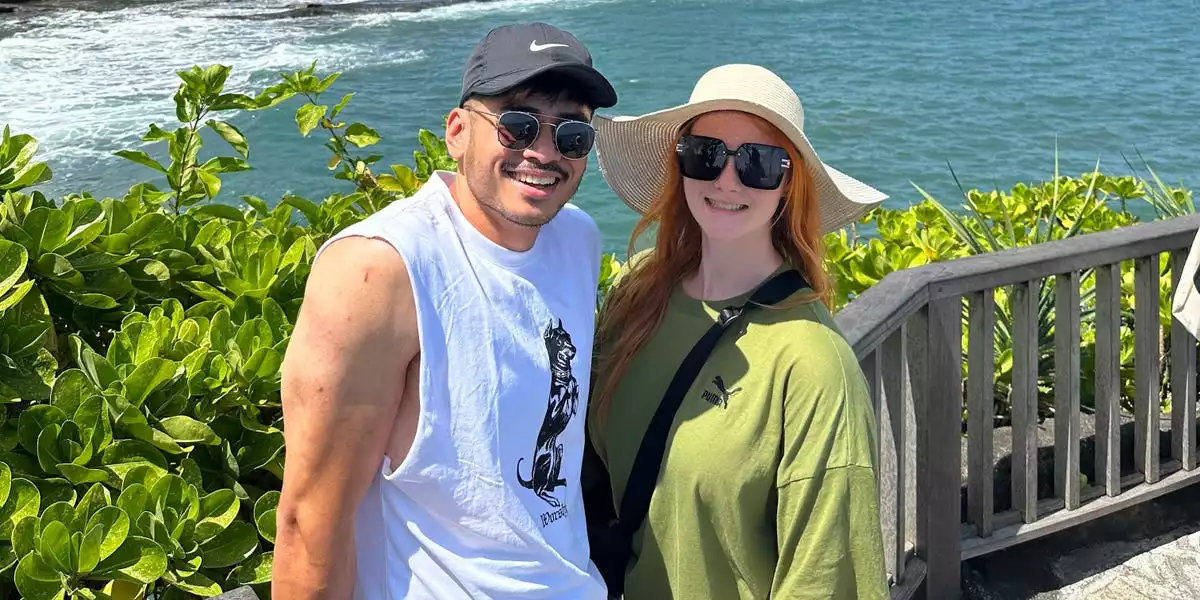

A high-stakes getaway that mirrors modern risk calculus in consumer decision-making
Chelsea Tobin and her partner, Noriel, choosing an eight-day trip to Bali just four months into their relationship reads, on the surface, like a romantic leap. From a business and technology lens, it also resembles a familiar pattern: a calculated, early-stage bet with asymmetric upside. The perceived risks were clear—distance, cost, and the uncertainty of spending extended time together before a relationship has fully stabilized. Yet the decision to bypass a closer, cheaper New Zealand alternative underscores a more nuanced reality shaping today’s travel economy: consumers increasingly optimize for value density, not just price.
Bali’s appeal, as described, reflects a form of destination arbitrage—where currency differentials and local cost structures allow travelers to purchase a “premium-feeling” experience at a comparatively modest outlay. In an era where many households face pressure from inflation and plateauing discretionary income, the logic is less about extravagance and more about maximizing return on experience (RoX): the emotional, relational, and memory value generated per dollar spent.
This is the same behavioral logic that has propelled growth in the broader experience economy, where spending shifts away from durable goods and toward moments that signal meaning, identity, and connection. For travel brands and platforms, the implication is direct: the winning proposition is not merely affordability, but perceived richness—the sense that a trip delivers a concentrated dose of novelty, beauty, and story.
—
Co-planning as co-creation: the relationship blueprint that travel-tech is trying to productize
What makes this Bali trip especially instructive is not the destination, but the method: Tobin and Noriel co-designed the journey end-to-end, from flights and lodging to daily structure. That collaborative approach is increasingly central to how modern consumers want to travel—and it aligns with a major product trend in travel-tech: moving from static packages toward modular, personalized, jointly authored itineraries.
Their planning process demonstrates several dynamics that platforms are actively trying to encode into software:
- Preference reconciliation: Two people rarely want the exact same trip. The ability to negotiate “must-dos” versus “nice-to-haves” is effectively a human version of multi-stakeholder optimization.
- Shared narrative building: By blending joint excursions with individual priorities (such as photo shoots or cultural performances), they created a trip that served both the relationship and the individual—an important distinction for customer satisfaction and repeat travel intent.
- Trust through transparency: Open communication about expectations and constraints reduced the likelihood of conflict. In digital terms, this resembles the role of reviews, verified listings, and clear cancellation policies in lowering perceived risk.
For the industry, this points to a clear opportunity: collaborative interfaces that allow couples, friends, and groups to plan together in real time—sharing shortlists, voting on options, tracking budgets, and building itineraries that reflect multiple profiles. The next generation of AI itinerary tools will likely differentiate not by producing a single “best plan,” but by mediating between competing preferences with explainable trade-offs: cost vs. convenience, rest vs. activity, spontaneity vs. structure.
—
Agile pacing and the economics of downtime: why “buffer time” is becoming a premium feature
A subtle but commercially significant element of the story is how the couple structured their days to include intentional downtime alongside shared activities. This is more than a personal compatibility tactic; it reflects a growing recognition across tourism and hospitality that travel fatigue is a demand-shaping constraint.
Their approach resembles agile project management applied to leisure: break the trip into manageable “sprints,” preserve autonomy, and reduce friction by designing recovery time into the system. In practice, this can look like:
- Morning routines or solo time to maintain personal equilibrium
- Flexible blocks that absorb delays, mood shifts, or weather changes
- Alternating intensity (big excursions followed by lighter days)
From a market standpoint, downtime is no longer dead space—it is increasingly part of the product. Wellness tourism has expanded this idea into retreats and spa-centric travel, but the broader shift is that even mainstream travelers want itineraries that feel sustainable, not exhausting. This opens room for services that operationalize rest: hotels that design for quiet recovery, apps that recommend low-effort local experiences, and platforms that proactively flag overpacked schedules.
For technology leaders, the next frontier may be mental-health-aware travel design—systems that infer when a traveler might benefit from a slower cadence, then suggest alternatives that preserve satisfaction without sacrificing the sense of discovery.
—
Strategic signals for executives: collaboration, personalization, and relationship-centric experiences
While Tobin and Noriel’s Bali trip is a personal narrative, it maps cleanly onto broader strategic themes relevant to business leaders across sectors. The core lesson is that shared experiences are increasingly treated as high-value assets, and the mechanisms that make them work—co-design, autonomy, pacing—are transferable to organizational contexts.
Several implications stand out:
- For business and HR leaders: The same co-creation principles can strengthen corporate offsites, client trips, and team retreats—especially when schedules include structured collaboration *and* protected personal time.
- For travel and hospitality operators: Tools that support co-booking, shared itinerary management, and transparent budget tracking can raise conversion rates and increase average booking value by capturing multi-person demand more effectively.
- For product and AI executives: Personalization is shifting from “one user, one plan” to multiple users, one shared outcome—a harder problem that rewards platforms capable of negotiating preferences, constraints, and emotional goals.
Ultimately, the Bali decision worked because the couple treated the trip less like a test of endurance and more like a jointly managed system—balancing ambition with realism, intimacy with independence, and cost with value. That blend is increasingly what modern consumers expect from travel itself: not a prepackaged escape, but a co-authored experience that feels both efficient and deeply human.

 By
By
 By
By
 By
By
 By
By



 By
By







