

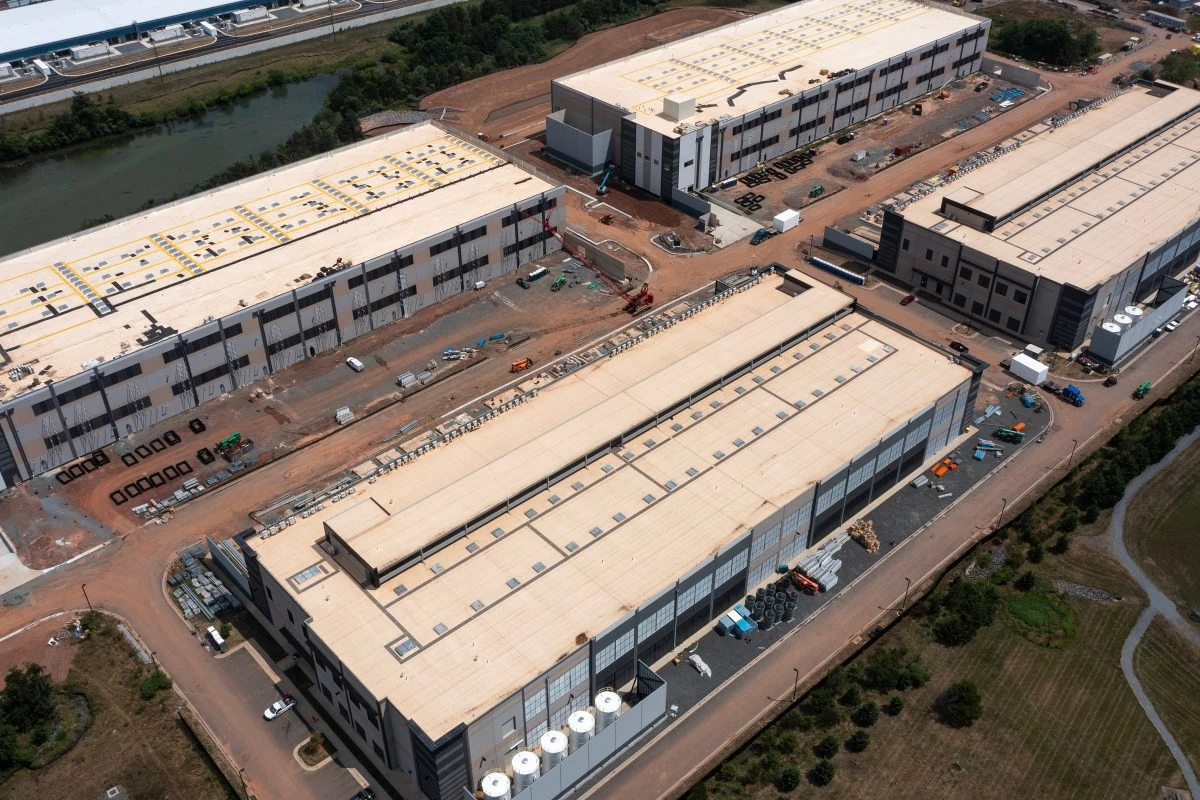

A rare AWS cooling failure exposes the physical limits behind “infinite” cloud
Amazon Web Services’ cooling-system failure at a major Northern Virginia data-center hub is notable not merely because it disrupted a hyperscale provider, but because it punctures a persistent market assumption: that cloud capacity is effectively elastic and insulated from the constraints of physical infrastructure. When engineers were forced to throttle services and reroute workloads to neighboring facilities, the episode revealed how quickly a localized thermal event can translate into broad customer impact—even in architectures designed around redundancy.
That high-profile platforms such as Coinbase saw core services go offline underscores the operational reality that cloud availability is ultimately bounded by power delivery, heat rejection, and facility-level fault domains. AWS reportedly brought immediate overheating under control by Friday morning, yet lingering timeouts and degraded performance persisted without a definitive recovery timeline. For customers, that “tail risk” matters: the most damaging outages are often not the initial failure, but the prolonged period of partial impairment—where systems are technically up, yet functionally unreliable.
Cooling failures are described by experts as extraordinarily rare in modern Tier-1 environments, which is precisely why this incident will be studied closely. The rarity does not reduce the risk; it reframes it. In a world where AI workloads push sustained high utilization, the probability distribution shifts toward fewer but more consequential events—especially when thermal margins narrow under extreme load and ambient conditions.
What the incident suggests about modern data-center engineering and cloud resilience
At a technical level, the outage highlights a structural tension in hyperscale operations: compute density is rising faster than the industry’s tolerance for thermal instability. Traditional air-based cooling can be engineered to impressive performance, but it faces hard limits when confronted with concentrated heat loads, equipment failures, or unfavorable environmental conditions. A single-zone design—or a design with insufficient compartmentalization—can allow a localized issue to cascade into throttling decisions that ripple outward to customers.
Key engineering and operational takeaways emerging from the event include:
- Cooling architecture is now a first-order reliability variable
– Air cooling, while mature, can become brittle at the edge of performance envelopes.
– The market is accelerating toward liquid cooling, including closed-loop systems and, for certain high-density racks, immersion or direct-to-chip approaches.
– The differentiator is not only the cooling medium, but real-time thermal telemetry and automated response that prevents hotspots from becoming service-impacting incidents.
- Redundancy is only as strong as the failure domains it anticipates
– AWS’s multi–Availability Zone model is designed to isolate failures, yet throttling within a major hub can still erode the “always-on” promise if workloads are not architected to fail over cleanly.
– Many enterprises treat multi-AZ as a default safety net, but true resilience often requires multi-region design, careful dependency mapping, and tested recovery playbooks.
- Traffic orchestration is becoming a competitive capability
– Rerouting workloads is not a simple switch; it depends on capacity headroom, network paths, and application state.
– Static routing and conventional load balancing may be insufficient in a world where thermal risk can emerge quickly.
– The next frontier is AI-assisted traffic orchestration that anticipates constraints—thermal, power, or network—and shifts load preemptively rather than reactively.
This is also a Service-Level Agreement (SLA) moment. “Five nines” availability is a powerful marketing shorthand, but the practical path to that standard increasingly involves hybrid continuity strategies: portable containerized workloads, disciplined disaster recovery, and selective use of edge or on-prem deployments for the most latency- and uptime-sensitive functions.
The business fallout: downtime economics, risk allocation, and cloud strategy recalibration
For sectors like finance and crypto markets, downtime is not just lost transactions—it can become a trust event. When a trading platform goes offline, the consequences can include customer attrition, market dislocation, and heightened scrutiny from regulators and auditors. Even if the root cause is upstream infrastructure, the accountability often lands on the service operator in the eyes of customers.
The economic and strategic implications are likely to show up in several boardroom conversations:
- Downtime cost modeling will get sharper
– Enterprises will revisit assumptions about cloud concentration risk, quantifying the revenue and operational exposure tied to a single provider or region.
– Underwriters may reprice policies for mission-critical digital operations, particularly in high-volatility sectors, as cloud-infrastructure fragility becomes more legible.
- Multi-cloud and partial repatriation gain momentum—selectively
– Not every workload justifies multi-cloud complexity, but high-impact services may.
– Some organizations will explore partial repatriation to private data centers or colocation for control over failure domains, especially where regulatory expectations demand demonstrable resilience.
- Cloud competition shifts from capacity to proof of resilience
– AWS, Microsoft Azure, and Google Cloud already compete on performance and breadth of services; increasingly, they will compete on verifiable operational resilience and sustainability metrics.
– New entrants and specialized operators—particularly those building micro-data centers or regionally diversified footprints—may capture niche workloads that prioritize geographic risk dispersion.
For CFOs, the calculus is evolving: balancing capex-heavy control (private infrastructure) against opex-driven flexibility (cloud) now requires factoring in energy volatility, insurance pricing, and outage externalities—not just unit compute cost.
The heat-and-carbon paradox: AI growth, thermal risk, and ESG pressure converge
The incident also lands amid intensifying scrutiny of the data-center sector’s environmental footprint. Estimates projecting up to 44 million metric tons of CO₂ emissions by 2030—driven in part by AI adoption—frame a paradox: data centers are both vulnerable to rising temperatures and contributors to the conditions that make cooling harder.
This creates a feedback loop with real policy and market consequences:
- Regulators and utilities are moving from observation to constraint
– Expect more attention to Power Usage Effectiveness (PUE), water usage effectiveness (WUE), and localized thermal-impact assessments.
– Grid interconnection approvals and power pricing may increasingly hinge on efficiency commitments and load-shaping capabilities.
- Sustainable design becomes operational risk management
– Waste-heat reuse (e.g., district heating), renewable power purchase agreements, and next-generation cooling fluids are not just ESG signaling—they can reduce exposure to energy price spikes and thermal instability.
– Operators that can document decarbonization and efficiency improvements may gain a procurement advantage as enterprise buyers embed ESG requirements into vendor selection.
AWS’s Northern Virginia disruption is a reminder that the cloud is not an abstraction; it is an industrial system where thermodynamics, grid economics, and software architecture meet. As AI pushes compute density higher, leadership in cloud will increasingly be measured by who can deliver not only more capacity, but more predictable capacity under stress, with resilience and sustainability engineered into the same blueprint.

 By
By
 By
By

 By
By
 By
By

 By
By
 By
By







