


A $2,000 Catalyst and the Quiet Power of Experiential Learning
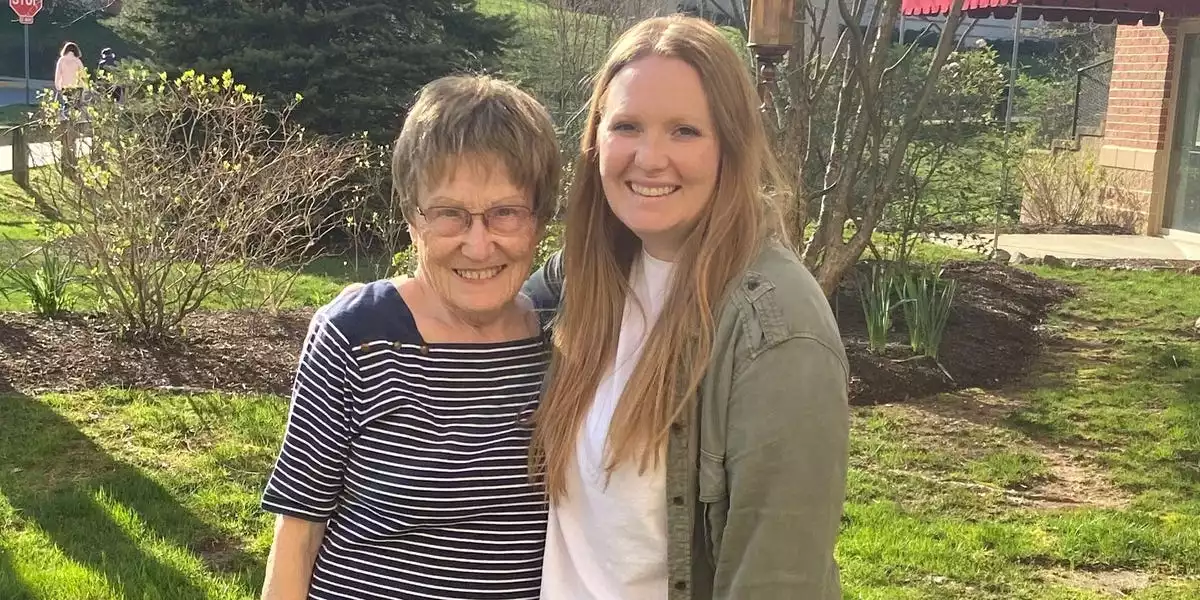
Taylor Beal’s story begins not with a grant, a district initiative, or a venture-backed education platform, but with a $2,000 gift from her grandmother—a retired school librarian whose own “late-blooming” travel life signaled that curiosity does not expire with age or career. That modest sum funded a 14-day, five-country European tour immediately after Beal earned her teaching degree, and the trip’s defining moments—such as the Anne Frank House in Amsterdam and the Globe Theatre in London—did what the best learning technologies aspire to do: they made knowledge *stick*.
For education leaders and business stakeholders, the significance is less sentimental than strategic. Beal’s experience illustrates how firsthand encounters with history, literature, and place can become a durable instructional asset—one that scales beyond a single traveler when translated into curriculum, school culture, and ultimately an institutional program. Her subsequent move—integrating observations into classroom teaching and co-founding her school’s first international travel program—shows how individual exposure can evolve into organizational capability.
In an era dominated by dashboards, devices, and AI-enabled personalization, this narrative re-centers a deceptively simple proposition: the world itself can function as high-impact educational infrastructure.
Travel as “Analog Technology” in a Digital-First Classroom
Beal’s approach reframes travel as a form of analog technology—a “hardware layer” of learning built from sensory context, spatial memory, and emotional salience. Standing inside a historic site or navigating a foreign city forces students to synthesize information in real time: reading the environment, interpreting cultural cues, and connecting abstract lessons to lived reality. These are not soft outcomes; they are measurable competencies tied to critical thinking and long-term retention.
This does not position travel against educational technology; it positions travel as the missing complement to it. While virtual reality field trips, remote exchanges, and interactive simulations are improving rapidly, they still struggle to replicate the cognitive imprint created by physical presence—what educators often describe as the “I was there” effect. The more forward-looking model is hybrid: place-based learning amplified by digital tools.
High-performing programs increasingly pair travel with lightweight but powerful EdTech layers, including:
- E-portfolios and reflective journaling to convert experience into assessable learning artifacts
- Geotagged video and photo documentation to anchor insights to specific sites and contexts
- Real-time blogging or classroom livestreams to extend impact beyond the traveling cohort
- AI-guided reflection prompts that help students connect observations to standards-based outcomes
For schools and districts, the opportunity is to treat travel not as an extracurricular luxury, but as a structured experiential learning platform—one that can feed data back into curriculum design and student development plans.
The Business of “Edutourism”: Demand, Costs, and Competitive Advantage
Beal’s program sits within a broader market reality: post-pandemic travel has rebounded, and niche segments like educational travel and teacher-led student tours are showing resilient demand. Families and institutions are increasingly willing to pay for experiences that deliver both personal growth and academic relevance—particularly when travel is framed as cultural literacy, leadership development, and real-world learning.
Yet the economics are tightening. Schools face a familiar set of pressures:
- Airfare volatility and lodging inflation that can quickly erode affordability
- Exchange-rate swings that complicate budgeting for multi-country itineraries
- Equity constraints, where participation risks becoming stratified by income
Programs that endure tend to behave like disciplined operators, not ad hoc trip planners. They negotiate:
- Volume discounts and multi-year vendor relationships
- Group-travel cooperatives across schools or districts
- Alumni and community networks for homestays, cultural exchanges, or local sponsorships
From a human capital lens, the return on investment can be substantial. Students who build global competencies—cultural intelligence, adaptability, communication across difference—often carry those advantages into higher education and the labor market. For institutions, a credible travel program can also strengthen brand positioning, supporting:
- Student recruitment and retention through differentiated offerings
- Teacher attraction and professional development by empowering educators as program leaders
- Community goodwill when programs are designed with access and purpose in mind
In business terms, experiential learning is not merely enrichment; it is a talent pipeline strategy aligned with the needs of multinational employers and innovation-driven economies.
Governance, Equity, and the Next Wave of Place-Aware Learning Systems
Scaling international travel in education is ultimately a governance challenge as much as a pedagogical one. Institutions must operationalize a duty-of-care framework that matches the complexity of global mobility. That means robust protocols—insurance, emergency response planning, and digital check-in systems—alongside clear accountability structures for staff and vendors.
Just as important is the ethical dimension. Education travel programs increasingly face scrutiny through an ESG lens: carbon footprint, community impact, and cultural respect. The strongest models emphasize:
- Low-impact tourism choices and responsible itinerary design
- Local community engagement that avoids extractive “look-and-leave” dynamics
- Intercultural preparation so students travel with humility, not entitlement
Equity remains the defining test. Not every school can fund international travel, and not every family can afford it. Here, technology can serve as a bridge rather than a substitute—through VR partnerships, GIS-based storytelling, streaming documentary collaborations, and remote exchanges that bring “living classrooms” to students who cannot board a plane. Done well, these tools can widen access while preserving the aspirational goal of eventual physical travel.
Looking ahead, the convergence is clear: travel, learning science, and AI will increasingly merge into immersive data ecosystems—platforms that integrate translation tools, augmented-reality site overlays, student travel logs, and analytics-driven reflection into a continuous learning loop. The most competitive schools will design curricula that are explicitly place-aware, linking pre-trip simulations, in-country inquiry, and post-trip project-based assessment into a coherent academic arc.
Beal’s grandmother’s gift is a reminder that systemic change sometimes begins with a small, targeted investment—and that the most future-ready education may come from pairing tomorrow’s technology with the oldest learning method of all: going there, seeing it, and returning changed.

 By
By
 By
By
 By
By
 By
By
 By
By


 By
By







