
A precision-strike doctrine collides with data decay and institutional process risk
Satellite and drone imagery now circulating among investigators has reframed what was initially treated as a conventional strike assessment into a far more consequential failure: a U.S. Tomahawk strike, reportedly aimed at a presumed military target, instead hit a segregated school complex in Iran, killing at least 175 civilians—most described as elementary-school girls. The emerging picture is not merely one of tragic misidentification, but of systemic fragility in the modern targeting stack, where legacy coordinates, compressed decision cycles, and software-mediated workflows can combine into catastrophic error.
Preliminary U.S. Central Command findings reportedly point to outdated target coordinates supplied by the Defense Intelligence Agency, suggesting a breakdown in the most basic prerequisite of precision engagement: data freshness. Imagery dating back to 2013 is said to show the school clearly separated from adjacent military infrastructure—an uncomfortable detail because it implies the error may not have been subtle, but procedural: the wrong reference data persisted long enough to become operationally “true.”
This is the strategic paradox of contemporary precision warfare. The weapons are increasingly accurate; the information supply chain that tells them where to go is often less so. When the kill chain is optimized for speed, the weakest link is frequently not the missile’s guidance system, but the human and institutional machinery that validates the target’s identity, location, and civilian risk profile.
Inside the geospatial “kill chain”: where AI decision support can amplify—rather than reduce—error
The ongoing probe into whether AI-based tools played any role has drawn particular attention to Anthropic’s chatbot Claude, reportedly integrated into the National Geospatial-Intelligence Agency’s Maven Smart System. The Pentagon has not confirmed AI involvement, but the mere possibility has reignited a debate that defense technologists have been circling for years: what happens when machine-assisted analysis becomes a default layer in lethal decision-making?
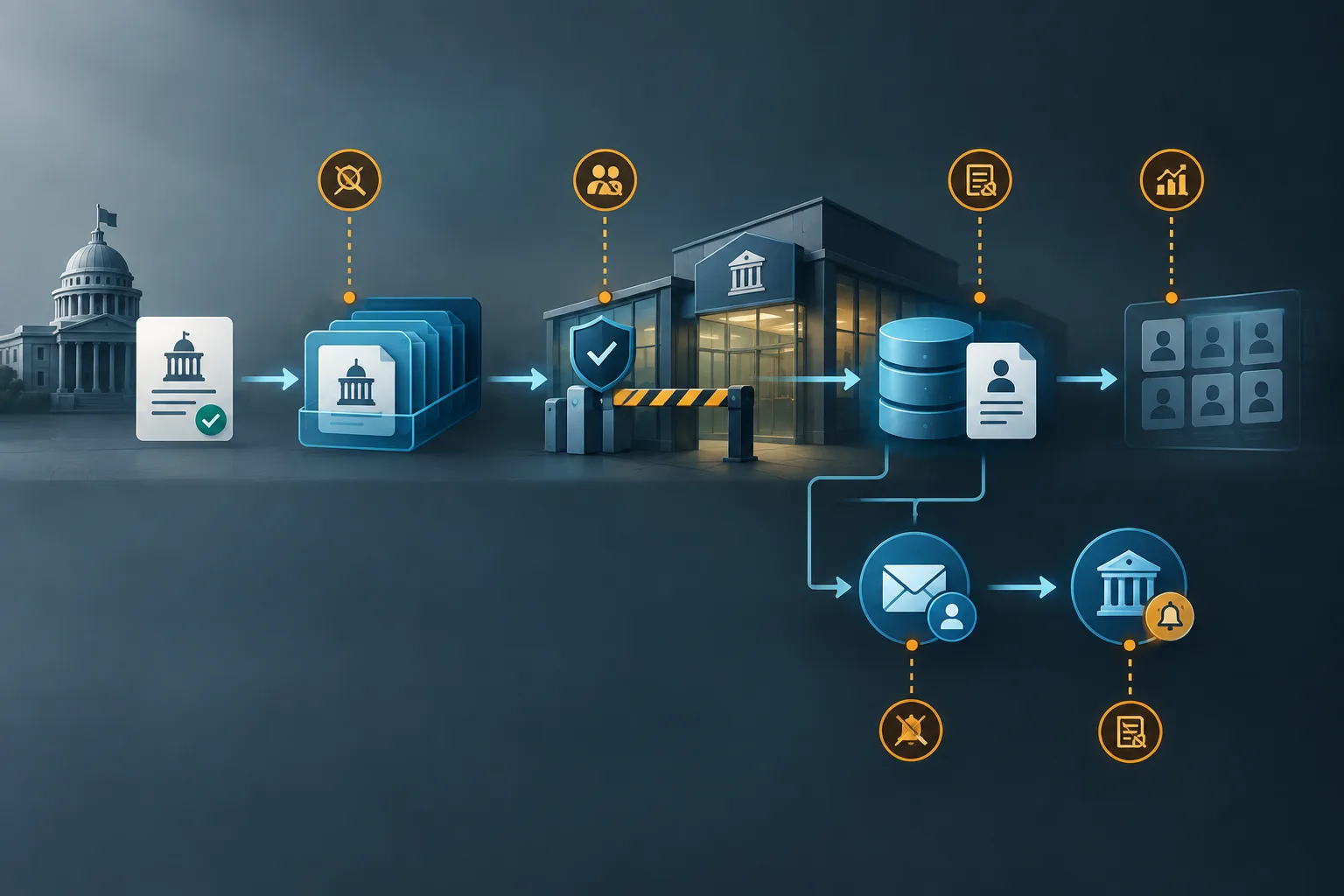
At a technical level, systems like Maven are designed to accelerate geospatial intelligence fusion—object recognition, change detection, and prioritization across vast imagery streams. In theory, such tooling should help analysts notice discrepancies between archival coordinates and current ground truth. Yet the incident highlights several structural vulnerabilities that can persist even in advanced AI-enabled environments:
- Data-freshness failure modes: If coordinate sets, map layers, or imagery baselines are not continuously validated with timestamps and provenance metadata, AI can “optimize” analysis on top of stale inputs. The result is faster processing of the wrong reality.
- Automation bias and “analysis complacency”: When AI outputs arrive with the sheen of computational authority, operators may unconsciously reduce cross-checking—especially under time pressure. This is not a flaw unique to large language models (LLMs); it is a predictable human-factors risk in any decision-support system.
- Opaque reasoning paths: LLMs can be powerful interfaces for summarizing intelligence, drafting target packets, or querying databases. But their strengths—fluency and compression—can also mask uncertainty, missing context, or misaligned assumptions unless the workflow forces explicit verification steps.
- Toolchain complexity: Modern targeting is rarely a single system. It is a mesh of sensors, databases, annotation tools, chat interfaces, and command workflows. Accountability becomes harder when the “answer” is an emergent product of many components rather than a single analyst’s judgment.
The central question investigators will likely pursue is not simply whether an AI tool was “involved,” but how it was used: Was it advisory or determinative? Did it surface confidence levels? Did it log prompts, outputs, and human overrides? Did it flag anomalies between historical imagery and current separation of civilian and military structures? Those details will shape whether this becomes a cautionary tale about AI specifically—or about the broader modernization of intelligence workflows without commensurate governance.
Defense procurement meets AI supply-chain reality: provenance, auditing, and liability pressure
The controversy also lands squarely in the domain of defense procurement and AI vendor due diligence. The summary notes that Anthropic’s models were previously classified by the Trump administration as potential security liabilities, yet integration reportedly continued. Regardless of the political context, the underlying issue is enduring: militaries want commercial innovation at commercial speed, but lethal operations demand defense-grade assurance.
Expect the incident to intensify scrutiny across three procurement fronts:
- Model provenance and update cadence: Defense users will face pressure to document what model version was deployed, what training and fine-tuning controls existed, and how updates were validated. In regulated industries, “what changed” is often as important as “what works.”
- Continuous monitoring as a budget line item: AI adoption is frequently sold as efficiency. This episode underscores that safe deployment requires ongoing costs—cybersecurity, red-teaming, data validation, and independent auditing—rather than a one-time integration.
- Insurance, financing, and reputational risk for AI startups: Public scrutiny can translate quickly into higher compliance burdens. Investors and insurers may demand evidence of safety testing, bias mitigation logs, adversarial robustness results, and incident-response readiness—especially for firms pursuing defense contracts.
A likely market outcome is the acceleration of “AI assurance” offerings: third-party verification, continuous evaluation under live conditions, and standardized reporting that can survive legal and congressional scrutiny. For vendors, the competitive edge may shift from raw model capability to auditability, traceability, and governance-by-design.
Strategic fallout: legitimacy, coalition trust, and the global race toward opaque autonomy
Civilian casualties at this scale—particularly involving schoolchildren—carry consequences that extend beyond the immediate operational theater. They erode the credibility of precision-strike narratives, provide adversaries with potent propaganda, and harden political positions that make de-escalation harder. Even if the root cause is ultimately confirmed as outdated coordinates rather than AI, the episode still signals that high-tech warfare can fail in low-tech ways—and that the human cost of those failures is strategically compounding.
Three geopolitical dynamics stand out:
- Erosion of moral authority: Precision is not only a technical claim; it is a legitimacy claim. When it collapses, so does the diplomatic leverage it supports.
- Coalition cohesion under accountability demands: Allies sharing intelligence and target-nomination protocols increasingly expect transparent post-strike assessments and clear chains of responsibility. Ambiguity—especially around AI-enabled workflows—can strain interoperability and trust.
- Arms-race incentives: If AI-assisted targeting remains opaque and under-governed, rivals may accelerate deployments with fewer constraints, increasing crisis instability and the risk of miscalculation.
What this incident ultimately exposes is a modern battlefield truth: speed and precision are not substitutes for verification. Whether the decisive failure was stale geospatial data, process shortcuts, or automation bias, the remedy points in the same direction—hard requirements for data freshness, mandatory human adjudication with documented sign-off, defense-grade AI supply-chain standards, and rigorous red-team testing that treats the kill chain as an end-to-end system rather than a collection of tools. The credibility of next-generation military AI will be measured less by what it can do in ideal conditions than by how reliably it prevents irreversible mistakes when conditions are not.

 By
By
 By
By


 By
By
 By
By

 By
By