
A personal anxiety that mirrors a macro trend in cognitive health
Holly Rizzuto Palker’s story begins with a familiar modern fear: a moment of forgetfulness that quickly escalates into a question about identity, aging, and future independence. Her decision to seek clinical assessment—ultimately ruling out early-onset Alzheimer’s—reflects a broader shift in how consumers approach brain health: not as a distant geriatric concern, but as a midlife performance variable shaped by stress, attention, hormones, sleep, and lifestyle.
The clinical framing matters. Palker’s lapses were attributed not to neurodegeneration, but to a more nuanced mix—ADHD traits, perimenopausal cognitive changes, and “autopilot” fatigue. That distinction is increasingly central to the business and technology landscape. The market is moving beyond binary outcomes (“dementia” vs. “fine”) toward a spectrum model where people want to understand *why* cognition feels different and what can be done about it—without immediately medicalizing the experience.
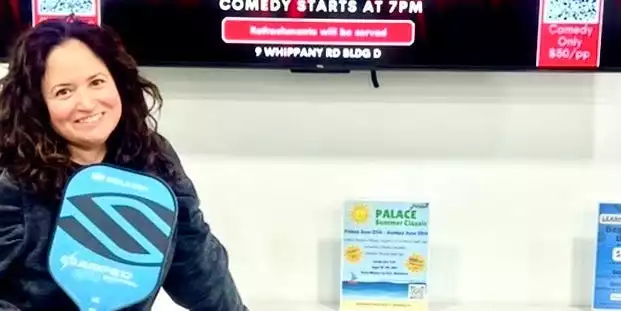
This is where her response becomes strategically revealing. Rather than relying on a single “brain training” app or supplement stack, she assembled a multimodal regimen—stand-up comedy, drumming, tap dancing, card play, and brain games—designed to keep her mind challenged, socially engaged, and emotionally regulated. Her approach aligns with emerging research on neuroplasticity and cognitive reserve, but it also signals a consumer preference that companies should not overlook: people want interventions that feel like living, not like treatment.
Rhythm, movement, and humor as “experiential neuroplasticity”
Palker’s embrace of drumming and tap dancing sits at the intersection of neuroscience and experience design. Rhythm and coordinated movement recruit distributed brain networks—attention, timing, auditory processing, motor planning, error correction, and memory. While the science is still evolving in terms of causal claims and standardized protocols, the direction of travel is clear: music and dance are being reinterpreted as cognitive training modalities, not merely hobbies.
From a product and platform perspective, this is fertile ground because it supports both engagement and adherence—two chronic weaknesses of conventional brain-training offerings. Many cognitive apps struggle with long-term retention because the activity feels like homework. By contrast, drumming lessons and adult tap classes deliver:
- High novelty and skill progression, which supports sustained learning loops
- Embodied cognition, where memory and attention are trained through movement
- Social reinforcement, which amplifies motivation and mood benefits
- Measurable performance signals, such as timing accuracy and sequence recall
Her creation of “The Mom Coms,” a comedy show that channels parental anxiety into humor, adds another layer: emotional regulation and stress reduction as cognitive strategy. Stress is not just a wellness issue; it is a cognitive tax that degrades working memory and attention. Comedy—especially performed comedy—requires rapid retrieval, narrative structuring, audience feedback processing, and improvisation under pressure. In business terms, it is a high-cognitive-load creative exercise packaged as entertainment.
This is why the “experience economy” angle is not superficial. Palker’s choices illustrate a consumer demand for cognitive prophylaxis that is intrinsically rewarding—activities that build capability while also delivering identity, community, and joy.
The next wave of brain-health technology: continuous monitoring, women’s midlife, and data trust
Palker’s pathway—symptom recognition, clinical rule-out, lifestyle redesign—highlights a gap that technology is well-positioned to fill: continuous cognitive monitoring and personalized interpretation. Many people do not need a one-time test; they need longitudinal context that can distinguish between attention variability, sleep debt, hormonal transition, and early pathology.
This opens a clear lane for platforms that blend active and passive signals, such as:
- Short, gamified cognitive tasks (memory, attention switching, processing speed)
- Wearable-derived indicators (sleep quality, heart-rate variability, activity patterns)
- Voice and language markers (speech rate, hesitation patterns, lexical diversity)
- Mood and stress tracking tied to life events and cycle/menopause stages
The women’s health dimension is especially commercially and clinically under-addressed. Perimenopausal “brain fog” is widely reported yet often poorly supported by integrated solutions. A credible digital therapeutic or companion platform for women’s midlife cognition could combine:
- Hormone-transition-aware coaching and education
- Telehealth pathways connecting gynecology, neurology, and mental health
- Personalized activity prescriptions (rhythm training, dance, strength, sleep protocols)
- Outcome tracking that respects both clinical rigor and lived experience
However, as cognitive platforms become more intimate—capturing cognitive scores, hormonal context, and potentially genetic risk—data stewardship becomes a competitive differentiator. Trust will not be a branding accessory; it will be a market gate. Companies that can articulate transparent governance, minimize data exposure, and pursue clinical validation will be better positioned to partner with health systems, employers, and insurers.
Where the “silver economy” meets scalable, hybrid cognitive wellness
Palker’s regimen also maps neatly onto the growth logic of the silver and wellness economy: aging demographics, rising health literacy, and a willingness to spend on prevention that feels enriching. Importantly, her choices are not purely digital. They are “phygital”—a blend of in-person classes, community interaction, and at-home reinforcement.
That hybrid structure points to scalable business models:
- Subscription bundles combining local classes (dance, drumming) with digital practice modules
- Corporate wellness offerings that treat cognition as productivity infrastructure (stress, focus, creativity)
- Franchiseable formats like comedic wellness nights or “laugh labs” that normalize anxiety and build community
- Partnership ecosystems linking arts institutions, neuroscience labs, and health providers to validate outcomes
The strategic north star is personalization. The brain-health market is crowded with generic claims; differentiation will come from systems that adapt to the individual—calibrating rhythm complexity, dance sequences, and cognitive tasks to a user’s baseline, motivation profile, and daily energy patterns.
Palker’s story is ultimately less about fear of decline than about a new template for longevity: cognitive health as a practiced skill, built through rhythm, movement, laughter, and social play—an approach that consumers will increasingly expect technology and wellness brands to support with rigor, empathy, and measurable value.

 By
By
 By
By

 By
By


 By
By
 By
By