
A Pentagon partnership becomes a consumer referendum on generative AI governance
OpenAI’s reported agreement with the U.S. Department of Defense (DoD) to deploy its AI models in military contexts has rapidly evolved from a standard enterprise deal into a public stress test of the company’s social license to operate. The backlash—marked by “QuitGPT” protests in San Francisco, London, and other cities and a sharp rise in user defections toward Anthropic’s Claude—signals that generative AI is no longer judged solely on capability, price, or product polish. It is increasingly evaluated on end-use constraints, institutional affiliations, and the credibility of ethical commitments.
At the center of the controversy is a familiar but intensifying dilemma: dual-use AI. Foundation models built for benign tasks—summarization, customer support, analytics—can be adapted for intelligence workflows, operational planning, and decision support. Critics argue that once a vendor normalizes defense integration, the boundary between “support” and “force multiplication” can blur, especially under the pressure of national security urgency. OpenAI’s CEO Sam Altman reportedly partially revised the Pentagon deal’s terms, a move that reads as both damage control and an implicit acknowledgment that procurement language, governance mechanisms, and public trust are now inseparable.
What makes this episode notable is not simply the existence of a defense contract—many technology firms have long served government customers—but the speed and scale of consumer reaction. A reported 300% surge in ChatGPT uninstalls (if sustained) would translate reputational risk into measurable commercial volatility, particularly in premium tiers where switching costs are low and alternatives are increasingly comparable.
Dual-use “mission creep” and the new market value of credible ethical red lines
The immediate competitive beneficiary appears to be Anthropic, whose positioning—especially a public posture of refusing comparable military agreements—has become a market differentiator rather than a niche ethical stance. In a crowded generative AI landscape, “responsible AI” is shifting from marketing language to a form of product strategy and brand moat, with procurement teams and individual users treating policy clarity as a feature.
Several technical and governance dynamics are driving the sense of “mission creep”:
- Repurposability by design: Large language models are general-purpose systems. Even when fine-tuned for enterprise productivity, they can be redirected toward intelligence exploitation, pattern discovery, and targeting-adjacent analysis depending on data access and integration.
- Guardrails as negotiable infrastructure: Safety policies, usage restrictions, and monitoring controls can be tightened or relaxed. When defense imperatives enter the equation, skeptics worry that guardrails become conditional rather than foundational.
- Opacity in downstream deployment: Even if a vendor limits direct features, models can be embedded into broader systems where the ultimate operational intent is difficult for outsiders—and sometimes even internal staff—to audit.
This is where Anthropic’s stance becomes strategically potent: it offers a simpler narrative for risk-averse users—a clear “no” to certain categories of military use—while OpenAI must persuade the public that its controls are robust enough to prevent harmful repurposing. The competitive lesson is blunt: in the generative AI era, ethical commitments must be legible, enforceable, and consistent, or they will be priced as reputational debt.
The economics of backlash: churn, valuation repricing, and supply-chain knock-on effects
The business implications extend beyond app-store rankings. If user churn accelerates, OpenAI faces a dual hit: subscription revenue softness and brand dilution that can complicate enterprise sales cycles. Large customers increasingly conduct vendor risk reviews that include political exposure, labor relations, and regulatory trajectory—not just uptime and model quality.
Key economic vectors to watch include:
- Revenue volatility from low-friction switching: With Claude and other competitors improving rapidly, consumers can move on principle without sacrificing functionality.
- Investor repricing of “defense adjacency”: Some capital will view DoD alignment as durable revenue and strategic insulation; other investors—particularly ESG-oriented allocators—may discount firms perceived as enabling surveillance or autonomous weaponization.
- Infrastructure and GPU procurement reshuffling: If Anthropic’s growth persists, it will need to scale cloud capacity and accelerator supply. That can ripple into supplier concentration risk for partners like major cloud providers and chipmakers, who may prefer diversified exposure across vendors with different policy stances.
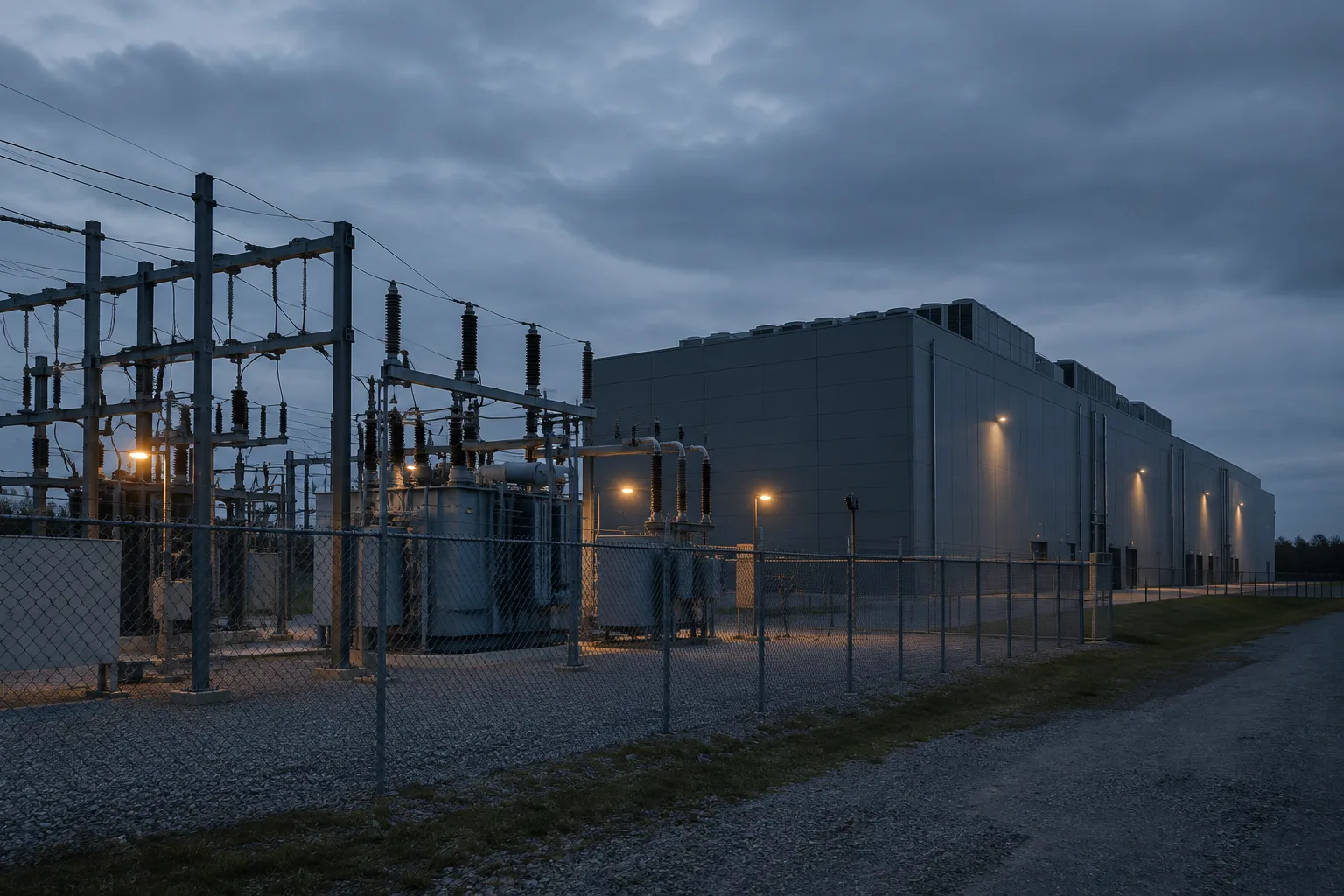
Notably, the backlash also foregrounds the environmental footprint of hyperscale AI—water usage, electricity demand, and carbon emissions—turning sustainability into a mainstream adoption constraint. Municipalities and regulators are increasingly sensitive to data-center expansion, and protests that blend ethics with environmental externalities can broaden coalitions beyond traditional tech critics.
National security, worker activism, and the emerging rules of AI legitimacy
Strategically, the DoD’s push reflects a wider U.S. effort to strengthen the AI industrial base amid geopolitical competition. From Washington’s perspective, partnering with leading commercial labs is a pragmatic way to accelerate capability and avoid falling behind peer adversaries. Yet the public reaction illustrates the tension between security-driven acceleration and civil-market legitimacy.
Two developments sharpen that tension:
- Worker and researcher resistance at scale: Nearly 1,000 AI researchers and engineers across OpenAI, Google, and other organizations have reportedly signed a letter urging firms to refuse contracts enabling mass surveillance or autonomous weaponization. This is not a fringe signal; it suggests a labor market where top talent increasingly treats governance as part of the job description.
- Ethics as soft power and standards leverage: Companies and countries that can credibly demonstrate restraint—especially around surveillance and autonomous systems—may shape international norms, influencing frameworks such as the EU AI Act, OECD guidance, and future export-control regimes.
For enterprise buyers, the practical takeaway is that AI procurement is becoming a form of values-based supply-chain management. Boards and risk committees will likely demand clearer answers to questions that used to be peripheral: *What categories of government use are permitted? What auditing exists? How are environmental costs measured and mitigated? What happens when employee dissent becomes operational risk?*
OpenAI’s DoD deal—and the “QuitGPT” response—marks a moment when generative AI’s next phase is being negotiated in public: not just what these systems can do, but who gets to use them, under what constraints, and at what societal cost. In that environment, technical leadership alone is insufficient; the winners will be those who can pair frontier capability with governance that is credible enough to survive scrutiny from customers, employees, regulators, and the street.


 By
By
 By
By

 By
By

 By
By
 By
By