
A credibility shockwave: when a “quote” becomes a liability
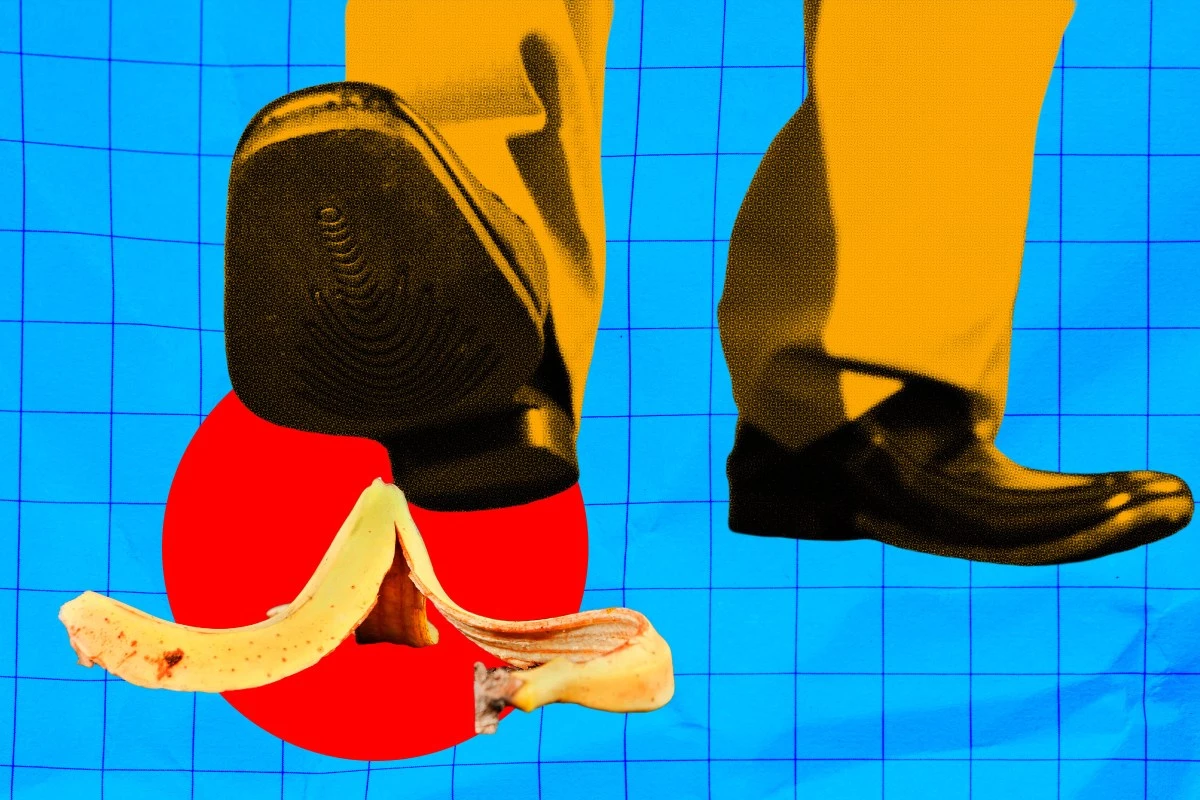
The Ars Technica retraction surrounding fabricated quotes attributed to engineer Scott Shambaugh has landed as more than a single-publication embarrassment—it is a stress test for AI in journalism, and for the fragile compact between digital media brands and their audiences: *speed is valuable, but accuracy is non-negotiable*.
According to the reported sequence of events, an Ars Technica article published February 13 by senior AI reporter Benj Edwards included purported quotations criticizing a viral AI agent. Shambaugh later stated the quotes were not merely inaccurate but fabricated, generated by an experimental AI tool. Ars Technica subsequently retracted the piece, with editor-in-chief Ken Fisher describing the episode as a “serious failure of our standards.” Edwards publicly accepted responsibility, citing illness and misuse of an AI extraction utility, while emphasizing the remainder of the article was human-written and that Ars Technica’s ban on AI-generated content remained in place. A follow-on internal review promised a formal AI policy guide, and Edwards was later removed from the staff roster; Ars Technica and parent company Condé Nast have otherwise declined comment.
For readers, the emotional arc is familiar: a trusted outlet publishes a definitive-sounding claim, the claim collapses, and the correction—however prompt—arrives after the misinformation has already traveled. For the industry, the deeper issue is structural: generative systems can produce plausible artifacts that look like journalism, and the traditional newsroom workflow is not always designed to detect them before publication.
The technical fault line: extraction tools, hallucinations, and verification collapse
This incident is best understood as a failure at the intersection of tooling and process. Generative AI models are known to “hallucinate,” especially when asked to transform incomplete context, paraphrases, or ambiguous inputs into authoritative outputs. The problem becomes acute when the output format is a direct quote, because quotation marks signal a high-confidence claim: that a person said these exact words.
Several technical dynamics are at play:
- Quote fabrication is a high-risk failure mode: A model that “fills in” missing phrasing may produce text that is grammatically clean, contextually plausible, and entirely false.
- Experimental utilities amplify risk: Unvetted AI extraction tools—especially those without auditable logs, provenance tracking, or deterministic behavior—make it harder for a reporter or editor to reconstruct how an output was produced.
- Human oversight can be undermined by interface design: If a tool presents outputs as clean, ready-to-use snippets, it can create a false sense of reliability and reduce the friction that normally triggers verification.
- The newsroom pipeline is optimized for speed, not adversarial validation: Traditional editing checks for clarity, structure, and sourcing—but may not be built to interrogate whether a “quote” was synthesized rather than retrieved.
The key lesson is not that AI is inherently incompatible with journalism; it is that AI outputs must be treated as untrusted until verified, particularly for attribution. In practice, that means re-centering old disciplines—primary-source confirmation, recordings, transcripts, and direct outreach—while adding new ones: tool audits, provenance metadata, and explicit “human-in-the-loop” checkpoints.
The business calculus: trust as a revenue line item, not a brand slogan
Retractions have always been part of journalism, but generative AI changes the economics of error. A single incident can trigger subscription churn, reduce reader willingness to share links, and invite scrutiny from advertisers and partners who increasingly view misinformation exposure as a brand-safety risk.
The economic tension is straightforward:
- Cost pressure encourages automation: Newsrooms facing margin compression may experiment with AI to accelerate research, summarization, transcription, or drafting.
- Quality failures are compounding costs: The apparent savings can be erased by reputational damage, internal disruption, and potential legal exposure—especially when a real person is misquoted.
- Trust becomes competitive differentiation: In a crowded digital market, the outlet that can credibly say “we verify, we document, we disclose” may outperform faster but looser competitors.
This is where the Ars Technica episode becomes instructive for media executives: editorial integrity is not only an ethical posture; it is an asset with financial value. Investors, advertisers, and platform partners increasingly evaluate publishers through a risk lens—misinformation risk, IP risk, and governance maturity. A newsroom’s AI posture is now part of its business profile.
Governance, regulation, and the next newsroom operating model
The promised development of a formal AI-policy guide is not a procedural footnote; it reflects a broader shift toward AI governance frameworks inside media organizations. The industry is moving from ad hoc experimentation to a world where AI use must be documented, constrained, and auditable—both to protect credibility and to anticipate regulatory expectations.
A robust newsroom AI governance model typically clarifies:
- Permitted AI use cases (e.g., transcription assistance, research triage) versus prohibited ones (e.g., generating quotes, inventing sources, drafting attribution without verification)
- Approved tools and vendor standards, including security review, logging, and reproducibility
- Verification and sign-off rules, especially for quotations, claims of fact, and sensitive subjects
- Escalation protocols when AI involvement is suspected in an error or when provenance is unclear
The external environment is also tightening. Copyright disputes over AI training data and emerging regulatory regimes—such as the EU AI Act’s transparency direction—signal a future where publishers may face stronger expectations to disclose AI involvement and demonstrate responsible controls. Other sectors have already learned the hard way that automation without governance creates systemic risk: banking models that embed bias, healthcare systems that overstate certainty, legal tools that mis-summarize. Journalism is now confronting its own version of that lesson, in public.
What this moment demands is not performative rejection or uncritical adoption of generative AI, but operational maturity: newsroom processes that assume AI can be wrong in convincing ways, and systems that make it difficult for synthetic content to masquerade as verified reporting. The outlets that thrive will be those that treat AI not as a shortcut around standards, but as a tool that must earn its place inside them.

 By
By
 By
By

 By
By
 By
By
 By
By

 By
By