
A defense contract becomes a referendum on AI legitimacy
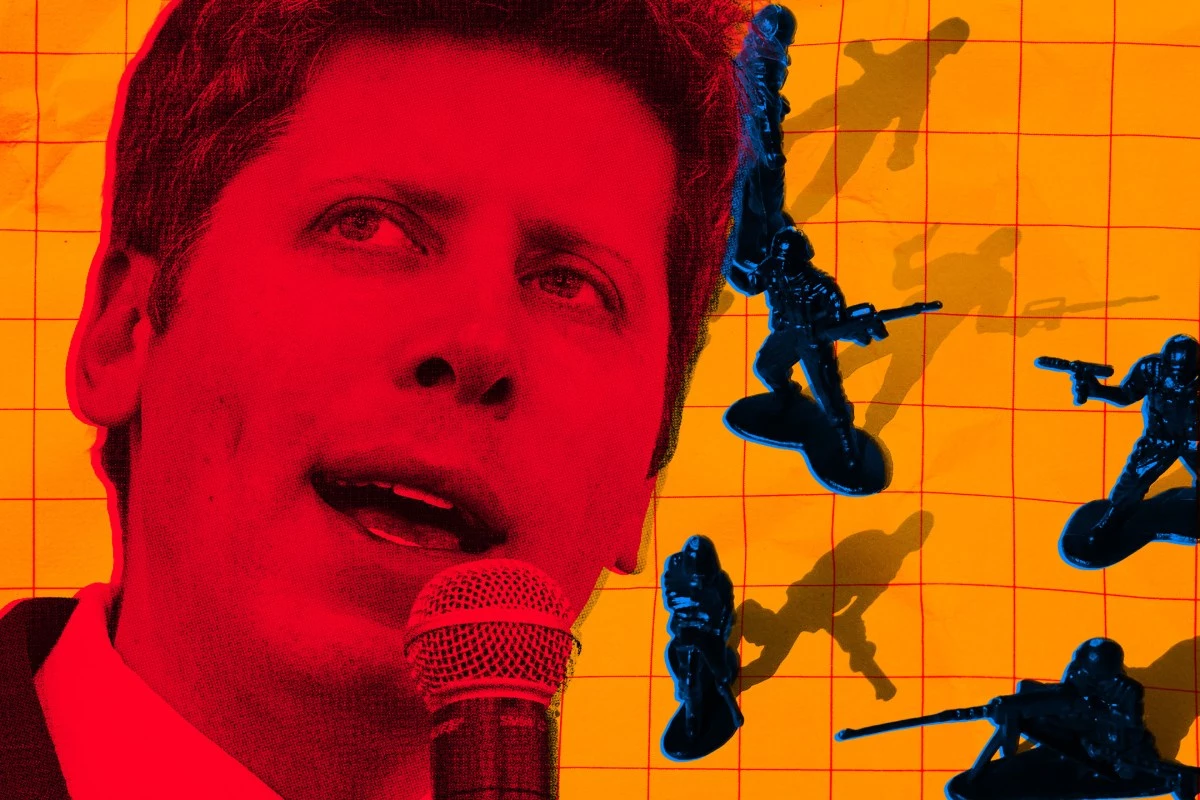
OpenAI’s agreement with the U.S. Department of Defense has landed as more than a routine government procurement win; it has become a high-visibility test of what “responsible AI” means when national security is the customer. CEO Sam Altman’s acknowledgment that the optics “don’t look good” captures the core tension: OpenAI’s brand equity has been built on broad public utility—developers, enterprises, educators, and everyday users—yet defense partnerships inevitably invite questions about militarization, surveillance, and the downstream uses of general-purpose models.
The public reaction has been unusually immediate and measurable. High-profile users and thousands of community members signaled intent to leave ChatGPT for Anthropic’s Claude, which surged up app-store rankings. That consumer migration matters because it reframes the controversy from an abstract ethical debate into a market signal: trust is becoming a competitive differentiator as tangible as model quality, latency, or price.
At the heart of the backlash is a perceived contradiction. Critics argue that a deal with the Pentagon—however bounded by internal policies—risks undermining OpenAI’s founding narrative of AI developed for “broadly shared benefit.” Supporters counter that defense agencies will use AI regardless, and that engagement by leading labs could impose more safeguards than a fragmented ecosystem of smaller vendors. The dispute is not merely about whether the DoD should have access to advanced AI; it is about who supplies it, under what constraints, and with what accountability.
Dual-use AI: the vanishing line between assistance and force
This episode underscores the accelerating erosion of a once-clear boundary between commercial AI and defense applications. Large language models are quintessential dual-use technologies: the same capabilities that improve logistics, intelligence analysis, and decision support can also enable targeting workflows, influence operations, and mass surveillance.
OpenAI’s willingness to provide access under negotiated ethical constraints signals a pragmatic shift in how leading AI providers weigh risk and reward. From a purely technological standpoint, defense collaboration can offer:
- High-value evaluation environments: stress-testing models against adversarial behavior, deception, and operational ambiguity.
- Security-sensitive datasets and workflows: improving robustness in domains where errors carry real-world consequences.
- Systems integration at scale: accelerating maturity in deployment patterns, monitoring, and reliability engineering.
Yet the controversy also highlights a hard technical truth: “walls” between benign and harmful use cases are difficult to enforce once a model becomes embedded in complex organizations. Even if a vendor prohibits autonomous weaponry or certain surveillance scenarios, enforcement depends on auditability, telemetry, contractual leverage, and the customer’s willingness to comply—conditions that are inherently harder in classified environments.
Anthropic’s posture—rebuffing Pentagon demands for unencumbered use of Claude, particularly around autonomous weapons and mass surveillance—illustrates the opposite bet: that refusal and constraint can be a product feature. But reports alleging that U.S. and Israeli strikes in Iran used Claude for target selection complicate that narrative, raising a central question for the entire sector: Can any frontier model provider credibly guarantee non-use in lethal or coercive contexts once models proliferate through partners, integrators, and downstream tooling? The reputational risk is no longer confined to what a company signs; it extends to what the ecosystem can do with its technology.
The business calculus: revenue certainty versus brand durability
Defense contracts offer what many AI companies crave: large, predictable, multi-year revenue that can help stabilize compute-heavy business models. In an era of volatile venture funding and escalating infrastructure costs, government demand can look like a ballast. But the OpenAI-DoD deal demonstrates that the trade-off is not theoretical; it is immediate and commercial.
Key economic dynamics now in play include:
- Brand equity as a moat: consumer and enterprise adoption is increasingly sensitive to perceived alignment with human-rights norms, privacy expectations, and corporate governance.
- Procurement-driven segmentation: customers may begin to ask whether a model is “defense-aligned” or “civilian-aligned,” treating that label as a compliance and reputational variable.
- Capital allocation and ESG pressure: limited partners and institutional investors with environmental, social, and governance mandates may shift funding toward vendors seen as more consistent or transparent.
- Talent competition: top researchers and engineers often weigh mission alignment heavily; defense entanglements can influence recruiting and retention.
Anthropic’s being branded a “supply chain risk” by the DoD is revealing in its own right. It signals that the Pentagon is not only buying capability; it is also seeking assured access and operational freedom. Vendors that insist on tighter use restrictions may win trust with civilian markets while losing leverage in defense procurement—an inversion that could reshape competitive strategy across the frontier-model landscape.
For OpenAI, the reputational volatility is compounded by the communications challenge. Altman’s AMA responses—promising rejection of “unconstitutional orders” while expressing faith in military restraint—land in a public sphere acutely aware of historical counterexamples. The issue is less whether OpenAI intends to behave responsibly and more whether its governance mechanisms are legible, enforceable, and independently verifiable.
What comes next: regulation, audits, and a bifurcated AI market
The controversy is likely to accelerate policy and regulatory momentum around “weaponizable AI,” with diverging approaches across jurisdictions. The U.S. may lean toward permissive innovation paired with procurement controls, while Europe is more inclined toward precautionary constraints and rights-based oversight. In Washington, the debate could extend into amendments to the Defense Production Act, new reporting obligations, and civil-rights impact assessments for defense-oriented AI deployments.
Commercially, the market appears headed toward a bifurcation:
- Defense-certified AI stacks: premium-priced, compliance-heavy offerings integrated into classified environments, often delivered via systems integrators and long-term contracts.
- Civil-scoped AI platforms: competing on transparency, privacy assurances, third-party audits, and explicit prohibitions on certain military or surveillance uses.
In that environment, institutional trust becomes an operational requirement, not a branding exercise. OpenAI’s path to resilience likely runs through radical clarity: independent oversight, publishable red-teaming methodologies, meaningful transparency about request denials, and auditable controls that survive contact with real procurement incentives. Meanwhile, Anthropic and other challengers will try to convert “principled AI” from a moral stance into a durable market position—knowing that credibility will increasingly be measured not by policy language, but by traceable enforcement in the wild.
The larger signal is unmistakable: as frontier AI becomes embedded in state power, the industry’s social contract is being renegotiated in real time, with users, investors, regulators, and governments all asserting their own definition of acceptable use.

 By
By
 By
By

 By
By
 By
By
 By
By

 By
By