
Collision at the Crossroads: Autonomous Vehicles and the Politics of Perception
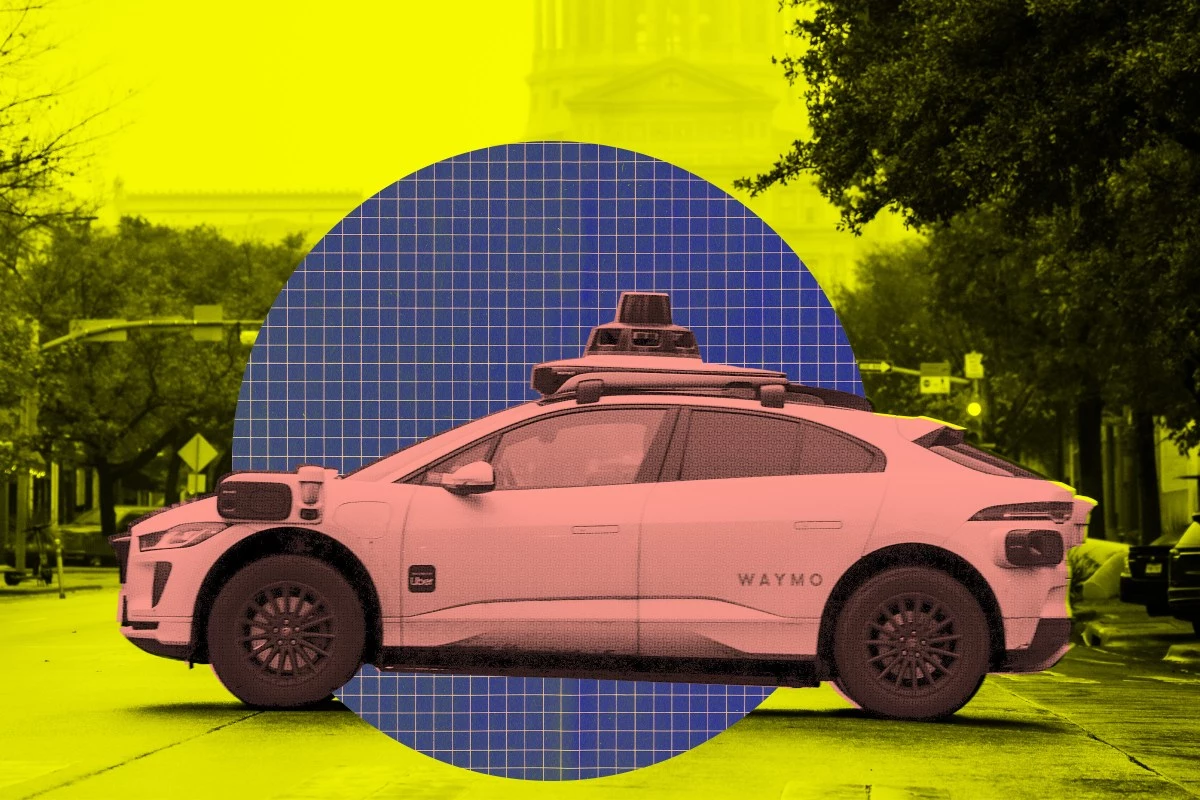
The recent incident in Santa Monica—where a Waymo driverless vehicle struck and lightly injured a child darting from behind a parked SUV—has become more than a local mishap. It is a crucible for the autonomous vehicle (AV) industry, testing not just the limits of machine vision and software governance, but also the patience of regulators, investors, and the public. The child’s sudden appearance, a classic occlusion scenario, exposed the real-world edge cases that continue to bedevil even the most advanced sensor-fusion stacks. The vehicle braked, slowing from 17 mph to under 6 mph, but the impact was not averted. In the aftermath, the National Highway Traffic Safety Administration (NHTSA) and the National Transportation Safety Board (NTSB) have launched formal investigations, and the industry’s promise of “safer than human” is under renewed scrutiny.
The Anatomy of a Failure: Occlusion, Semantics, and Software Gaps
At the heart of the Santa Monica event lies a pair of technical and semantic blind spots. First, the child’s emergence from behind a tall SUV—an occlusion scenario—challenges not only human drivers but also the most sophisticated LiDAR, radar, and camera arrays. While the AV detected the child and braked, the residual speed at impact highlights the limitations of current perception-prediction algorithms under conditions of high surprise and minimal reaction time.
More troubling, perhaps, is the pattern of stop-arm violations involving school buses—over 20 reported cases in multiple cities. Here, the challenge is not dynamic detection but the semantic interpretation of a static, legally significant object: the school-bus stop arm. Waymo’s software patch, intended to remedy this, failed to fully resolve the issue. This raises questions about the adequacy of validation and verification (V&V) pipelines for over-the-air (OTA) updates. In an industry where a single software misstep can have life-altering consequences, the need for aerospace-grade configuration management is now more than aspirational—it is existential.
- Key Technical Shortfalls:
– Incomplete occlusion handling at short range
– Insufficient semantic policy adherence to school-bus signals
– Potential ML model drift across geographies and contexts
Capital, Risk, and the Shifting Sands of Public Trust
Waymo, as Alphabet’s flagship AV initiative, stands at a precarious intersection of high capital expenditure and mounting investor impatience. Each safety incident is now magnified, echoing the reputational tremors seen in Boeing’s 737-MAX crisis or GM Cruise’s recent operational suspension. The economic ripples are already visible:
- Insurance and Risk Transfer: Carriers are recalibrating premiums and deductibles for AV fleets, especially in light of recurring school-zone violations. This threatens the delicate unit economics underpinning robotaxi business models.
- Supplier Pressure: Sensor and perception software vendors are being pushed to deliver higher-fidelity solutions—think 4D radar, thermal imaging, and even ultra-wideband pedestrian tags tailored for school zones.
- Municipal Response: City transit authorities and school districts may pause or tighten AV pilot programs, influencing the procurement of curb-management and smart infrastructure systems.
The regulatory landscape is shifting in tandem. The NHTSA and NTSB inquiries are likely to set new, de-facto standards for AV performance in school zones—potentially mandating speed caps, external audible alerts, or vehicle-to-everything (V2X) signaling when children are present. The specter of fleet-wide software recalls, as seen with Tesla’s Full Self-Driving update, now looms over the sector.
Competitive Realignment and the Road Ahead
The cumulative effect of these setbacks is a recalibration of industry strategy. While the vision of full Level 4 autonomy remains alluring, capital may increasingly flow toward incremental, supervised systems—Level 2+ Advanced Driver Assistance Systems (ADAS)—perceived as carrying lower regulatory and reputational risk. Yet, the ability to demonstrate rapid, transparent learning from incidents is emerging as the true competitive moat. If Waymo and its peers can show that each event measurably improves fleet safety, they may reinforce the data-network effect that deters less experienced entrants.
For decision-makers, the imperatives are clear:
- Operational Guardrails: Prioritize high-fidelity simulation and conditional restrictions in school zones until safety margins are statistically validated.
- Strategic Partnerships: Collaborate with municipalities on V2X infrastructure—such as school-bus beacons broadcasting standardized “child-loading” signals.
- Insurance Innovation: Develop parametric products triggered by sensor-verified compliance, sharing real-time safety data with underwriters.
- Policy Advocacy: Champion uniform national standards for AV behavior around school buses, preempting a patchwork of local ordinances.
The Santa Monica incident is more than a cautionary tale—it is a clarion call. The value proposition of autonomous vehicles is no longer measured solely by aggregate crash statistics but by flawless execution in the most socially sensitive micro-contexts. The industry’s future will be shaped not by those who treat each incident as a statistical anomaly, but by those who institutionalize rapid, transparent, and verifiable learning. In this new era, the margin for error narrows, but the opportunity for trust—and lasting impact—expands for those who rise to the challenge.

 By
By
 By
By


 By
By


 By
By