
The Mirage Reshaped: Neom’s Pivot from Architectural Icon to AI Compute Powerhouse
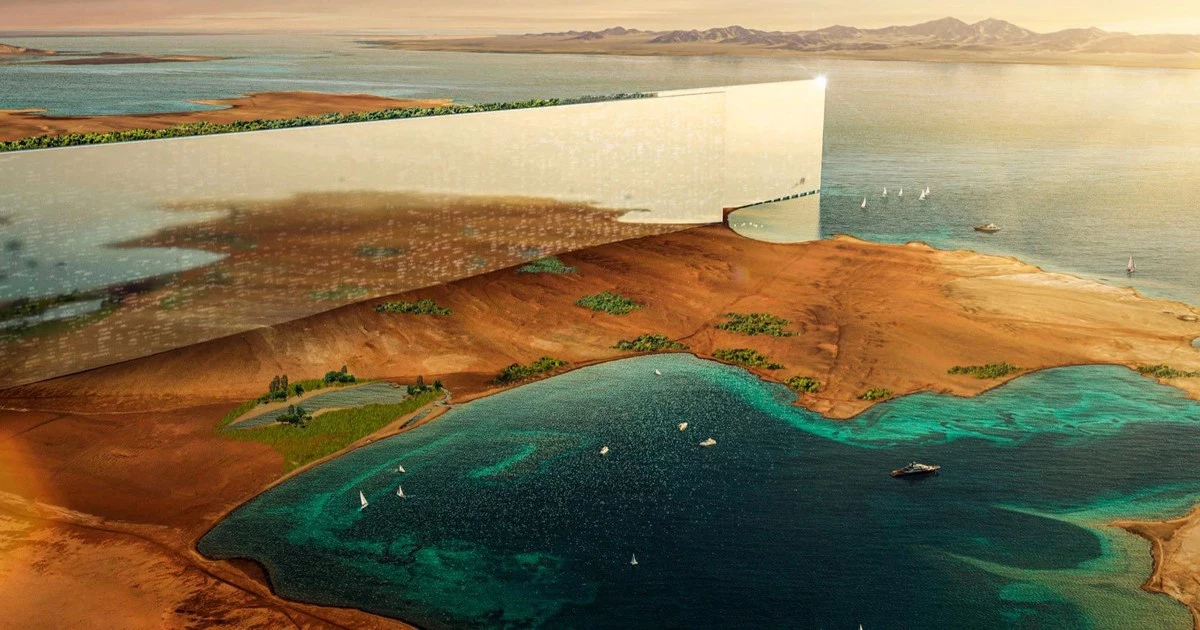
The shimmering vision of Neom—Saudi Arabia’s $1.5 trillion “city of the future”—has long captured the world’s imagination. At its heart stood The Line, a 100-mile mirrored monolith, a utopian promise to house millions in a gravity-defying urban corridor. Yet, as the global economic tide shifts and the realities of capital markets assert themselves, Neom’s trajectory appears to be undergoing a profound recalibration. What was once the world’s most audacious real estate experiment is morphing into something more elemental: a digital infrastructure hub, purpose-built for the age of artificial intelligence.
Economic Realities and the Gulf’s New Digital Arms Race
Saudi Arabia’s Public Investment Fund (PIF) finds itself at a crossroads. Brent crude, the Kingdom’s economic lifeblood, has hovered stubbornly below the fiscal break-even required to sustain Vision 2030’s ambitions. At the same time, rising global interest rates and a crowded portfolio—spanning everything from Premier League clubs to esports—have tightened liquidity just as construction costs soar.
- Funding Strain: The economic calculus has shifted. PIF’s ability to bankroll long-dated, speculative megaprojects like The Line is constrained, with opportunity costs now glaring in a world of higher rates and lower liquidity.
- Portfolio Crowding: Non-core investments in sports and entertainment have further squeezed capital available for infrastructure, making the original scale of The Line increasingly untenable.
- Regional Competition: The Gulf is in the throes of a digital infrastructure race. The UAE, Qatar, and Oman are all accelerating their own hyperscale data-center projects, eager to attract the next wave of AI startups, semiconductor giants, and cloud hyperscalers.
The result: a strategic pivot toward hyperscale data centers, leveraging Neom’s vast land, access to low-cost energy, and a unique geographic position at the crossroads of Europe, Asia, and Africa.
From Urban Utopia to Sovereign Compute: The Technology Pivot
The logic behind Neom’s transformation is compelling. Generative AI is devouring global compute capacity at a pace that outstrips supply. By reimagining swathes of The Line as hyperscale data-center campuses, Saudi Arabia can position itself as the Gulf’s indispensable AI compute hub—a move that promises faster returns and greater strategic leverage than residential megastructures.
- Hyperscale Rationale: Sovereign control over AI compute is emerging as a new pillar of national security and economic competitiveness. Neom’s pivot offers a path to digital sovereignty, insulating the Kingdom from the regulatory and supply-chain frictions that increasingly define the global tech landscape.
- Cooling Innovation: The proposed use of deep-seawater cooling from the Gulf of Aqaba is both bold and fraught. It echoes Scandinavian experiments and Microsoft’s Project Natick, but introduces new engineering challenges—saline corrosion, marine ecosystem impacts—that will test the ingenuity of climate-tech firms.
- Connectivity Advantages: With major subsea cables already mapping through the Red Sea, Neom enjoys a latent advantage: low-latency routes between three continents, a critical asset for AI model training and inference.
- Data Sovereignty: The move aligns with global trends—Europe’s GAIA-X, China’s MLPS, India’s data localization laws—signaling a new era where compute, not just data, is a locus of geopolitical contestation.
Strategic Ripples: Stakeholder Calculus and Non-Obvious Opportunities
The implications of Neom’s metamorphosis ripple far beyond the Gulf.
- For Saudi Policymakers: Downsizing The Line risks denting national prestige but offers a faster route to economic diversification and digital transformation. Yet, the Kingdom must now compete globally for AI talent, pitting it against hubs like Dubai and Singapore.
- For Global Tech Giants: Hyperscalers face chronic capacity shortages. Joint ventures with PIF could unlock subsidized energy and tax incentives, but also raise ESG questions around labor rights and carbon intensity. Semiconductor vendors, meanwhile, may find Saudi Arabia’s appetite for pre-paid offtake agreements irresistible—a model reminiscent of East Asian chip procurement.
- For Investors: A capital shift from iconic real estate to digital infrastructure may recalibrate Gulf sovereign wealth fund strategies, boosting valuations in infra-tech while tempering enthusiasm for luxury property.
- For Climate-Tech Innovators: The seawater-cooling gambit opens a blue-ocean market for corrosion-resistant technologies and marine monitoring services, while the region’s nascent carbon markets present arbitrage opportunities for corporates seeking green offsets.
Less obvious, but equally vital, is the coupling of data-center loads with emerging Red Sea wind corridors—an opportunity to accelerate Saudi Arabia’s renewable energy targets and reshape the region’s power purchasing landscape.
Navigating the Next Frontier: Scenarios and Strategic Guidance
Three future scenarios now beckon:
- Strategic Focus: PIF scales back residential ambitions, fast-tracks gigawatts of data-center capacity, and signs multi-cloud anchor tenants—a play for capital efficiency and digital sovereignty.
- Hybrid Compromise: A truncated Line serves as a demonstration district, while surplus land becomes a digital and logistics hub—balancing political optics with financial pragmatism.
- Reversion to Iconic Build: Political imperatives override financial logic; The Line proceeds at full scale, but at the risk of renewed funding strains and elevated solvency risks.
For technology firms, the moment to act is now: pre-feasibility studies on power, fiber, and regulatory frameworks in the Gulf of Aqaba will be decisive. Infrastructure investors should watch for first-mover concessions on renewable PPAs, while multinationals with heavy AI workloads would be wise to negotiate data-sovereignty carve-outs before localization statutes harden.
The transformation of Neom is more than a footnote in the annals of megaprojects. It is a bellwether for a world where the architecture of power is being redrawn—not in steel and glass, but in fiber, silicon, and sovereign compute. Those who recognize this shift stand to shape the next era of digital nation-building.

 By
By
 By
By
 By
By


 By
By
 By
By
 By
By