
The Collision of Federal Power and Tech Workforce Ethics
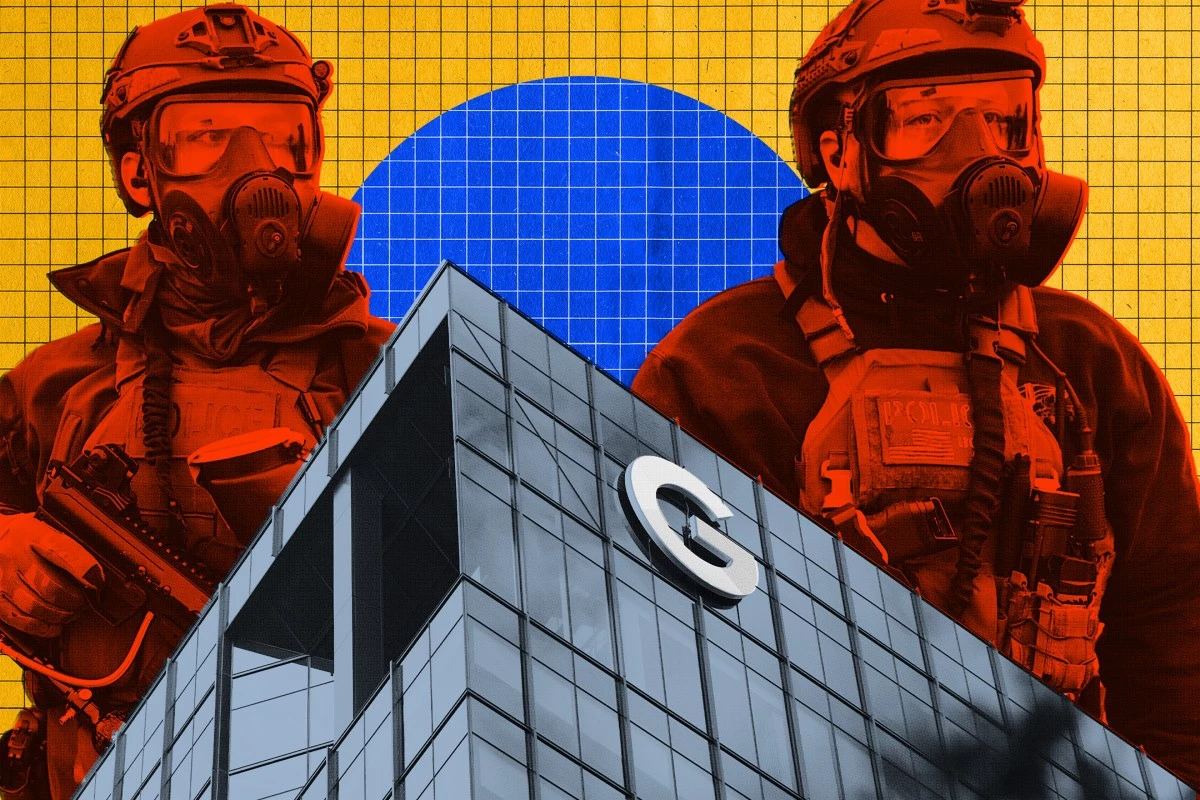
The attempted warrantless entry by a federal agent at Google’s Cambridge office, in the immediate aftermath of the tragic shooting of nurse Alex Pretti by ICE officers, has cast a long shadow over Silicon Valley’s uneasy partnership with government agencies. This episode, reverberating through Google’s corridors and across the broader technology sector, has become a flashpoint—galvanizing more than 800 tech workers to sign an open letter demanding a severing of ties with ICE. The public condemnation by Jeff Dean, a senior figure in Google’s AI division, stands in sharp contrast to the company’s executive silence, underscoring a widening rift between leadership and the values of its technical workforce.
This is not merely a moment of internal protest; it is a harbinger of a deeper structural reckoning. The tech industry’s dependence on public-sector contracts, especially in cloud and AI, now collides headlong with a workforce that increasingly views social impact and ethical alignment as non-negotiable. The events in Cambridge have crystallized a tension that has simmered since the days of Project Maven: the question of whether the pursuit of government revenue can coexist with the progressive ideals that define the industry’s most sought-after talent.
Security, Data, and the New Frontiers of Corporate Risk
The federal agent’s attempted incursion exposed an uncomfortable truth: the boundaries between physical and digital security are dissolving. As law enforcement agencies seek both on-premises access and digital evidence, traditional security protocols—badge systems, legal process checks, and cloud access logs—are being stress-tested in real time. The episode signals an urgent need for integrated security orchestration platforms that can authenticate legal warrants and coordinate physical and digital access in a single, auditable workflow.
Beyond the immediate security implications, the incident has placed data governance under a microscope. ICE contracts often require access to sensitive geolocation, biometric, and cloud-stored data. Employee resistance to such arrangements is not simply a matter of internal politics; it is a warning shot that data-sharing pipelines may need to be re-architected, with ethical boundaries and zero-knowledge frameworks built in from the ground up. The specter of proprietary AI models being used in controversial enforcement actions further complicates the landscape, fueling calls for “purpose-bound” model licensing and code-level audit trails—a stance increasingly echoed in regulatory regimes like the EU AI Act.
Economic Fallout and the Fragility of Tech’s Human Capital
For technology companies, the economic calculus of government contracts is shifting. While public-sector deals provide steady, if lower-margin, revenue streams, the potential for reputational damage—and the resulting attrition of high-value talent—can quickly outweigh their financial benefits. In an industry where the departure of even a small percentage of top AI researchers can derail product roadmaps and erode competitive advantage, the risk is anything but theoretical.
This fragility extends beyond internal dynamics. Enterprise customers, attuned to the reputational risks of their own supply chains, are increasingly inserting ethics clauses into procurement contracts. A single high-profile incident can trigger a cascade of lost business, as clients migrate to cloud providers perceived as less entangled in social-license controversies. The message is clear: ethical missteps are no longer confined to the realm of public relations—they are material business risks.
Governance, Industry Signals, and the Road Ahead
The events in Cambridge have catalyzed a re-examination of governance at the highest levels. Boards of directors now face a dual mandate: to maximize shareholder value while mitigating contingent liabilities from social backlash. This is prompting a wave of third-party human-rights impact assessments and the institutionalization of stakeholder governance, including employee-elected observer seats and ethics review boards with real veto power over sensitive contracts.
Industry-wide, the incident signals the dawn of a new “Techlash”—one that centers not on privacy, but on the ethics of enforcement and the boundaries of corporate complicity. There is growing momentum for an industry pact on human-rights guardrails for AI in law enforcement, reminiscent of the Asilomar guidelines that once shaped biotechnology. Meanwhile, technical countermeasures—such as geo-fenced cloud environments that prevent physical overreach—are emerging as both a shield against government intrusion and a selling point for risk-averse clients.
For decision-makers, the imperative is clear: quantify the true cost of contested contracts, embed crisis playbooks that treat physical warrant incidents as existential threats, and use this moment to lead on enforceable AI ethics. Those who operationalize ethical guardrails earliest will not only avert regulatory and reputational fallout—they will define the competitive moat for the next era of responsible technology. As the lines between digital infrastructure, physical security, and societal values blur, the companies that navigate this terrain with clarity and conviction will shape the future of the industry.

 By
By
 By
By
 By
By
 By
By
 By
By

 By
By