
When Official Narratives Collide with Real-Time Evidence
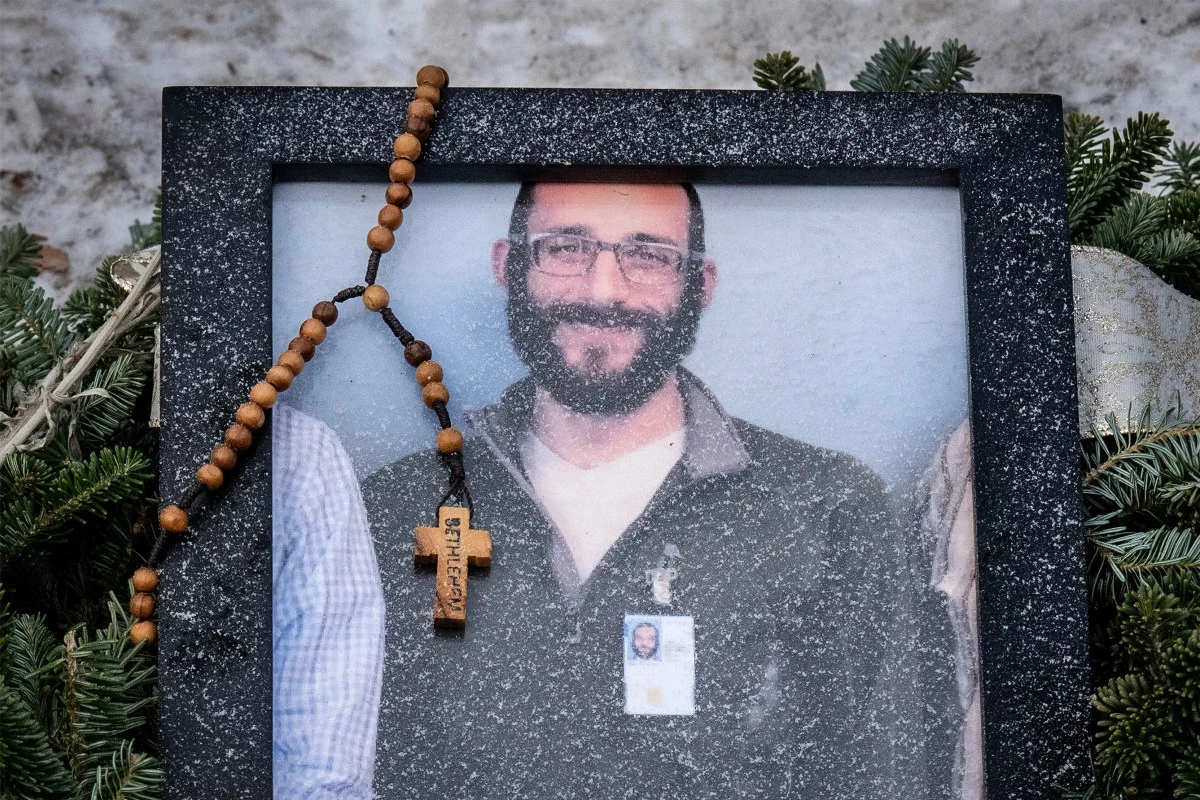
The fatal shooting of ICU nurse Alex Pretti by U.S. Border Patrol agents in Minneapolis has become a crucible for the nation’s anxieties about federal policing, technological accountability, and the evolving landscape of workplace safety. A sworn statement by an on-scene physician, directly contradicting the Department of Homeland Security’s official account, has not only deepened public outrage but also exposed the widening chasm between institutional narratives and the decentralized, always-on reality of citizen-captured evidence.
At the heart of this discord lies a fundamental question: Who controls the truth in an era where every bystander is a broadcaster and every official record is subject to forensic scrutiny? The proliferation of body-worn cameras among federal agents was intended as a bulwark against ambiguity, yet selective disclosure and delayed footage releases have only fueled skepticism. The public, armed with smartphones and livestreams, has become an ad hoc sensor network—one that routinely challenges, and sometimes outpaces, the official chain of evidence.
This dynamic is catalyzing demand for new classes of technology: immutable, open-standard evidence management platforms built on distributed ledgers; zero-knowledge proofs to authenticate footage in real time; and advanced watermarking to counter the specter of deepfakes. Enterprises at the intersection of cloud video, AI-powered anomaly detection, and edge analytics are now navigating a regulatory thicket, as calls intensify for greater transparency in metadata handling and evidence retention.
The Ripple Effect: Workforce Anxiety and Economic Recalibration
For the nation’s critical-skill labor pools—nurses, doctors, and first responders—the Minneapolis incident is not an abstraction but a lived risk. Already battered by pandemic fatigue, healthcare professionals now face a new layer of physical insecurity, one that is reshaping the calculus of labor markets and institutional risk management. Hospital systems, in particular, confront the prospect of rising retention costs, surging liability premiums, and mounting union demands for hazard pay and security concessions.
Insurers and credit markets are responding in kind. Commercial property and casualty carriers, tracking granular “civil-unrest intensity” indices, are flagging facilities within newly identified “security hot zones,” triggering higher premiums or outright coverage exclusions. Municipal credit spreads threaten to widen as volatility persists, complicating the capital planning of cities that have long relied on their status as talent magnets.
Corporations, meanwhile, are recalibrating their site-selection models. The persistent threat of unrest is eroding the gravitational pull of Tier-1 metros, nudging investment toward mid-market cities that offer not just lower security premiums but also more favorable optics in the realm of environmental, social, and governance (ESG) metrics.
Governance, Security, and the New Boardroom Imperative
The implications for corporate governance are profound. What was once the domain of ESG committees is rapidly morphing into a broader mandate—one that encompasses governance, security, and resilience (GSR). Boardrooms are now tasked with overseeing not only environmental and social risks but also the physical security of employees and customers, particularly in politically charged environments.
Forward-thinking companies are updating their enterprise risk playbooks to include:
- Civil-unrest scenario planning that integrates medical-evacuation protocols and real-time evidence management.
- Formalized data retention policies designed to withstand subpoena or Freedom of Information Act (FOIA) scrutiny.
- Rigorous third-party security vendor assessments to ensure compliance with federal guidelines and seamless handover of body-cam telemetry.
Reputational calculus has also shifted. Silence in the face of contested federal actions is increasingly interpreted as complicity. Brands with deep ties to healthcare or public service must now anticipate activist pressure and the downstream risks of consumer boycotts or talent attrition. Proactive, values-driven messaging is emerging as a strategic necessity, not a luxury.
Signals for the Next Decade: Regulation, Insurtech, and Distributed Resilience
The Minneapolis shooting is already shaping the regulatory and technological landscape. Bipartisan draft legislation proposes mandatory public release of federal body-cam footage within 48 hours—an inflection point for firms specializing in secure cloud storage, automated redaction, and data governance. The convergence of insurtech and civic-tech is accelerating, with real-time civil-unrest risk scores poised to influence everything from underwriting and urban planning to gig-economy surge pricing.
Healthcare systems are exploring distributed clinical capacity, investing in modular micro-hospitals equipped with IoT instrumentation and 5G-enabled telemetry. Meanwhile, the adoption of AI-powered, HIPAA-compliant mental health platforms is gaining momentum as employers seek to address post-incident trauma among frontline workers.
The Minneapolis controversy is not merely a flashpoint—it is a harbinger. It signals a future in which technology, governance, and workforce resilience are inextricably linked. For executives, investors, and policymakers, the imperative is clear: recalibrate assumptions, invest in trusted data infrastructure, and treat social volatility as a core strategic variable—one as consequential as currency risk or supply-chain fragility. In this new era, the ability to navigate uncertainty will define not just reputations, but the very architecture of value creation.

 By
By
 By
By
 By
By
 By
By
 By
By


 By
By