
The Parallel Universe of U.S. Luxury Real Estate: Where Global Capital Meets Local Ground
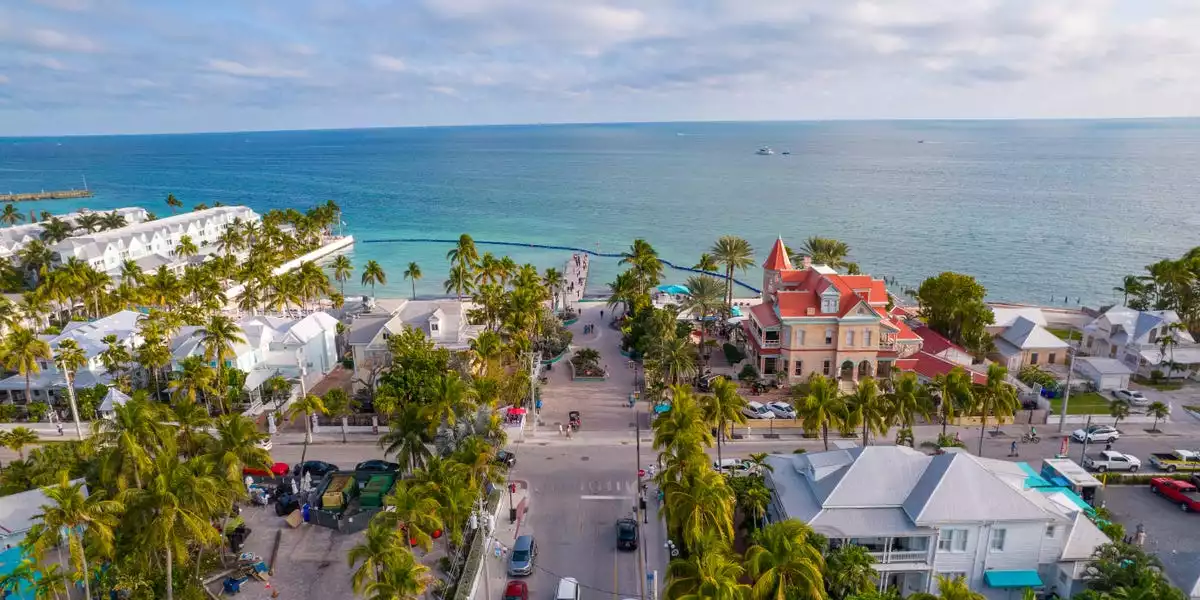
The American luxury residential real estate market has quietly become a world apart, operating with its own logic, liquidity, and gravitational pull. Entry into the top decile now demands a minimum of $1.19 million—nearly three times the national median home price. This divergence is most pronounced in Florida, where luxury-to-median price multiples soar as high as 5× in key metros. Miami, in particular, has eclipsed New York in $1 million-plus listings, a testament to the ongoing migration of high-net-worth individuals and the shifting tectonics of American wealth geography.
What’s unfolding is not merely a tale of rising prices, but a structural segmentation of the housing market. Luxury inventory is increasingly priced by the whims of global capital, tax optimization strategies, and lifestyle migration, rather than the old anchors of local wage fundamentals. The result: a parallel asset class, semi-detached from the economic realities of the communities in which these homes reside.
Forces Shaping the Luxury Divide: Capital, Migration, and Policy
At the heart of this divergence lies a complex interplay of macroeconomic and policy forces:
- Capital Allocation in a High-Rate World
– While the Federal Reserve’s tightening has cooled conventional mortgages, cash-rich buyers—buoyed by robust equity portfolios—are largely impervious to rate hikes.
– For these buyers, luxury real estate functions as both an inflation hedge and a tangible store of value, blunting the impact of monetary policy on asset prices.
- Migration and Tax Arbitrage
– The pandemic-era normalization of remote work, combined with Florida’s lack of state income tax, has catalyzed a north-to-south migration of affluent households.
– This influx not only inflates luxury home prices but also exerts upward pressure on service-sector wages and non-luxury rents, deepening regional inequality.
- Supply Constraints and Latent Climate Risk
– Coastal zoning restrictions and persistent NIMBYism choke the supply of new luxury stock, sustaining premium pricing.
– Yet, the full implications of climate risk—particularly in hurricane-prone Florida—remain underpriced, with insurance costs lagging behind the looming realities of sea-level rise and storm exposure.
Technology’s Double-Edged Sword: PropTech, Tokenization, and Climate Analytics
The luxury real estate sector is not immune to the digital revolution. If anything, technology is accelerating its decoupling from traditional housing markets:
- AI-Powered Valuation and Trading
– Advanced PropTech platforms, leveraging AI-driven valuation engines, now enable ultra-high-net-worth individuals to transact with the speed and sophistication of institutional investors.
– This further severs luxury pricing from local comparables, embedding global liquidity cycles into the DNA of high-end U.S. housing.
- Tokenization and Fractional Ownership
– Blockchain-based real estate funds are lowering the barriers to entry, allowing investors to own fractions of trophy properties.
– While this democratizes access and deepens liquidity, it also introduces the specter of increased volatility, as luxury assets become more tradable—and thus more sensitive to global financial tides.
- Climate-Risk Analytics: The Unpriced Variable
– Geospatial SaaS platforms are beginning to quantify location-specific climate risk, but adoption remains uneven in the luxury segment.
– As institutional investors demand greater disclosure, a sudden repricing of at-risk assets looms on the horizon—a scenario that could reshape coastal markets overnight.
Strategic Imperatives: Navigating the New Luxury Landscape
For stakeholders across the spectrum, the evolving luxury real estate market demands a recalibration of strategy and risk:
- Developers must pivot toward mixed-use luxury enclaves with built-in climate resiliency and smart-home infrastructure, catering to buyers who increasingly view ESG credentials as a status marker.
- Institutional Investors should treat prime-metro luxury housing as a quasi-global REIT substitute, scenario-planning for climate-driven underwriting shifts and potential regulatory changes.
- Policy Makers face the dual challenge of harnessing property tax windfalls while mitigating the social fallout of widening equity gaps—potentially through zoning overlays that incentivize workforce housing.
- Technology Providers, including innovative firms like Fabled Sky Research, are poised to lead by integrating transaction data, ESG scores, and climate models into holistic risk dashboards for discerning clients.
The luxury-to-median price gap is not a fleeting anomaly, but a signpost of a new order—one in which high-end residential real estate is financializing into a semi-global asset class. The winners in this landscape will be those who treat luxury properties as dynamic, tech-infused investment vehicles, responsive to both the tides of global capital and the imperatives of climate resilience. The next cycle belongs to those who can see—and seize—the future before it fully arrives.

 By
By
 By
By
 By
By
 By
By
 By
By
 By
By

 By
By