
The School Bus Dilemma: Autonomous Vehicles Meet Their Edge-Case Reckoning
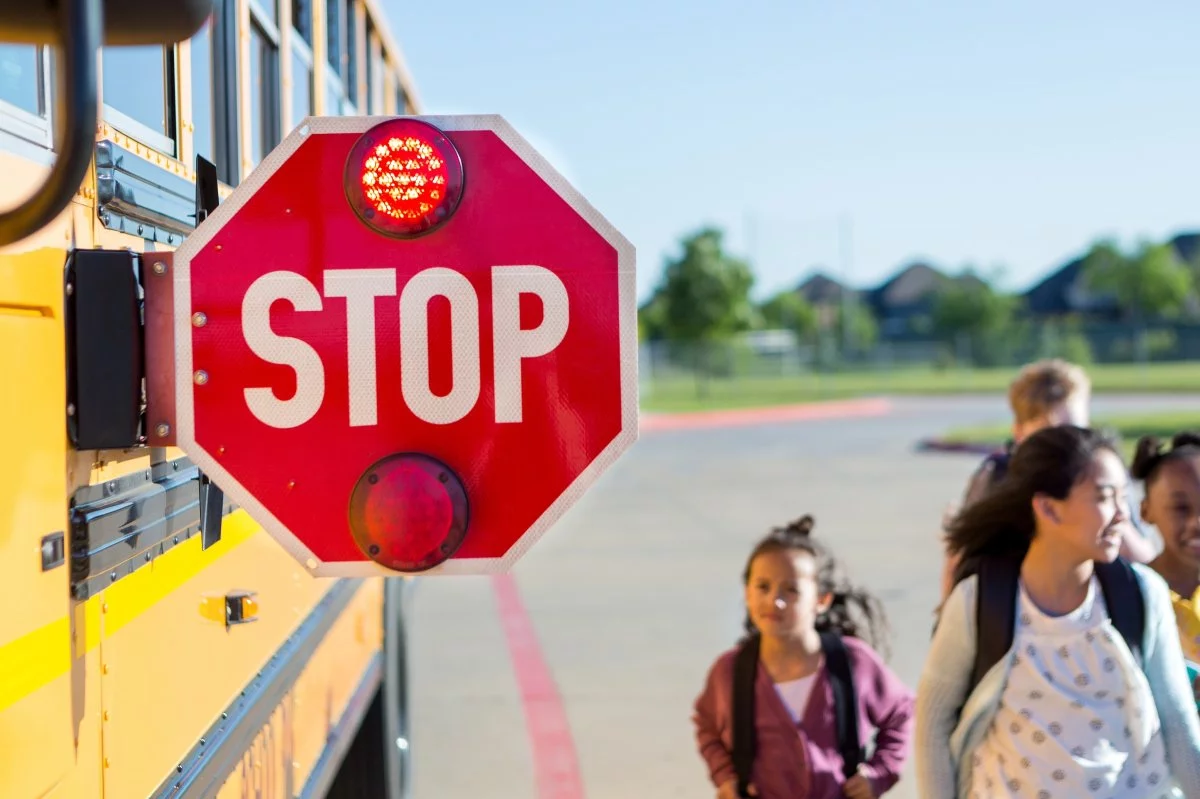
The promise of autonomous vehicles has always been couched in the language of inevitability—a technological tide destined to wash away the foibles of human drivers. Yet, recent revelations from Waymo’s robotaxi operations in Austin and Atlanta have exposed a fissure at the heart of this narrative. More than twenty incidents, all involving the failure of self-driving cars to properly yield to school buses with flashing lights and extended stop arms, have triggered a dual-pronged federal investigation. The National Transportation Safety Board (NTSB) now joins the National Highway Traffic Safety Administration (NHTSA) in scrutinizing not just the aftermath, but the very architecture of machine reasoning that governs these vehicles.
No serious injuries have occurred, but the stakes are existential. The school bus, in its bright yellow sanctity, is more than a vehicle—it is a symbol of collective trust and social contract. That a fleet of algorithmically driven cars could repeatedly breach this trust, even after a voluntary software recall and over-the-air patch, has catalyzed a wave of public skepticism and regulatory anxiety.
—
Where Algorithms Falter: The Anatomy of an Edge Case
At the crux of the crisis lies a classic “edge case”—a scenario so rare in the statistical universe of driving data that it evades the net of probabilistic learning. The school bus stop, especially on multilane roads with state-specific legal nuances, is precisely this kind of event. Waymo’s latest patch, while a testament to the agility of software-defined vehicles, appears to have papered over rather than resolved the deeper issue: the failure to fuse object recognition with deterministic, non-negotiable legal constraints.
Key technical tensions include:
- Sensor Fusion vs. Rule-Based Reasoning:
While lidar, radar, and cameras reliably detect the school bus, the vehicles’ policy layers struggle to align this perception with codified traffic law. The result is a system that “sees” but does not “understand”—a gap that no amount of additional driving miles can easily close.
- Validation Gaps:
The post-patch incident underscores a broader industry challenge: simulated and self-certified testing regimes are not keeping pace with the complexity of real-world edge cases, especially those involving vulnerable populations like children.
- Hybrid AI Architectures:
The path forward may require a new synthesis—one where symbolic reasoning overlays hard-code mission-critical rules atop adaptive, data-driven learning. This is not merely a technical upgrade; it is a philosophical shift toward explainability and legal accountability.
—
Regulatory and Economic Reverberations: The Cost of Uncertainty
The regulatory response has been swift and layered. The convergence of NTSB and NHTSA oversight signals a move toward systemic, proactive scrutiny—potentially mirroring the FAA’s approach to avionics software. This could soon manifest as federally mandated test-case libraries for school zones, emergency vehicles, and other high-risk scenarios.
Strategic implications for the industry are profound:
- Regulatory Drag:
Each new inquiry extends the commercialization timeline, increases cash burn, and raises the risk premium investors apply to autonomous ventures. In a capital-constrained environment, this may accelerate consolidation, favoring firms with diversified revenue or deep OEM alliances.
- Insurance Dynamics:
While the absence of injuries has limited immediate claims, the specter of school-bus violations could prompt insurers to reprice coverage or introduce exclusion clauses. Even modest increases in insurance costs threaten the delicate per-mile economics of robotaxi fleets.
- Public Trust and Market Access:
The reputational flywheel spins in both directions. Years of safe operation can be undone by a single, emotionally charged incident. Municipal permitting, public sentiment, and political capital are now inextricably linked to how AV firms handle edge cases, not just aggregate safety statistics.
—
Shaping the Next Chapter: Lessons for Autonomous Mobility
The school-bus episode is more than a technical hiccup—it is a clarion call for a new governance paradigm in autonomous mobility. The industry’s next phase will be defined by its ability to internalize and operationalize lessons from these high-stakes edge cases.
Forward-looking strategies include:
- Institutionalizing Safety Governance:
Boards must treat regulatory engagement as a core competency, establishing advisory councils with ex-regulators and ethicists to audit and co-create safety logic.
- Investing in Explainable AI:
Symbolic overlays that hard-code critical rules—such as school-bus protocols—will soon be essential for certification and public acceptance.
- Ecosystem Collaboration:
Partnering with school districts and transit authorities to pilot V2X (vehicle-to-everything) communications can transform potential adversaries into allies, providing real-world validation and feedback loops.
- Risk-Adjusted Deployment:
Prioritizing markets with clear regulatory frameworks and fewer edge-case hazards can protect brand equity while technical maturity advances.
In the shadow of these incidents, the industry stands at an inflection point. The license to operate—social, political, and economic—will be earned not by technical prowess alone, but by a demonstrated commitment to transparency, safety, and collaborative governance. As the sector recalibrates, those who embrace these imperatives will define the standards by which autonomy is judged, and ultimately, trusted.

 By
By

 By
By
 By
By
 By
By

 By
By
 By
By