
Davos as a Battleground: The New Face of U.S. Economic Rivalry
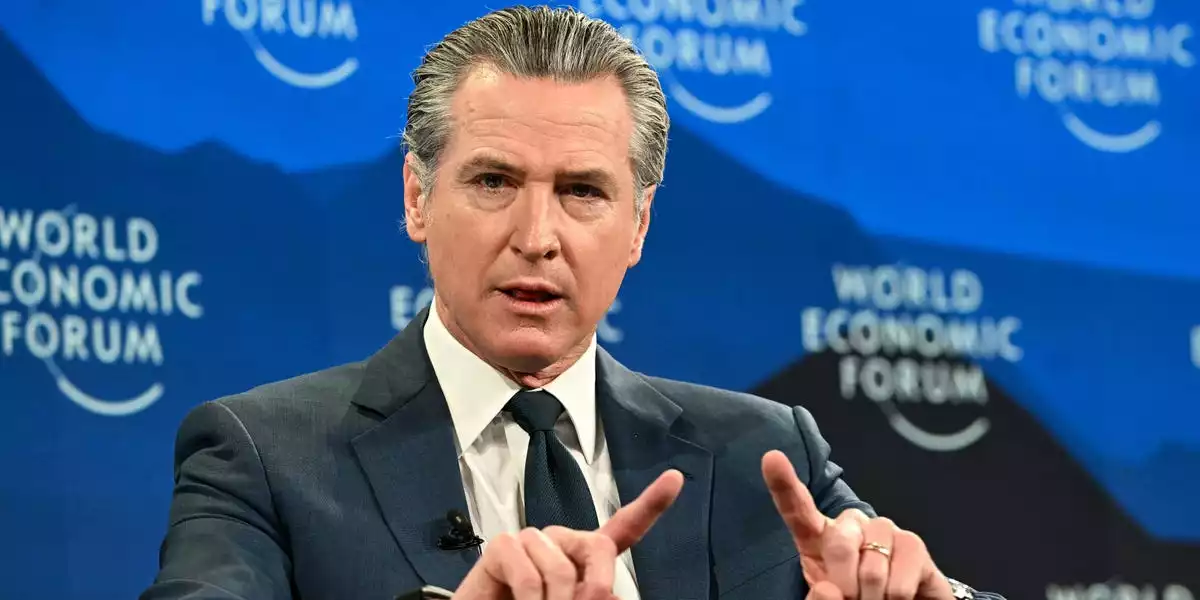
In the rarefied air of the Swiss Alps, where the World Economic Forum convenes its annual conclave of power brokers, Governor Gavin Newsom’s 2024 appearance became a flashpoint for the evolving contest over America’s economic soul. Newsom’s pointed critique of former President Donald Trump’s “crony capitalism” was more than a soundbite—it was a declaration of ideological war, leveraging Davos’ global stage to reframe California’s progressive, innovation-driven model as the antithesis of populist industrial policy. The subsequent exclusion of Newsom from the USA House pavilion, reportedly at the behest of federal authorities, laid bare a new reality: the United States’ internal fractures are now spilling into the world’s most influential soft-power venues.
This rupture is not merely symbolic. It signals a deeper, structural shift in how the U.S. projects economic leadership, both at home and abroad. For multinational executives, sovereign wealth funds, and global technocrats, the spectacle at Davos is a harbinger of volatility—a warning that the once-reliable American consensus is giving way to dueling visions with profound implications for capital, technology, and regulatory strategy.
Divergent Doctrines: California’s Innovation Engine vs. Populist Industrial Policy
At the heart of this drama lies a fundamental policy fork. On one side stands Trump’s industrial populism, with its arsenal of tariffs, reshoring incentives, and a muscular approach to supply chain sovereignty—an economic doctrine that resonates with legacy manufacturing and resource extraction sectors. On the other, Newsom positions California’s climate-tech ecosystem as a template for national renewal: market-driven, venture-capitalized, and anchored in aggressive decarbonization, AI safety, and progressive labor standards.
The friction between these models is now impossible to ignore. Newsom’s theatrical use of red kneepads to lampoon “corporate capitulation” to special interests captured a zeitgeist of CEO anxiety, as business leaders increasingly find themselves navigating a landscape where state and federal priorities are not only misaligned, but openly adversarial.
For corporate strategists, this bifurcation is not academic. The choice is stark:
- Optimize for subsidy-rich, geopolitically insulated supply chains—embracing the protectionist contours of Trump-era policy.
- Align with high-regulation, high-talent innovation clusters—betting on the durability and scalability of California’s regulatory regime.
This is not a binary world, but a dual-track environment where hedging across both possibilities becomes essential for preserving optionality and competitive advantage.
Capital Flows, Regulatory Futures, and the New Geography of Risk
Davos is more than a talking shop; it is a signal generator for global capital. The public airing of U.S. policy discord risks diluting the “America premium” that has long underpinned investment flows. As the EU advances its fit-for-55 climate plan and Japan doubles down on semiconductor sovereignty, institutional investors are recalibrating exposure—diversifying toward jurisdictions offering clearer, more predictable regulatory horizons.
Within the U.S., the stakes are equally high. California’s rule-making authority—manifest in initiatives like the 2035 EV mandate, hydrogen hub funding, and pioneering carbon-capture protocols—remains a lodestar for climate-tech capital. Should Newsom’s national ambitions materialize, these standards could become de facto federal policy, front-running SEC climate-disclosure rules and reshaping compliance burdens for corporates with net-zero pledges.
Meanwhile, the state’s pending AI accountability bill (AB 331) sets a high-water mark for algorithmic governance, in sharp contrast to the lighter-touch federal approach. The prospect of California’s digital policy frameworks going national is already prompting industry to lobby for harmonized standards—or, failing that, to arbitrage regulatory environments by shifting operations to Europe or Canada.
Telecom and cloud infrastructure providers face a similar calculus. Trump’s infrastructure legacy, with its focus on rural broadband via public-private partnerships, diverges sharply from California’s municipal open-access fiber and Net-Neutrality 2.0 initiatives. The resulting dichotomy presents divergent capex allocation scenarios, with billions in play.
Strategic Imperatives for the Next Decade
The Newsom–Trump confrontation at Davos is not an isolated episode; it is the opening act in a larger drama that will shape the allocation of capital, talent, and technological leadership well into the next decade. For decision-makers, several imperatives emerge:
- Reassess geographic and policy risk exposures—balancing the compliance costs of a potential Newsom regulatory wave against the input costs of protectionist industrial policy.
- Develop robust “50-state” compliance playbooks—anticipating that governors will increasingly wield local authority as a tool for national positioning.
- Realign lobbying and coalition strategies—moving beyond partisan identity to focus on discrete, high-impact issue areas such as semiconductor incentives and grid modernization.
- Evaluate talent and site selection with a long view—weighing the resilience of coastal innovation clusters against the rise of subsidized interior manufacturing corridors.
- Extend scenario planning horizons to 2030—building in option-value approaches to remain agile amid policy volatility.
The Davos episode, with its blend of political theater and substantive policy signaling, crystallizes the stakes. As the U.S. risks ceding agenda-setting power at global forums to the EU, India, and Middle Eastern investment blocs, the need for strategic agility has never been greater. For those who can read the signals and hedge accordingly, the coming era of bifurcated economic doctrine offers not just risk, but unprecedented opportunity.

 By
By
 By
By
 By
By
 By
By


 By
By