
Fractures at the Nexus of Power: Civil–Military Tensions and the Venezuelan Gambit
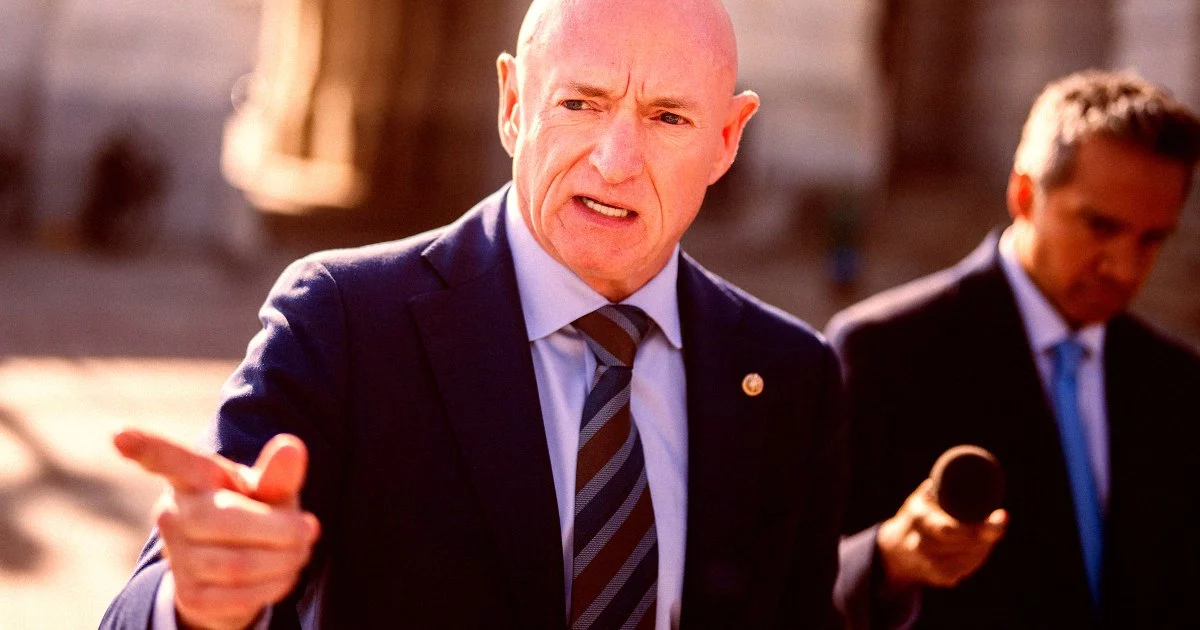
The public clash between Senator Mark Kelly—a decorated astronaut and retired Navy captain—and Defense Secretary Pete Hegseth over the U.S. military campaign in Venezuela has exposed a set of fault lines that reverberate far beyond the Beltway. In a strikingly modern tableau, Kelly and five Democratic colleagues released a polished video urging service members to resist “illegal orders” tied to kinetic strikes and the forced rendition of Nicolás Maduro. Hegseth’s swift reprisal—demoting Kelly and slashing his pension—was matched by President Trump’s incendiary suggestion that Kelly’s actions could warrant the death penalty. This confrontation is not merely a constitutional skirmish; it is a signal event in the evolving relationship between America’s civilian leadership and its military stewards, with cascading implications for business, technology, and global markets.
Strategic Shockwaves: Energy, Technology, and Institutional Volatility
At the heart of the crisis lies Venezuela, still the custodian of the world’s largest proven oil reserves. The specter of U.S. intervention—now manifesting in urban strikes and regime-targeted operations—has sent tremors through global supply chains. U.S. Gulf-Coast refiners, uniquely configured for Venezuela’s heavy crude, face operational uncertainty as the possibility of protracted conflict or regime collapse threatens to disrupt flows. Multinational energy and logistics firms are bracing for a tightening of OFAC sanctions, historically imposed within weeks of overt military action, raising compliance costs and operational friction.
The rapid escalation from maritime interdictions to urban combat underscores the pivotal role of commercial intelligence, surveillance, and reconnaissance (ISR) assets. Small-satellite constellations and AI-driven targeting systems—once the purview of defense ministries—now implicate private-sector vendors in real-time combat support. For companies previously insulated by a veneer of neutrality, the reputational hazards are acute, especially as digital evidence of their involvement circulates on social media.
The Kelly–Hegseth confrontation also spotlights the compression of strategic dissent into the viral economy. Kelly’s decision to broadcast his opposition via a professionally produced, social-media-optimized video is emblematic of how digital channels can rapidly mobilize public sentiment and force boardroom recalibration. Corporate crisis-communications teams are now compelled to factor in the velocity and virality of such moments, which can shift stakeholder expectations overnight.
Boardroom Calculus: Talent, Procurement, and Information Risk
The reverberations of this civil–military rupture are already being felt in the corridors of corporate power. Senior ex-military officers currently hold a significant share of board seats in aerospace, defense, and cybersecurity firms. If the precedent of punitive action for policy dissent hardens, these leaders may self-censor, depriving companies of critical geopolitical insight at a time of heightened volatility. Alternatively, technology firms with robust civil-liberties cultures may attract a new cohort of disaffected officers, accelerating the migration of defense talent into Silicon Valley and reshaping the competitive landscape.
Procurement cycles are also in flux. The urgency of operations in the Caribbean theater may prompt abbreviated acquisition timelines for drones, ISR platforms, and hypersonic interceptors. Yet, such surges are often followed by congressional scrutiny and funding clawbacks, exposing contractors to contract volatility and revenue whiplash. CFOs and strategic planners at both Tier-1 and Tier-2 suppliers would be wise to stress-test scenarios ranging from rapid escalation to abrupt rollback.
The information environment is equally fraught. Political polarization within the armed forces increases the risk of insider threats for defense contractors, particularly those employing reservists. Chief Information Security Officers must redouble efforts on access control and data-loss prevention, especially with upcoming federal compliance audits. Meanwhile, disinformation campaigns exploiting the Kelly–Hegseth narrative are proliferating on fringe platforms, posing reputational risks for brands with veteran or Latin-American constituencies.
Navigating the New Geopolitical Terrain: Strategic Moves for Business Leaders
For executives and board members, the path forward demands both agility and foresight. Scenario planning for Latin-American operations should encompass both the prospect of a negotiated settlement—potentially unlocking multi-billion-dollar reconstruction contracts—and the risk of a drawn-out occupation that could jolt oil prices and upend supply chains. Hedging strategies, particularly in energy markets, should be recalibrated now, before liquidity premiums spike.
At the governance level, it is prudent to formally integrate civil–military relations into enterprise risk matrices, encompassing talent strategies, reputational exposure, and federal contract eligibility. Whistle-blower and free-speech policies should be revisited and, where possible, strengthened beyond statutory requirements to pre-empt regulatory scrutiny.
On the technology front, the crisis signals accelerated demand for autonomous maritime interdiction, persistent satellite surveillance, and secure communications—areas where early-stage investment and FedRAMP-certified solutions will command premium valuations. Legal teams should closely monitor the outcome of Kelly v. Hegseth, as any judicial constraint on punitive measures against retired officers could reshape the advisory-board ecosystem that underpins corporate geopolitical intelligence.
The Kelly–Hegseth episode, and the broader U.S. intervention in Venezuela, offer a prism through which to view the entanglement of talent, technology, and geopolitics in the modern enterprise. For those able to read the signals and adapt, the moment is rife with both peril and possibility.


 By
By
 By
By
 By
By
 By
By

 By
By