
Rethinking the Humanoid: Atlas and the Dawn of Post-Biological Automation
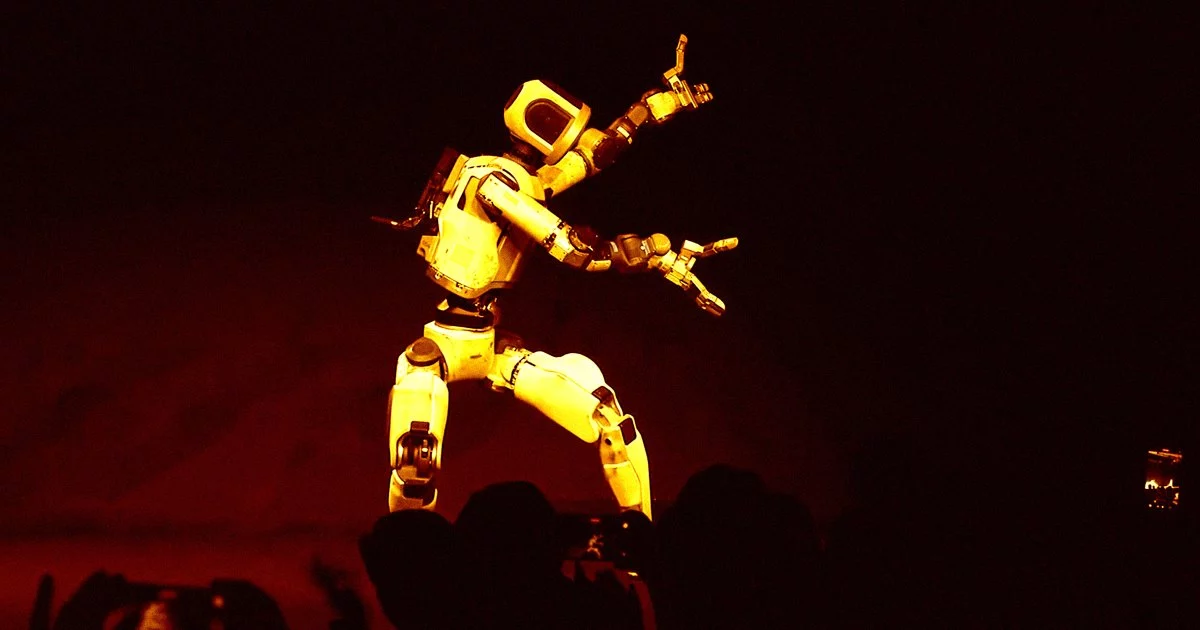
At CES 2024, Boston Dynamics’ unveiling of a production-ready Atlas humanoid robot—paired with a technical alliance with Google DeepMind—signaled a profound shift in industrial robotics. Far from the anthropomorphic novelties of the past, this new Atlas is a study in purposeful divergence from biology: a machine that borrows from human form only where it serves utility, then exceeds it with mechanical grace.
The demonstration was as much a statement of intent as a technical showcase. Atlas’s 360-degree hip, wrist, and neck rotations are not mere parlor tricks; they represent a design philosophy that asks not how closely robots can mimic humans, but how much further they can go once freed from the constraints of flesh and bone.
Engineering Beyond the Human Template
The architecture of Atlas is a deliberate departure from the musculoskeletal limitations of its creators. Its joints, unbound by tendons or cartilage, allow for compound rotational freedom, making the machine less a robo-person and more a flexible, kinematic platform. Early analyses point to the use of lightweight composite links and high-torque electric actuators—choices that forgo hydraulic complexity in favor of strength, compliance, and reliability.
This hardware is paired with a rapidly evolving AI stack. DeepMind’s involvement hints at an end-to-end learning pipeline: large-scale simulation pre-training, transfer learning for edge deployment, and generative policy refinement. The analogy to AlphaFold is apt; both projects seek to generalize complex, high-dimensional behaviors—one in proteins, the other in physical manipulation. The likely result: foundation models for robotics that synthesize visual, tactile, and linguistic data, enabling robots to adapt fluidly to new tasks.
Hyundai’s 2028 deployment target for Atlas aligns seamlessly with its Industry 4.0 ambitions. The robot’s anthropomorphic reach allows it to operate within legacy, human-oriented work cells, sidestepping the need for costly re-tooling. This is not just a technical coup—it’s a compression of retrofit costs, a bridge between old infrastructure and new automation.
Economic Realities and Industrial Stakes
Atlas enters the market at a moment of acute labor shortages across the U.S., EU, and South Korea, exacerbated by demographic shifts and reshoring incentives. The promise of “drop-in” labor elasticity—robots that can step into human roles without plant-wide redesign—has never been more attractive. Yet, the economics remain unproven. Early prototypes are priced in the mid-six figures; to achieve mass adoption, Boston Dynamics must drive down the bill of materials below $100,000 and guarantee multi-year reliability, meeting the stringent payback periods demanded by automotive CFOs.
The competitive landscape is crowded. Tesla’s Optimus, Agility’s Digit, and Figure’s 01 all chase a total addressable market estimated in the trillions, evoking the speculative fervor of early electric vehicle markets. The risk of a bubble is real, especially as valuations race ahead of proven unit economics.
Should Atlas prove capable of manipulating heavy, awkward components like EV battery packs and stamped body panels, it will challenge the dominance of fixed-axis robots from industrial giants such as Fanuc, ABB, and KUKA. The potential for cannibalization is clear—but so is the opportunity to unlock new, previously unserviceable scenarios.
Strategic Leverage and the Data Flywheel
The partnership between Boston Dynamics and Google DeepMind is more than a marriage of hardware and software. It is a bid to create a closed-loop system in which usage data continuously refines both the AI and the mechanical design—a feedback flywheel reminiscent of Tesla’s approach to autonomous driving. This dynamic, if realized, could become a formidable moat, insulating the partnership from hardware-only competitors.
Atlas’s modularity hints at a broader platform strategy. The possibility of interchangeable appendages and third-party software modules evokes the accessory ecosystems of smartphones and GPUs, suggesting a future where robots are not just products, but platforms for innovation.
Hyundai’s adoption of Atlas also serves as a signal to regulators and ESG-conscious investors. Robots that reduce workplace injuries and support net-zero commitments are not just productivity tools; they are compliance assets, aligning with evolving safety and environmental standards.
Geopolitically, the Boston Dynamics–Hyundai axis positions South Korea as a rising force in global robotics, challenging the longstanding dominance of Japan and Germany. The implications for trade policy and export financing are profound, as nations vie for leadership in the automation race.
As Atlas transitions from acrobatic showpiece to production asset, the conversation among executives is shifting. The questions are no longer theoretical: Which workflows are ripe for humanoid deployment? How will operational data be managed and secured? What new models of depreciation, insurance, and labor relations will emerge as robots become co-workers?
Those who see humanoid robots not as novelties but as strategic variables—integrating labor, data, and supply-chain resilience—will be best positioned to turn early experimentation into lasting advantage. The age of post-biological automation is no longer a distant prospect; it is arriving, joint by joint, line by line, in the world’s most advanced factories.

 By
By
 By
By


 By
By
 By
By

 By
By