
A Tectonic Shift in Smart-Home Robotics: Dreame’s X40 Ultra Discount as Market Signal
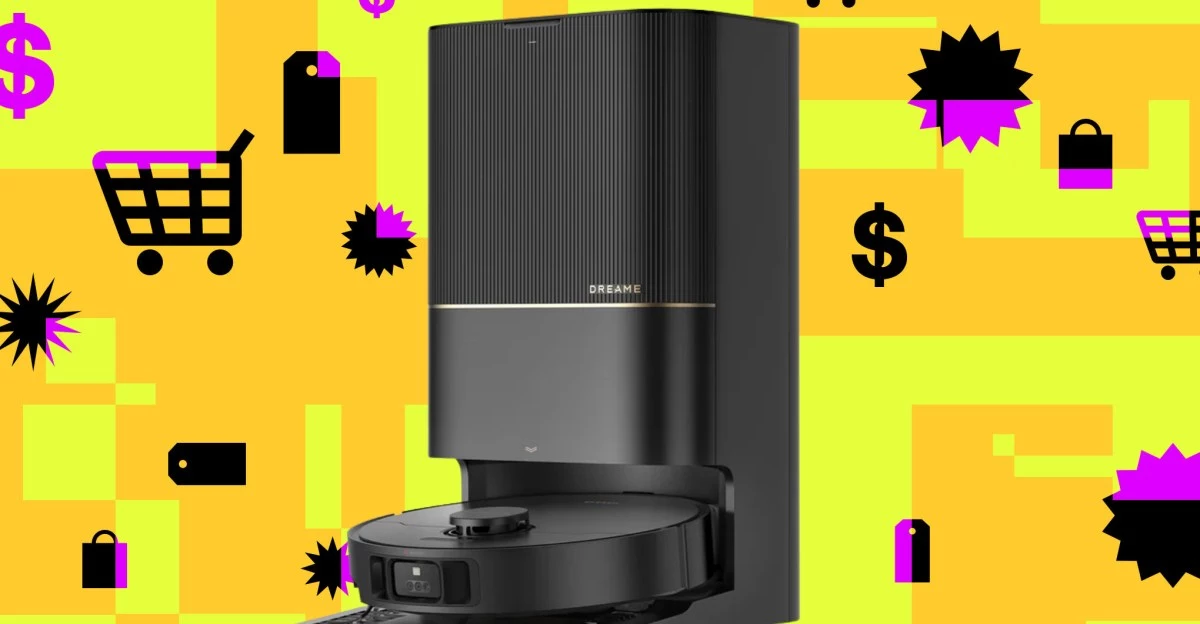
The smart-home landscape, ever restless, has just witnessed a seismic jolt. Dreame’s dramatic price cut on its X40 Ultra robot vacuum—slashing the sticker from $1,199.99 to a mere $503—arrives not as a mere seasonal promotion, but as a harbinger of deeper industry realignment. The timing is conspicuous: the X40 Ultra’s markdown trails the introduction of Dreame’s more advanced X50 Ultra, signaling both an inventory recalibration and a strategic recalibration in how value is positioned and perceived in the robot vacuum sector.
The Anatomy of Autonomy: Where AI Meets Everyday Utility
The X40 Ultra’s core proposition remains formidable, even as its price plummets. With 12,000 Pa suction—placing it in the upper echelon of consumer robotic vacuums—and dual oscillating mop pads that detach automatically, Dreame’s device is a testament to the accelerating sophistication of domestic robotics. Its AI-guided dirt detection leverages on-device vision processing, a notable pivot from cloud-based inference. This architectural choice not only trims latency but also sidesteps the data-privacy pitfalls that increasingly concern consumers.
The X40 Ultra’s fully automated base station, handling dust, water, and mop pad maintenance, is emblematic of a broader industry migration toward “hands-off” robotics. This is more than a convenience play; it is a necessary precursor to mainstream acceptance of autonomous household machines. Yet, the X40’s omission of the X50’s swing arm and dual rubber rollers is telling. Here, Dreame exposes a fundamental tension in robot design: should innovation focus on refining core autonomy, or on expanding the machine’s physical reach and adaptability to complex floor plans? The answer, it seems, is being written in real time.
Accessory Ecosystems and the New Modularity
The promotional halo surrounding the X40 Ultra’s discount is equally revealing. Consider the Baseus 163 W multi-device car charger, whose power delivery (PD 3.1, PPS Fast-Charge) and retractable cable architecture reflect a convergence of automotive and consumer electronics power standards. This is not just a peripheral; it’s a signpost pointing toward a future where home, auto, and mobile energy systems interoperate seamlessly.
Apple’s Crossbody Strap for MagSafe cases is another subtle nudge toward modularity, extending the iPhone’s ecosystem from power and identity to wearable hardware. Meanwhile, the Polaroid Now Plus instant camera—now discounted yet still commanding a premium—demonstrates that analog experiences retain their allure even in a digital age. The persistence of such “phygital” products suggests that the most resilient hardware brands will be those that blend tactile engagement with digital convenience, resisting the gravitational pull of pure commoditization.
Competitive Realignment and Strategic Imperatives
Dreame’s 58 percent markdown is not an isolated maneuver. It is a calculated response to the twin pressures of inventory rationalization and intensifying competition. By repositioning the X40 Ultra at the $500 mark, Dreame thrusts it into the crowded “prosumer” segment, directly challenging incumbents like iRobot’s Roomba j7+ and Ecovacs’ Deebot T9. This move reinforces a three-tier market structure:
- Entry-level ($300 and below): Basic automation, limited features.
- Prosumer ($500–$700): Advanced autonomy, robust self-maintenance, AI features.
- Flagship ($1,200+): Cutting-edge hardware, expanded physical reach, premium ecosystems.
Such aggressive price compression is likely to squeeze margins for Western incumbents, while granting Chinese OEMs increasing share in mature markets. The bundling of unrelated accessories on a single promotional page is a tactic borrowed from the playbook of fast-moving consumer goods, designed to boost average cart size and amortize customer-acquisition costs.
For device OEMs, the lesson is clear: shorter flagship lifecycles and sharper end-of-life discounts are the new normal. Monetization must increasingly extend beyond the initial hardware sale, encompassing consumables, subscription-based analytics, and cross-device orchestration. Retailers and e-commerce platforms, meanwhile, must balance the traffic spikes of category-spanning flash sales against the risk of training consumers to delay purchases in anticipation of future discounts.
The Road Ahead: AI, Interoperability, and the Phygital Renaissance
The implications radiate outward. The convergence of home, auto, and mobile power—embodied by the Baseus charger—foreshadows a universal, bidirectional charging fabric. Smart-home platforms will vie to convert the telemetry generated by self-maintenance robotics into actionable insights for energy optimization and security, unlocking new SaaS revenue streams.
Perhaps most significantly, the rise of generative and reinforcement-learning models will soon transform not just path planning and fault prediction, but the entire paradigm of contextual home automation. Early investments in edge-AI silicon and data-labeling pipelines will set the winners apart.
Against this backdrop, Dreame’s X40 Ultra discount is more than a clearance sale; it is a signal flare illuminating the next phase of smart-home evolution. The brands that synchronize product cadence with supply-chain agility, cultivate cross-device synergies, and harness the full promise of AI-powered autonomy will define the contours of the market’s future.

 By
By
 By
By
 By
By
 By
By



 By
By