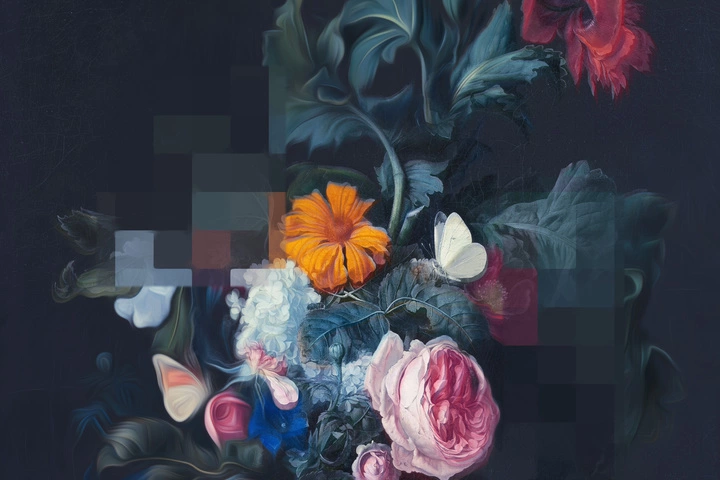

The AI-Forged Provenance: Art’s New Battleground
In the shadowed corridors of the global art market, a new adversary has emerged—one not of flesh and blood, but of code and computation. Generative AI, with its uncanny ability to mimic human nuance and institutional formality, has quietly upended the centuries-old dance between authenticity and deception. The provenance document, once the sacred passport of a painting or sculpture, is now a battleground where algorithms duel for control of truth itself.
Generative AI platforms—large language models and image generators—have democratized the art of forgery. No longer the exclusive province of skilled counterfeiters, the fabrication of sales invoices, certificates of authenticity, and valuation reports is now accessible to anyone with a browser and a modicum of intent. These synthetic documents, replete with plausible institutional seals and typographic quirks, are nearly indistinguishable from the real thing. Fine-art insurers and brokers are already sounding the alarm: claims supported by AI-generated paperwork are rising, and only the most meticulous forensic metadata analysis can expose the fraud.
The technology’s duality is striking. Collectors, often unwittingly, consult AI chatbots for provenance checks, only to receive “hallucinated” confirmations—convincing fabrications that unravel under scrutiny. In response, adjusters and underwriters are deploying their own AI tools, but concede that the gap between forgery and detection is closing. Visual inspection, once the first line of defense, is rapidly becoming obsolete.
From Brushstroke to Blockchain: The Shifting Terrain of Authenticity
The art world has always been a theater of trust—between artist and buyer, dealer and collector, expert and institution. But in this new era, trust-by-expertise is yielding to trust-by-infrastructure. The old methods—pigment analysis, connoisseurial intuition, the subtle reading of brushwork—are being supplemented, and sometimes supplanted, by digital forensics. Creation timestamps, cryptographic hashes, and PDF object trees are the new brushstrokes, artifacts of authorship in a landscape where the line between real and synthetic blurs.
Yet, the very engines that generate fake documents are learning to spoof these digital signals. LLMs can now fabricate plausible EXIF data, and image generators can mimic watermark patterns. The arms race is not merely technological but epistemological: it is now cheaper and faster to invent a new document than to conclusively disprove its authenticity. Detection relies on finite registries and known signatures, while creation is limited only by the imagination—and the dataset—of the attacker.
Economic ripples are already visible. Insurers, grappling with rising loss-adjustment expenses, are rethinking their models. Exclusions for AI-forgery are on the horizon, and premiums for private collections and galleries are likely to rise. The liquidity of art as an alternative asset is threatened; due-diligence costs inflate, transaction velocity slows, and art-backed lending becomes riskier. Secondary market spreads may widen, echoing the title risk seen in real estate mezzanine debt. For museums and auction houses, the specter of AI-assisted forgeries slipping through the net poses not just financial risk, but existential brand damage.
Toward a Consortium of Trust: Strategic Responses and Market Evolution
The way forward, paradoxically, may lie in collaboration. Major stakeholders—insurers, auction houses, catalog-raisonné publishers—share a vested interest in restoring confidence. The formation of a Provenance Confidence Consortium, pooling proprietary archives of legitimate paperwork, could mirror the role of SWIFT in banking, creating a closed ecosystem where detection models are fed with the richest possible training data.
Technological solutions are emerging: distributed ledgers, NFC-enabled artwork tags, and cryptographic provenance standards are being piloted to shift authenticity from opinion to verifiable data trail. Regulatory frameworks, such as the EU AI Act, are beginning to classify falsified documentation as a high-risk use case, nudging the industry toward early compliance and transparent audit trails.
In the short term, the market faces an inversion: AI-generated fakes proliferate faster than detection tools can mature. Underwriters are preparing for a wave of AI-forgery exclusions in 2025 policy renewals. Analog provenance—handwritten ledgers, video-recorded transfers, artist biometrics—gains new cachet as “pre-AI” authenticity. Over the next three years, expect the rise of Proof-of-Authenticity-as-a-Service platforms, bundling IoT tagging, blockchain registration, and AI anomaly scoring, as well as a wave of M&A activity as insurers seek to internalize AI-forensics expertise.
Longer term, the art market will bifurcate. Works with end-to-end cryptographic provenance will command a premium, while uncertified pieces will trade at a discount—effectively creating two parallel economies. The standards set here will ripple outward, influencing digital content, ESG disclosure, and beyond.
Boards and executives must now treat provenance risk as both a financial exposure and a cybersecurity threat. Insurers need scenario models that reflect the velocity of AI forgery, not just historical data. Technology vendors should pivot toward verticalized, regulation-ready solutions tailored to the art market’s unique vulnerabilities.
Generative AI has transformed art forgery from an artisanal crime into a scalable SaaS enterprise. The institutions that embed cryptographic, consortium-based verification today will define the new premium segment of the art economy—and set the template for authenticity in the digital age. The stakes are no longer just about art; they are about the very architecture of trust in an era where reality itself can be manufactured.
 By
By
 By
By
 By
By
 By
By

 By
By