
When the Cosmos Offers a Ride: 3I/ATLAS and the Dawn of Interstellar Logistics
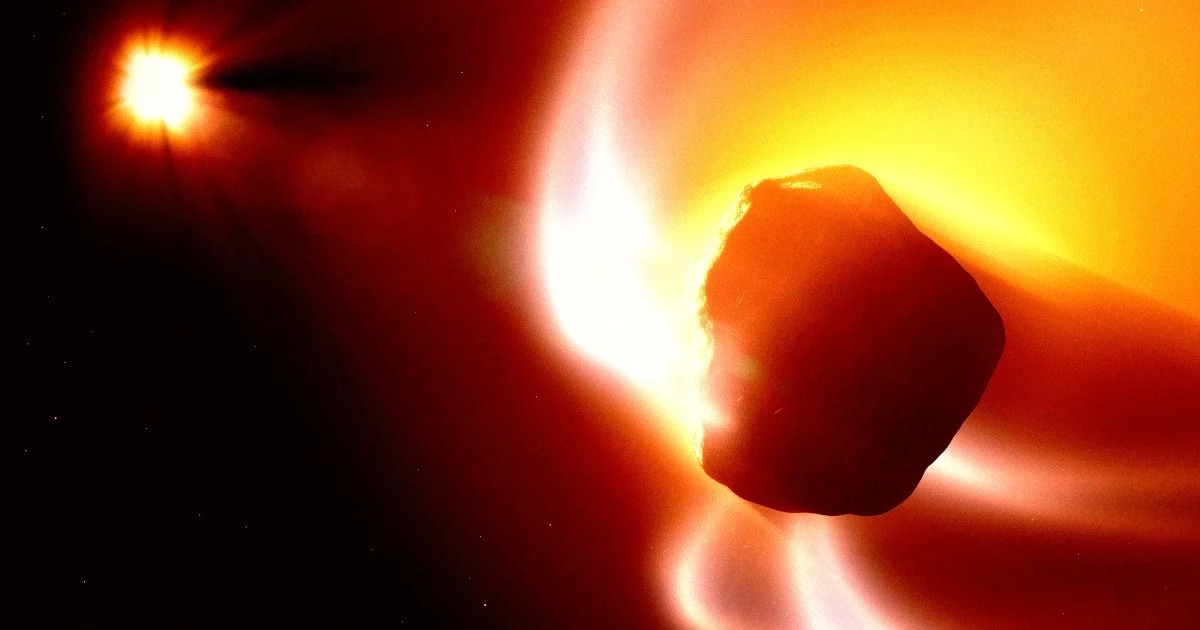
On December 19th, a silent visitor from the void—3I/ATLAS—swept through our celestial neighborhood, passing Earth at a stately 167 million miles. This unbound comet, only the third known interstellar object after the enigmatic ‘Oumuamua and the icy Borisov, has kindled more than scientific curiosity. In the hands of visionaries like Harvard’s Avi Loeb, it becomes a logistical revelation: a cosmic express, offering humanity the rare chance to hitch a ride beyond the Sun’s dominion without the tyranny of chemical propellant or the prohibitive costs of megawatt-scale laser arrays.
The encounter with 3I/ATLAS produced no signs of alien technology. Yet, its mere presence—hurtling at 37 miles per second, far outpacing even our fastest probes—has reframed the conversation from pure observation to pragmatic opportunity. The question is no longer just what we can learn, but what we can send.
—
The Logistics of Interstellar Hitchhiking: Technology Meets Timing
The concept is as elegant as it is audacious: treat these rare, high-velocity interstellar objects as “free” propulsion platforms. Instead of launching ever-larger rockets or waiting for solar sails to mature, why not attach micro-probes, time capsules, or even memorial payloads to these cosmic visitors? The implications ripple through the landscape of space technology:
- Micro-Probe Attachment: Engineering sub-10 kg craft able to autonomously anchor themselves to irregular, loosely bound cometary surfaces—an exercise in miniaturization and autonomy.
- Ultra-Fast Capture Mechanisms: From harpoons to cold-gas anchors, the race is on to develop systems that can seize fleeting opportunities, adaptable to the unpredictable geometry and composition of interstellar debris.
- Laser-Engraved Data: Repurposing orbital laser-communications infrastructure to etch information directly onto the surface of passing objects—a literal message in a bottle, cast into the galactic sea.
This approach turns the energy equation on its head. Where chemical rockets are constrained by the tyranny of mass ratios—over 90% of launch mass is propellant—piggybacking on 3I/ATLAS offers a low-capex, high-ROI bridge to the stars. The next window, a close pass by Jupiter in March 2026, is already galvanizing mission planners and investors alike.
—
Economic and Strategic Ripples: Capital, Heritage, and the New Space Race
The potential of interstellar rideshares is not lost on the investment community. As post-SPAC funding shifts from launch vehicles to downstream data and services, a credible interstellar probe program could reignite hardware investment, offering differentiated technical risk and the promise of long-term brand equity.
- Capital Flows: Hardware investors, weary of commoditized launchers, may find new allure in micro-intercept demonstrators and nano-probe platforms.
- Memorial and Heritage Markets: The notion of sending ashes or data vaults on a one-way journey out of the solar system is more than a novelty. With the space-burial market growing at 7–9% CAGR, interstellar offerings could command triple the fees, carving out a lucrative, high-margin niche.
- Insurance and Stewardship: Missions spanning millennia demand new models—escrow accounts, custodial frameworks, and multi-generational stewardship vehicles, perhaps even a new asset class akin to perpetual trusts.
Strategically, the absence of legal frameworks for modifying or annexing interstellar visitors offers a fleeting window for norm-setting. Early movers—be they nations or private consortia—could shape the next addendum to the Outer Space Treaty, much as satellite constellations have redefined low-Earth orbit governance. The optics of national insignia affixed to an interstellar body are not lost on great powers; expect China, the UAE, and others to move quickly.
—
Second-Order Effects and the Road Ahead: Materials, Data, and Policy
Beyond the obvious, the 3I/ATLAS encounter hints at subtler, far-reaching impacts:
- Materials Science: Direct study of exosolar isotopes could revolutionize terrestrial supply chains for advanced semiconductors or medical radioisotopes.
- Data Longevity: Encoding million-year time capsules will drive innovation in radiation-hard substrates and quantum-safe archival methods—technologies with terrestrial applications in sovereign data and security.
- Climate-Finance Parallels: The stewardship of multi-century missions mirrors the challenges of carbon-offset markets, suggesting a cross-pollination of methodologies between space and ESG finance.
For forward-thinking executives and policymakers, the message is clear. The boundary conditions of interstellar ambition have shifted: what was once an insurmountable energy problem is now a question of timing, logistics, and imagination. Those who internalize the “natural rideshare” paradigm—allocating capital, shaping standards, and exploring new revenue streams—will find themselves not just observers, but architects of the next great leap into the unknown.
As 3I/ATLAS recedes into the darkness, it leaves behind more than a trail of cosmic dust. It offers a blueprint for a new era—one where the cosmos itself becomes our partner in exploration, and where the boldest ideas may yet find passage on the unlikeliest of vessels.

 By
By


 By
By
 By
By

 By
By
 By
By