
Taiwan’s Asymmetric Defense Revolution: Redefining Security in the Shadow of the PLA
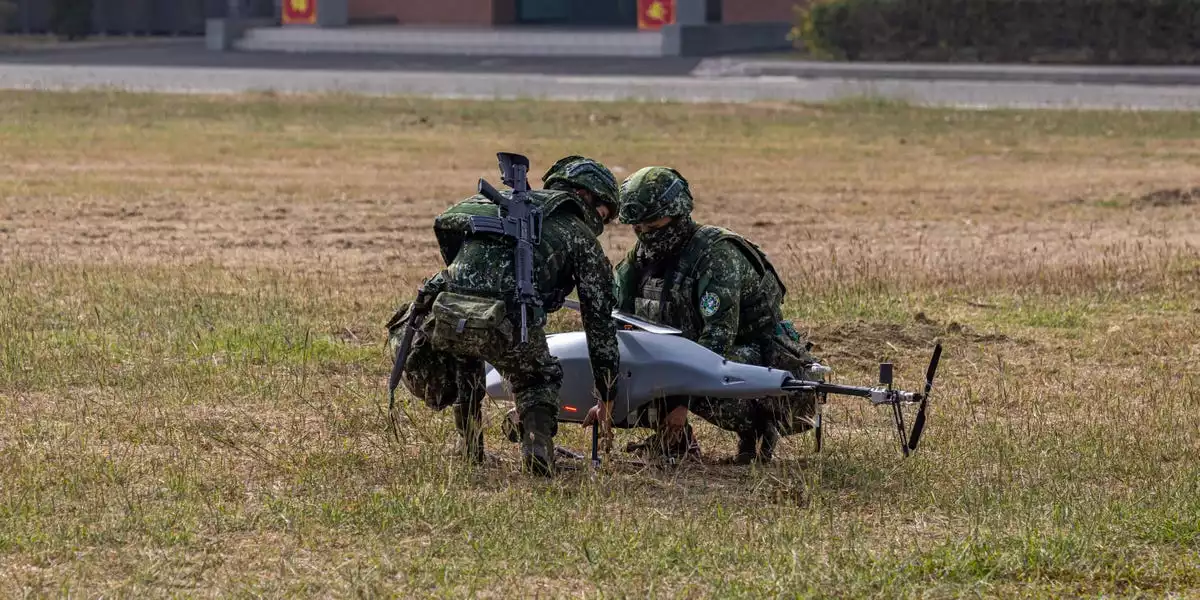
In the labyrinthine corridors of Taipei’s defense establishment, a profound transformation is underway. No longer content to chase the People’s Liberation Army’s (PLA) overwhelming numbers ship-for-ship or jet-for-jet, Taiwan is orchestrating a pivot that is as pragmatic as it is innovative. The new doctrine is one of asymmetry—mass-producing low-cost, highly mobile, and survivable systems, from drones and loitering munitions to truck-mounted missile batteries. This is not merely a tactical adjustment, but a strategic reimagining of national defense, one that seeks to turn the island’s vulnerabilities into strengths.
Retired Admiral Lee Hsi-Min, a principal architect of this shift, frames the effort as a dual response: blunting the daily “gray-zone” incursions that sap Taiwan’s resources, while preparing for the specter of high-intensity conflict, where the ability to sustain fires—not the prestige of platforms—will determine survival. Recent budget allocations, an ambitious domestic target of 200,000 drones annually by 2030, and a steady stream of U.S. Foreign Military Sales all signal that this is no passing trend, but a foundational change.
The Strategic Chessboard: Gray-Zone Maneuvers and Lessons from Ukraine
Taiwan’s asymmetric doctrine is not conceived in a vacuum. The PLA’s relentless air and maritime sorties are less about reconnaissance and more about attrition—forcing Taiwan to expend precious flight hours, fuel, and manpower. By fielding swarms of unmanned aircraft, mobile missile batteries, and rapid-deployment sensors, Taiwan aims to flip the cost equation, denying Beijing a cheap lever for coercion.
The war in Ukraine has provided a sobering case study. Attrition, it turns out, is not measured by the number of tanks or jets, but by the resilience of logistics and manufacturing depth. Commercial off-the-shelf (COTS) technologies—smartphones, low-Earth orbit satellite communications, hobbyist drones—have proven decisive when ruggedized and networked. Taiwan’s publicized production goals serve not only as deterrence, but as a signal to capital markets and allies: the island can impose unacceptable costs without matching the PLA in a force-on-force contest. This dovetails with Washington’s “porcupine” doctrine, arming partners to complicate any rapid fait accompli.
Technology as Equalizer: Swarms, Additive Manufacturing, and the Counter-UAS Race
The technological implications of Taiwan’s pivot are profound. Advances in low-SWaP (size, weight, and power) processors now enable micro-UAVs to share sensor data, distribute targeting, and remain resilient under electronic warfare—shrinking kill-chain latency to mere seconds. The integration of AI-driven mission planners promises to shift operational value from singular, exquisite platforms to heterogeneous swarms, echoing the paradigm shift of software-defined networking in the IT world.
Additive manufacturing is compressing the design-to-deployment cycle from years to months. Taiwanese firms are experimenting with 3D-printed airframes and seeker housings, a manufacturing agility with implications far beyond defense—touching everything from medical devices to automotive tooling. Each inexpensive drone forces adversaries to expend disproportionately costly interceptors or directed-energy shots, tilting the cost curve and triggering a counter-UAS arms race. The PLA’s investments in microwave and laser systems will likely spill over into telecom and power-scaling component markets, reshaping adjacent industries.
Economic Ripples: Dual-Use Supply Chains, Investment Cycles, and Global Risk
The economic and industrial reverberations of Taiwan’s defense pivot are equally significant:
- Dual-Use Supply Chains: Many drone subsystems—batteries, optics, flight controllers—mirror consumer electronics. Taiwan’s electronics contract manufacturers (ECMs) thus gain incremental volume without major retooling, raising utilization rates and absorbing semiconductor oversupply. At the same time, a kinetic conflict could disrupt 60% of global advanced chip output, making Taiwan’s defense posture a matter of global economic security.
- Capital Allocation: Defense spending has risen to about 2.5% of GDP, a threshold that risks crowding out R&D in civilian sectors. Balanced public-private consortia, such as drone innovation parks, are essential to ensure that spillover benefits remain positive.
- Defense-Tech Investment: Venture capital is rotating into “hard-tech,” with Taiwan’s demand projections validating a total addressable market for small UAS exceeding $30 billion by 2030. This is catalyzing follow-on funding across the Asia-Pacific.
Internationally, U.S. and European defense firms view Taiwan as a proving ground for exportable asymmetric packages, while indigenous players like Thunder Tiger and GEOSAT Aerospace are gaining intellectual property leverage, potentially following the Turkish Baykar model from domestic champion to global exporter.
Navigating the New Order: Implications for Business and Technology Leaders
The asymmetric turn in Taiwan’s defense strategy is already reshaping the calculus for executives and investors worldwide:
- Insurance and Re-insurance: Actuarial models now factor in drone swarm scenarios, influencing global marine and cargo premiums—an upstream cost for every supply chain leader.
- Cyber-Physical Security: Swarm command-and-control networks weaponize civilian 5G infrastructure, turning telecom operators into quasi-military assets and prompting regulatory scrutiny reminiscent of U.S. critical-infrastructure designations.
- ESG and Resilience: Institutional investors increasingly treat Taiwan’s defense resilience as systemic risk, prompting multinationals to reassess contingency stockpiles and diversify production sites.
For those navigating the intersection of technology, industry, and geopolitics, the asymmetric pivot underway in Taiwan is more than a regional affair—it is a harbinger of how innovation, resilience, and strategic foresight will define the next era of security and commerce. The world is watching, and the lessons extend far beyond the Taiwan Strait.

 By
By
 By
By
 By
By
 By
By
 By
By


 By
By