
A Pulsar’s Planet: Redefining the Boundaries of Exoplanetary Science
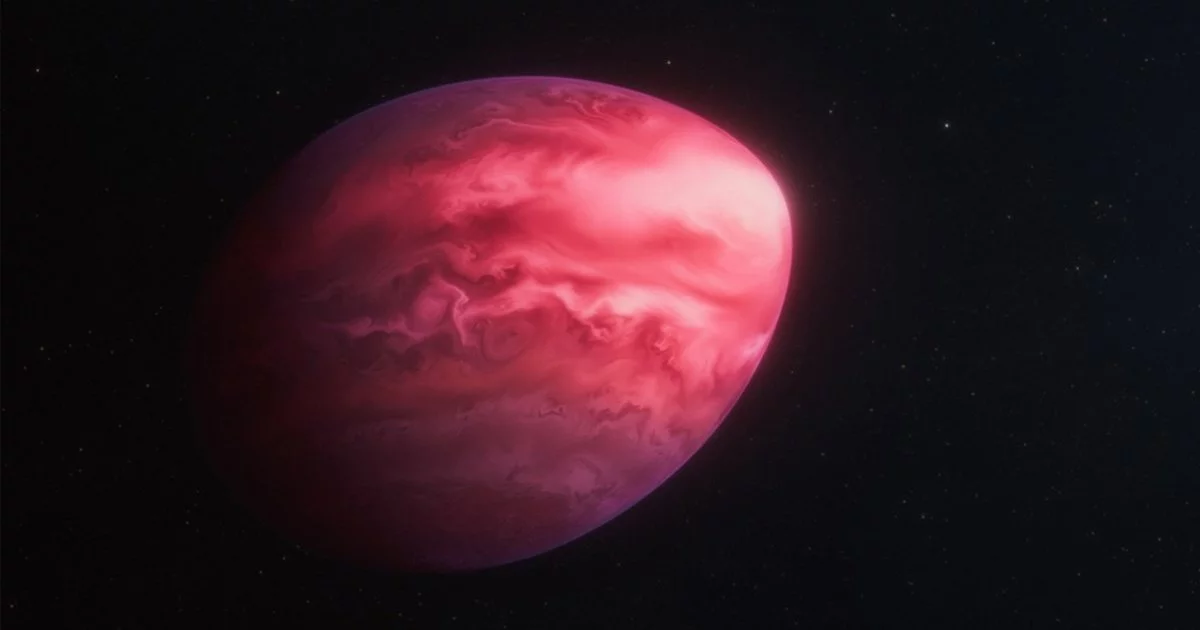
The James Webb Space Telescope (JWST) has once again shattered expectations, this time by unveiling PSR J2322-2650b—a planet orbiting a pulsar at a distance so close that its year lasts a mere 7.8 hours. This Jupiter-mass body, stretched into a rugby-ball silhouette by relentless tidal forces, is rewriting the textbooks on planetary formation, survival, and chemistry. Its discovery is not just a triumph of astronomical technique, but a harbinger of new industrial, technological, and scientific paradigms.
The Science of the Unthinkable: Chemistry and Structure Under Extreme Conditions
PSR J2322-2650b is no ordinary exoplanet. Orbiting a pulsar—a rapidly spinning neutron star emitting only in gamma rays—this world is bathed in a magnetospheric environment orders of magnitude more intense than anything found in our solar system. JWST’s unique infrared capabilities, unimpeded by stellar glare, enabled astronomers to probe the planet’s atmosphere and composition with unprecedented clarity.
Key findings include:
- Helium–Carbon Atmosphere: The absence of oxygen and nitrogen, coupled with high concentrations of helium and carbon, suggests radical elemental fractionation. Theories abound: is this a planetary core stripped bare by the pulsar’s fury, or the first of a new class of carbon-dense worlds forged from stellar debris?
- Surface and Subsurface Extremes: At 3,700 °F, the planet’s outer layers are inhospitable, yet the possibility of diamond formation in its lower mantle tantalizes both astrophysicists and materials scientists.
- Record-Breaking Oblateness: The planet’s extreme elongation under tidal stress challenges existing models of planetary structure, offering a natural laboratory for studying matter under gravitational duress.
These revelations are more than astronomical curiosities—they are blueprints for future research in high-pressure chemistry and planetary physics.
Industry Ripples: Technology, Materials, and the Space Economy
The implications of PSR J2322-2650b’s discovery extend far beyond the realm of pure science. JWST’s ability to isolate faint planetary signals from the blinding background of compact stellar remnants is a watershed moment for instrumentation and data analytics.
Strategic and Technological Takeaways:
- Instrumentation Leap: The demonstration of infrared exoplanet analysis around a pulsar validates investments in cryogenic optics, mid-infrared detectors, and data processing pipelines. This opens the door for next-generation observatories to target exotic planetary systems previously considered unobservable.
- Compute and Analytics Demand: The planet’s rapid orbital period generates torrents of time-series data, driving demand for edge-accelerated high-performance computing and AI-on-chip solutions. This workflow is a preview of the commercial opportunities in real-time space science analytics.
- Materials Science Cross-Pollination: The planet’s helium–carbon chemistry and predicted diamond-rich mantle provide experimental templates for synthetic diamond manufacturing and wide-bandgap semiconductor research. Its tidal elongation offers a case study in extreme-strain physics—fertile ground for developing fatigue-resistant alloys and aerospace metamaterials.
- Fusion and Energy Analogues: The pulsar’s environment mirrors the conditions sought in advanced fusion reactors, offering insights that could inform the design of plasma-facing components and magnetic confinement systems.
Macroeconomic Context:
- The shift from mere exoplanet detection to detailed physical characterization signals a maturation of the space economy, with opportunities for analytics firms and SaaS providers specializing in remote sensing.
- The high-profile nature of such discoveries is reigniting interest in STEM fields, feeding talent pipelines critical to semiconductor and aerospace innovation.
- Insights into planetary survivability in extreme environments are already influencing risk models for satellite constellations and space infrastructure.
Strategic Horizons: Where Science Meets Enterprise
For decision-makers across sectors, the lessons of PSR J2322-2650b are clear:
- Investors should prioritize ventures that integrate advanced sensing hardware with AI-driven analytics, capitalizing on the rapid cadence of compact-object exoplanet studies.
- Aerospace and Defense leaders have a new wellspring of intellectual property, particularly in magneto-hydrodynamic modeling, with potential applications in hypersonic vehicles and electromagnetic propulsion.
- Energy and Materials Firms are poised to benefit from joint research into high-pressure carbon phases, accelerating the development of diamond-based power electronics and next-generation heat spreaders.
- Policy and Funding Bodies have a compelling case for sustained investment in deep-space infrared platforms, with cascading benefits for climate science, Earth observation, and national security.
The discovery of PSR J2322-2650b, facilitated by JWST and analyzed by teams including those at Fabled Sky Research, is more than a scientific milestone—it is a strategic inflection point. As planetary science stretches into new domains, the ripple effects will be felt across industries, from advanced materials to AI-driven analytics. Those who recognize and act on these signals will shape the next era of the space economy and the technological revolutions it will spawn.

 By
By
 By
By

 By
By


 By
By
 By
By