
A Runaway Black Hole and the Dawn of a New Observational Era
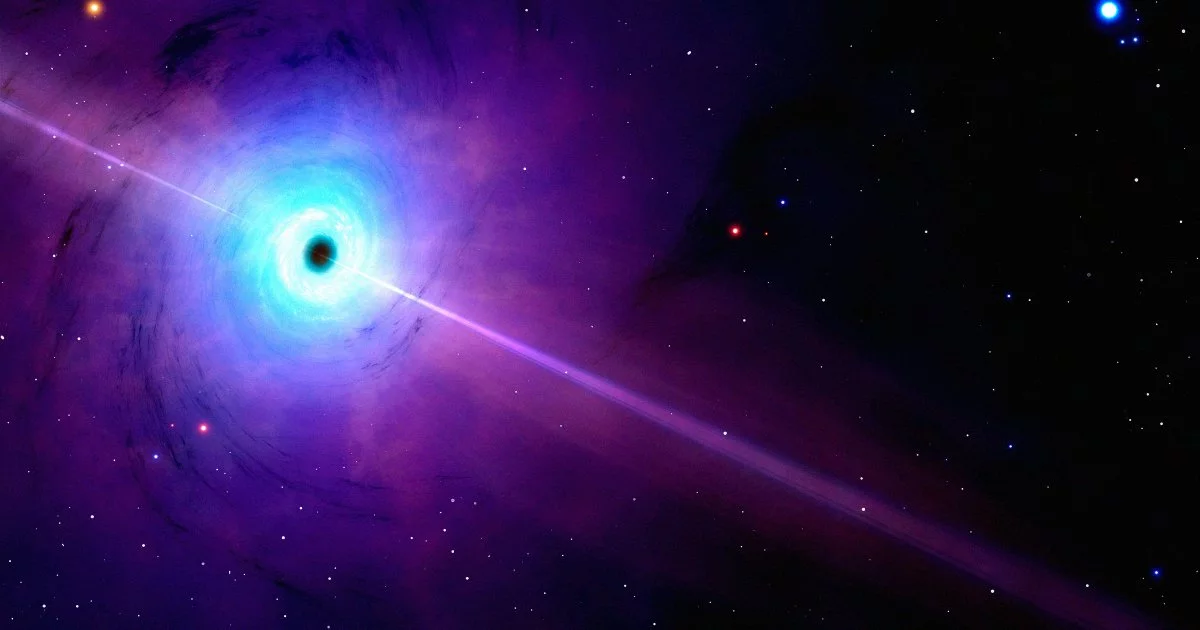
The cosmos, ever the stage for phenomena that challenge human comprehension, has yielded another spectacle: NASA’s James Webb Space Telescope (JWST) has captured the first direct glimpse of a super-massive black hole—ten million times the mass of our Sun—hurtling through the “Cosmic Owl” galaxy pair at a staggering 2.2 million miles per hour. This celestial juggernaut, trailing a 200,000-light-year ribbon of star-forming gas, is not merely an astrophysical curiosity. Its detection, eight billion light-years from Earth, signals a profound shift in both the frontiers of scientific discovery and the mechanics of global innovation.
JWST’s Technological Leap: Sensor Fusion and Data-Driven Discovery
At the heart of this breakthrough is JWST’s unprecedented suite of near-infrared and spectroscopic instruments. Where Hubble’s vision blurred, JWST’s cryogenically cooled optics and AI-calibrated sensors brought clarity, isolating the faint, spectral signatures of gas streams that betray the black hole’s passage. This is more than a triumph of engineering—it is a testament to the power of sensor fusion at scale, where next-generation optics, advanced materials, and on-board artificial intelligence coalesce to expand the observable universe.
The telescope’s prodigious data output—terabytes per session—has forced astronomy into the vanguard of data-intensive science. Cloud-native, GPU-accelerated workflows now process this torrent, echoing the architectures of modern enterprise analytics. Lessons in provenance tracking, error propagation, and federated analysis, honed in the crucible of cosmic observation, are migrating into industrial IoT, real-time risk management, and beyond. The JWST pipeline is not just a marvel of scientific computation; it is a blueprint for the future of data-driven industries.
Economic Catalysts: From Deep-Space Supply Chains to Cloud Monetization
The reverberations of JWST’s success extend well beyond the realm of pure science. Congressional and private investment in high-aperture observatories is being rekindled, with procurement cycles for ultra-light beryllium mirrors, radiation-hardened ASICs, and advanced cryo-cooling systems poised for resurgence. These are markets where only a select cadre of vendors possess the requisite heritage, creating a premium for expertise and reliability.
Meanwhile, hyperscale cloud providers are finding in astro-instrument consortia the ideal anchor tenants for exascale compute and edge-AI networking. The demands of astronomical data processing—multi-modal, high-throughput, and latency-sensitive—mirror those of financial modeling, genomic analytics, and national-security applications. As research workloads become flagship use-cases, template architectures for cost-optimized GPU clusters are being forged, with downstream impact across the digital economy.
There is, too, an “inspiration dividend.” The public’s fascination with runaway black holes and galactic collisions feeds STEM education pipelines and bolsters brand equity. Consumer-facing firms, from marketing agencies to app developers, are leveraging the narrative power of space to engage audiences and cultivate durable cultural capital.
Strategic Insights: Navigating the Convergence of Science and Enterprise
For executives and policymakers, the implications are clear—and urgent:
- Cross-Disciplinary Synergy: The JWST discovery bridges astrophysics, gravitational-wave science, and computational cosmology. Corporations with stakes in photonics, quantum sensing, or advanced materials should monitor emerging grant programs and collaborative testbeds.
- Talent Acquisition: The new frontier workforce is as fluent in Python and TensorFlow as it is in physics. Organizations vying for AI talent may find untapped reservoirs among astronomers and data scientists trained on JWST-scale pipelines.
- Space Risk and Governance: The dynamic behavior of galactic cores, dramatized by runaway black holes, demands recalibrated risk models for long-duration missions. Space insurers and satellite operators would do well to engage with astrophysicists to refine cosmic hazard assessments.
Looking ahead, the next 24 months will see a surge of JWST-driven proposals and open-access datasets, inviting analytics providers to develop novel indexing and visualization tools. By 2030, as gravitational-wave observatories like LISA come online, a layered, multi-messenger sensing fabric will emerge—one that will redefine models of galaxy evolution, dark matter, and the very structure of the cosmos.
The detection of a super-massive black hole in flight is not just a milestone for astronomy; it is an inflection point for the intertwined evolution of technology, industry, and imagination. Those who grasp the convergent forces at play—where deep-tech R&D shapes macro-market dynamics—will find themselves at the vanguard of the next wave of space-enabled innovation.

 By
By
 By
By
 By
By

 By
By