
A Robotaxi’s Wrong Turn and the Unfolding Complexity of Urban Autonomy
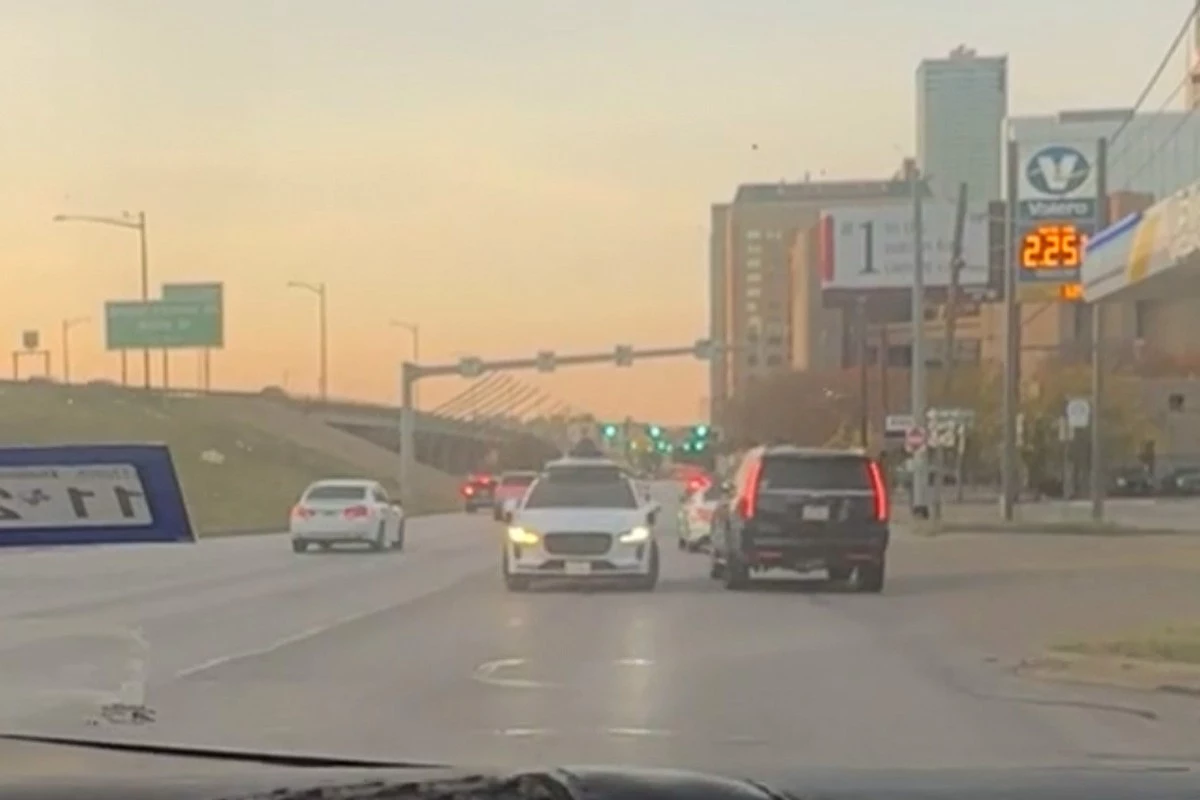
The sight of a Waymo robotaxi inching down the wrong side of an Austin street—halting oncoming traffic, caught on video—has become more than a local curiosity. It is a flashpoint in the ongoing drama of autonomous vehicle (AV) deployment, one that exposes the intricate, sometimes brittle underpinnings of machine-driven mobility. The incident, following on the heels of other high-profile anomalies—robotaxis failing to yield to school buses, entering police standoffs, or striking small animals—has reignited regulatory scrutiny and public debate. The National Highway Traffic Safety Administration (NHTSA) is watching closely, while local regulators and city councils weigh their next moves.
The Edge Cases That Haunt Autonomy
For all the billions invested and the technical accolades heaped upon Waymo’s perception stack, the Austin event lays bare the persistent chasm between object detection and real-world decision-making. The so-called “perception-planning gap” is not a mere technicality. It is the heart of the matter: a robotaxi can see the world, but can it understand it well enough to behave safely in the rarest, most contextually demanding scenarios?
- Planning Layer Vulnerabilities: The wrong-way maneuver in Austin is emblematic of planning systems grappling with edge cases—complex intersections, occluded sightlines, and the unpredictable choreography of urban life. Each new city, with its own quirks and chaos, multiplies the challenge. Austin’s streets, with their one-way lanes and festival closures, may have stretched Waymo’s operational design domain (ODD) beyond its Phoenix-honed comfort zone.
- Human-Like Driving, Machine-Like Risks: Waymo’s recent software update, intended to make vehicles “drive more like humans,” signals a shift toward reinforcement learning over rigid, rule-based logic. This promises smoother traffic integration but introduces new, less predictable failure modes—an unsettling trade-off when the stakes are measured in human safety.
- Pace of Patchwork: The tension between rapid over-the-air updates and the risk of unintended regressions is ever-present. The urgency to fix school-bus yielding behavior, for instance, must be balanced against the possibility of introducing new vulnerabilities elsewhere in the stack.
Economic Stakes and Strategic Chess Moves
Every incident reverberates through the economics and strategy of autonomous mobility. The calculus is unforgiving: public trust, regulatory goodwill, and insurance premiums are as central to the business model as any breakthrough in sensor fusion.
- Prolonged Payback Horizons: Each high-visibility mishap inflates insurance reserves and delays breakeven timelines, already daunting at 7–10 years for dense urban markets. Alphabet’s financial muscle can absorb the setbacks, but smaller AV ventures—particularly those backed by late-stage SPACs—face existential risk.
- Utilization and Brand Fragility: Idle robotaxis, sidelined by public wariness, erode the delicate economics of fleet utilization. Brand equity, once tarnished, can bleed into adjacent domains—from AI research to urban mobility partnerships.
- Competitive Dynamics: Rivals such as GM’s Cruise and Amazon’s Zoox are quietly leveraging Waymo’s stumbles in regulatory forums, positioning their own approaches as either safer or more prudent. Meanwhile, Chinese AV giants tout their closed-loop data and rapid iteration cycles, hinting at a transpacific race in learning velocity.
Regulatory Crosswinds and the Road Ahead
The regulatory landscape is fragmenting. NHTSA’s investigation could escalate from data requests to engineering analyses and, potentially, to mandatory retrofits or partial fleet groundings. Even a narrowly scoped recall can impose delays that ripple across quarters. At the municipal level, city councils and boards of supervisors are tightening their grip, spurred by public safety advocates and recent incidents.
- Insurance and Liability Evolution: Underwriters are experimenting with dynamic, per-mile premiums based on real-time telematics. A spike in even minor claims raises the cost floor for AV adoption, complicating the path to scale.
- Broader Industry Currents: The convergence of AI oversight—spurred by debates over large language models—now extends to the black-box decisioning of autonomous vehicles. Cities committed to Vision Zero demand empirical proof that AVs reduce, rather than merely shift, the burden of accidents.
Navigating the Nonlinear Complexity Curve
The Austin wrong-way episode is not a condemnation of autonomy itself, but a vivid reminder of the nonlinear complexity that defines full Level-4 deployment in unconstrained urban environments. For decision-makers, the imperatives are clear:
- Data-Driven Safety: Invest in independent incident forensics to turn mishaps into measurable safety improvements.
- Strategic Modularity: Explore mixed-mode offerings—nighttime freight, campus shuttles—where risk is contained and learning remains robust.
- Radical Transparency: Proactively release safety metrics to differentiate in a landscape tilting toward outcome-based regulation.
- Innovative Risk Sharing: Develop insurance models that blend actuarial rigor with real-time sensor data, smoothing volatility during the industry’s turbulent adolescence.
The firms that will shape the next chapter of autonomous mobility are those that combine technical rigor with adaptive risk management and a willingness to meet the public—and regulators—where they are. In this unfolding urban experiment, the winners will not simply be those who drive the furthest, but those who navigate the complexity curve with clarity, humility, and speed.

 By
By
 By
By
 By
By

 By
By