
Mars Relay Crisis: The Silent Alarm Echoing Through Deep-Space Infrastructure
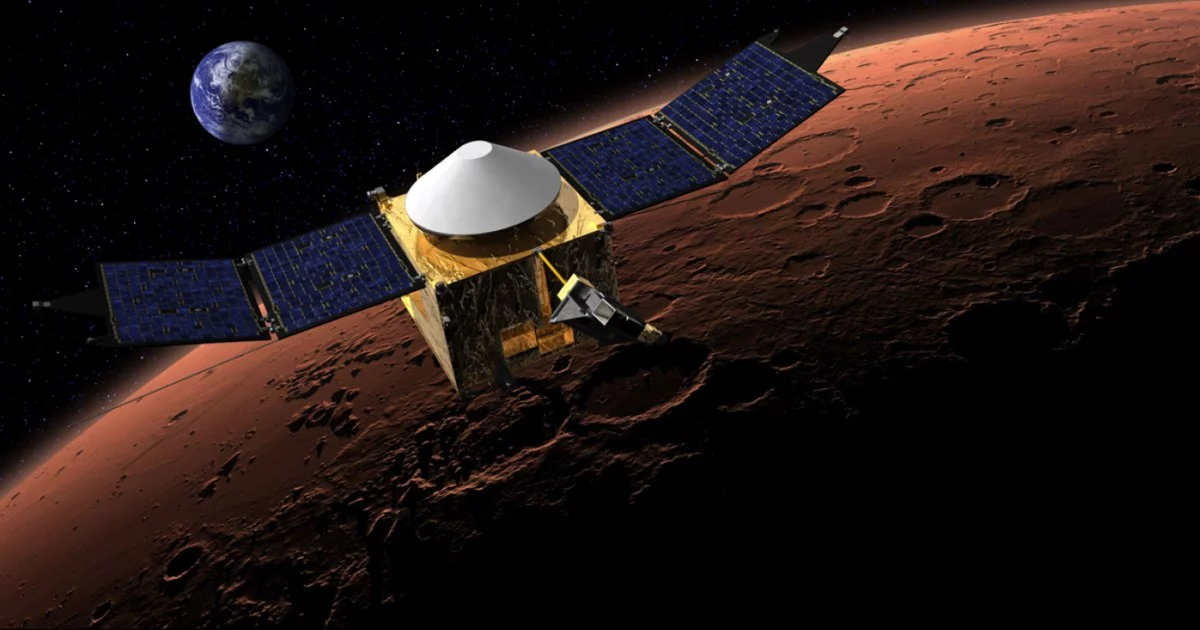
The sudden loss of contact with NASA’s MAVEN orbiter on December 6th is more than a technical hiccup; it is a seismic tremor reverberating through the architecture of interplanetary communication. MAVEN, the youngest yet already venerable member of the Mars relay fleet, has become a linchpin for both scientific discovery and surface mission support. Its silence exposes the precariousness of an aging network, the economic tightrope of space infrastructure, and the strategic chessboard of planetary exploration.
The Fragility of Legacy Systems in the Martian Relay Chain
The Martian relay constellation is, in essence, a museum of early-21st-century engineering. Three of the four active orbiters are well into their second decade, and even MAVEN relies on avionics conceived at the turn of the millennium. The Deep Space Network (DSN), tasked with shepherding signals across the solar system, is itself stretched thin—its Ka- and X-band antennas are in constant demand from Artemis lunar traffic, the James Webb Space Telescope, and a flotilla of outer-planet probes. This exposes a single-point failure risk that is as much about terrestrial infrastructure as it is about the spacecraft themselves.
Recent history underscores the fragility: in 2022, MAVEN’s inertial measurement units faltered, forcing a desperate pivot to stellar navigation—a triumph of ingenuity, but also a warning. Redundancy is finite; workarounds are not cures. The episode illuminated the urgent need for embedded autonomy: AI-driven fault detection, real-time reconfiguration, and a move away from Earth-dependent triage. The future of deep-space operations will be written not just in hardware, but in algorithms that can outpace the speed of crisis.
Economic Realities and the New Shape of Space Commerce
The proposed $700 million Mars Telecommunications Orbiter (MTO) is a bold line item in the federal budget, but its future is anything but assured. It must vie for oxygen with Artemis surface systems, planetary defense priorities, and NOAA’s weather satellite recapitalization—all within an era of tightening fiscal discipline. Deep-space projects are notorious for overruns, with historical averages suggesting the true lifecycle cost could approach $1 billion.
Yet, the winds of commercial innovation are beginning to stir. NASA’s augmentation contract with the Canberra Deep Space Communication Complex hints at a future where public-private partnerships are not just expedient, but essential. Structuring MTO procurement along the lines of Commercial Lunar Payload Services could shift capital expenditure off NASA’s books, accelerate timelines, and infuse market discipline into a sector long dominated by bespoke government contracts.
The commercial sector’s growing role is not limited to ground infrastructure. Optical communications—demonstrated by NASA’s Laser Communications Relay Demonstration—promise a hundredfold increase in data throughput. The case for a purpose-built MTO, or even a swarm of small satellites with optical cross-links, grows stronger as legacy orbiters approach the limits of their power and down-mass budgets.
Geopolitical Stakes and the Digital Transformation of Space Operations
Mars is emerging as a communications commons, where science, diplomacy, and soft power intersect. The European Space Agency’s ExoMars Trace Gas Orbiter currently relays data for both NASA’s Perseverance and China’s Zhurong rover—a rare instance of multipolar cooperation in a domain often defined by rivalry. But the next wave of missions from China and India will strain shared spectrum and contact windows, sharpening the imperative for sovereign relay infrastructure.
The Mars Sample Return (MSR) project, a flagship NASA–ESA collaboration, is especially vulnerable. Its architecture assumes continuous high-data-rate downlink for critical commanding; a prolonged MAVEN outage could force costly redesigns or delay the timeline for humanity’s first interplanetary sample retrieval.
Beneath these headline risks, subtler industry trends are reshaping the space sector. Digital twinning and edge analytics—hallmarks of industrial IoT—are migrating spaceward, promising real-time anomaly detection and predictive maintenance. Yet, the semiconductor supply chain remains a lurking threat: radiation-hardened components have procurement cycles measured in decades, and the CHIPS Act’s focus on terrestrial fabs leaves deep-space programs exposed to scarcity and forced redesign.
Strategic Pathways: Building Resilience for the Next Era
The MAVEN incident is a clarion call for systemic change. The path forward is multifaceted:
- Accelerate optical relay deployment by funding a cubesat constellation to establish a Mars-orbit laser mesh, creating layered redundancy and de-risking future infrastructure.
- Expand DSN-commercial synergy through market-driven solicitations for private downlink services, treating DSN capacity as a dynamic resource.
- Mandate autonomy as a core requirement for all post-2025 interplanetary missions, leveraging AI to reduce operational costs and human intervention.
- Leverage relay access for diplomacy, offering bandwidth as a tool for scientific collaboration and standards leadership.
- Hedge against budget volatility with a Mars Infrastructure Fund, modeled on proven multi-year appropriations structures.
The silence of MAVEN is not merely a technical setback—it is a stark reminder that the scaffolding of our interplanetary ambitions is overdue for reinvention. Those who grasp the interplay of technology, economics, and strategy in this new era will shape the next chapter of Mars exploration, and perhaps, the future of humanity’s reach beyond Earth.

 By
By
 By
By
 By
By
 By
By

 By
By

 By
By