
Chrome’s Quiet Reinvention: From Form Filler to Digital Identity Concierge
In a move that signals a profound shift in the architecture of web interaction, Google has reimagined Chrome’s autofill—long a utilitarian convenience—into a sophisticated, cloud-synced engine for digital identity. By drawing on structured data from Google Accounts and Google Wallet, Chrome now transcends its passive role, evolving into a proactive personal-data concierge. This transformation is not merely about efficiency; it is about redefining the browser’s place at the intersection of identity, commerce, and artificial intelligence.
The Anatomy of Chrome’s New Autofill: Intelligence Meets Localization
At the heart of this evolution is a fundamental architectural shift. Chrome’s autofill no longer relies solely on rule-based field detection or local device storage. Instead, it leverages server-side inference, pulling from a unified Google Account profile. This means that:
- Names, emails, and addresses are fetched directly from the cloud, ensuring consistency and up-to-date information across devices.
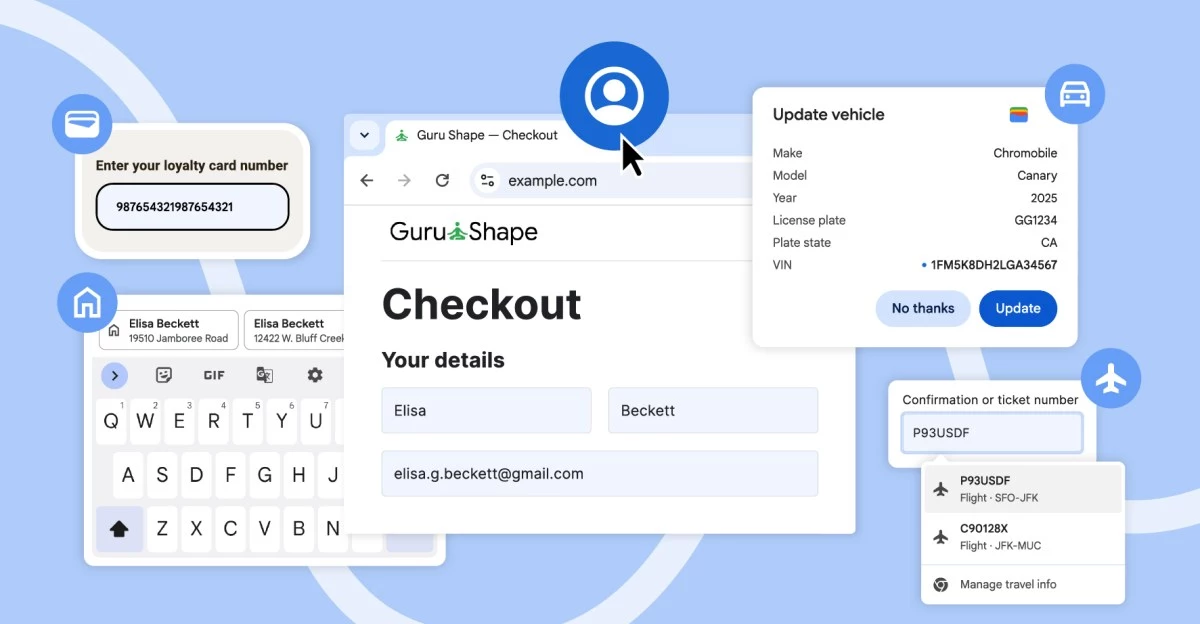
- Expanded data classes—including passports, driver’s licenses, vehicle IDs, and loyalty cards—are now seamlessly integrated.
- Richer user interfaces emerge, with larger suggestion cards and multi-line address rendering, particularly on Android, reducing the cognitive friction of form completion.
- Localization is prioritized: Chrome now understands the nuances of Mexican cross-street conventions and is preparing to support phonetic Japanese names, a nod to the complexities of global e-commerce.
This is more than a technical upgrade; it is a strategic play. By anticipating user intent—surfacing, for instance, “flightArrivalTime” from Wallet during travel bookings—Chrome is edging toward a predictive paradigm. The browser is no longer a passive intermediary but an active participant, ready to complete not just fields, but potentially entire transactional flows.
Strategic Stakes: Ecosystem Lock-In and Economic Incentives
Chrome’s dominance—commanding roughly 65% of desktop market share—gives Google a formidable launching pad. By entwining deep personal data services into the browser, Google is raising the stakes in the battle for user loyalty. This move counters Apple’s iCloud Keychain and Microsoft’s Edge/Entra ID, reinforcing an ecosystem lock-in strategy that spans identity (Gmail), payments (Wallet), travel (Google Travel), and now, intelligent autofill.
The economic implications are significant. Every reduction in friction—every millisecond shaved from checkout or booking—translates into higher conversion rates. Merchants and platforms, from travel aggregators to gig economy apps, benefit from this streamlined experience, nudging more advertising and affiliate spend toward Google’s channels. Moreover, as Wallet adoption deepens, Google positions itself for incremental revenue through interchange fees and loyalty-program brokerage, extending the Apple Pay model beyond app-walled gardens into the open web.
Yet, this deep integration is not without risk. Storing sensitive IDs—passports, driver’s licenses—in a cloud-synced autofill raises the specter of regulatory scrutiny. GDPR, CCPA/CPRA, and emerging federal frameworks will probe default opt-ins, data retention, and cross-border transfers. Google’s public narrative now pivots on explicit consent and zero-knowledge encryption, but any breach could reignite antitrust debates around data leverage.
The Road Ahead: Chrome as Transactional Orchestrator
The implications of Chrome’s autofill evolution stretch far beyond the browser’s UI. In the near term, expect:
- APIs for third-party developers, enabling enterprises to embed Google-verified identity snippets directly into onboarding flows.
- Retailers optimizing checkout forms to align with Chrome’s heuristics, further standardizing the web around Google’s schema.
Looking further, Chrome could integrate with passkey and decentralized ID standards, morphing into a credential vault that rivals dedicated password managers. Regulatory compliance modules—age verification, driver’s license uploads—may become turnkey solutions, opening new enterprise channels. Over the next five years, Chrome could become a transaction orchestrator, where generative AI agents pre-populate, validate, and even negotiate forms, blurring the line between browsing and transacting.
For decision-makers, the message is clear:
- Benchmark your forms against Chrome’s new patterns; frictionless data capture is now table stakes.
- Assess platform dependency; deeper entanglement with Google’s identity layer offers convenience, but at the cost of concentrated power.
- Prioritize privacy engineering to stay ahead of regulatory shifts.
- Embrace localization; Chrome’s nuanced parsing of global address formats is a blueprint for international growth.
As Chrome quietly fortifies itself as the nexus of digital identity, commerce, and AI-driven personalization, the browser emerges not just as a window to the web, but as a central arbiter of the modern digital experience—a development that will shape the competitive landscape for years to come.

 By
By
 By
By
 By
By
 By
By
 By
By


 By
By