
The Eleven-Day Orbit: China’s Shenzhou-22 and the New Benchmark for Human Spaceflight Agility
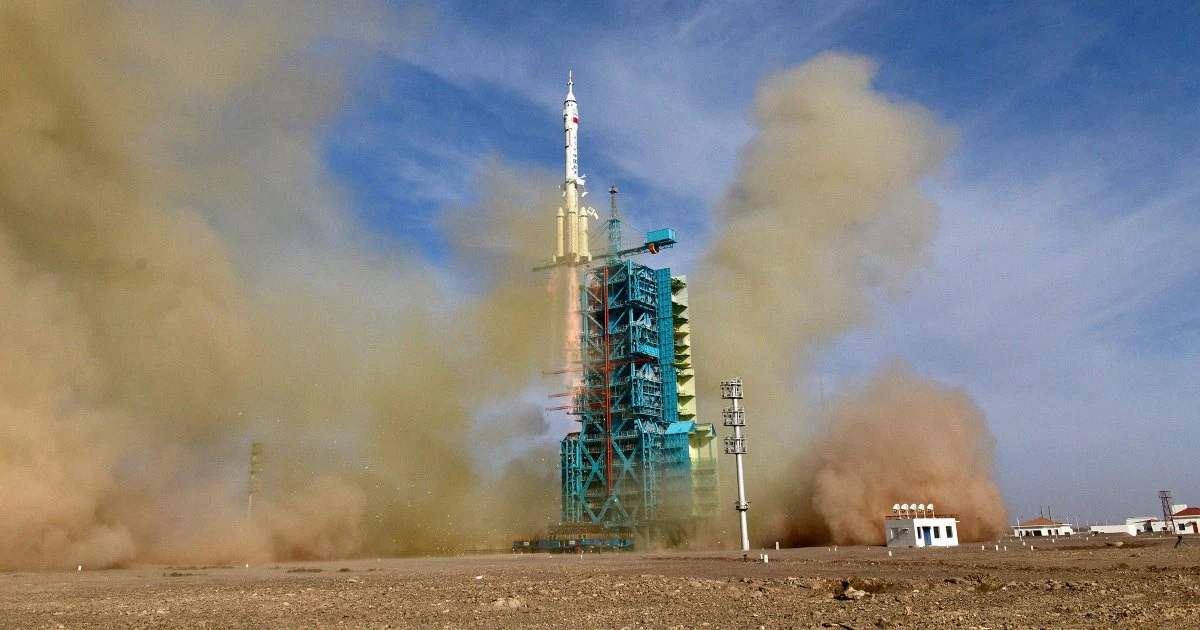
When a cascade of orbital debris cracked the hull of Shenzhou-20, China’s Manned Space Agency (CMSA) faced a crisis that would test the mettle of any spacefaring nation. Within eleven days, CMSA not only identified the threat but engineered, launched, and docked a replacement—Shenzhou-22—restoring Tiangong’s lifeboat capability and ensuring the safety of its crew. This episode, executed with a precision that bordered on the cinematic, has reverberated across the aerospace world, offering a glimpse into the future of crewed spaceflight—and the industrial logic that underpins it.
Modular Redundancy and the Calculus of Speed
Unlike the Western fixation on reusability, China’s approach is defined by manufacturing redundancy and modularity. Shenzhou capsules, descendants of the venerable Soyuz lineage, are built in batches—single-use, but always ready. This “fleet-in-box” philosophy, enabled by indigenous supply chains and launch infrastructure co-located with manufacturing centers, compresses the timeline from design to orbit.
Key enablers of this agility include:
- Batch Production: Near-identical vehicles can be rapidly substituted, eliminating the bottleneck of refurbishment cycles.
- Integrated Supply Chains: Components and labor are sourced domestically, sidestepping global disruptions and logistical drag.
- Parallelized Launch Operations: Multiple active pads allow for civil, commercial, and military launches to proceed without mutual interference.
The result is a system that can absorb shocks—whether from debris or design flaws—without the months-long delays that have recently hampered Western programs. The nine-month grounding of NASA’s Starliner, by contrast, underscores the vulnerability inherent in fragmented, contractor-driven architectures.
Industrial Policy and the Economics of Vertical Integration
China’s “whole-of-nation” model is more than bureaucratic shorthand; it is the economic engine behind CMSA’s rapid response. By bundling spacecraft design, manufacturing, launch, and operations under a single authority, China achieves:
- Capital Efficiency: Investment is amortized across defense, civil, and commercial sectors, lowering per-mission costs.
- Accelerated Decision-Making: The absence of inter-organizational contracting friction enables near-instantaneous pivots.
- Supply Chain Sovereignty: Strategic insulation from external shocks is now a macroeconomic imperative, especially amid global decoupling.
This structure yields a compelling $/seat metric for Shenzhou, positioning CMSA to export human spaceflight services to emerging nations seeking alternatives to U.S. or Russian platforms. The extra payload capacity on Shenzhou-22—delivering not just supplies but fresh produce and even an oven—signals an intent to enhance crew habitability, perhaps foreshadowing a move toward commercial crew tourism. Recent filings for “Tiangong Commercial” mission slots only reinforce this trajectory.
Debris, Risk, and the New Safety Paradigm
The proximate cause of the Shenzhou-20 crisis—a micrometeoroid or orbital debris (MMOD) strike—highlights a growing imperative: debris mitigation is no longer peripheral, but central to crewed mission design. CMSA’s response suggests a future in which:
- Hardened Materials: Advanced window composites and multi-layer Whipple shields become standard.
- In-Situ Repair: On-orbit servicing and patching capabilities shift from experimental to essential.
- Active Debris Removal: Payloads dedicated to cleaning up orbital lanes may soon fly as routine cargo.
For insurers and risk managers, the calculus changes. Redundancy, not just reliability, becomes a hedge against rising premiums. The Chinese model—stockpiling ready-to-launch vehicles—may well influence global benchmarks for risk pricing and mission assurance.
Strategic Signals and the Industry’s Next Chapter
Beyond the technical and economic, the Shenzhou-22 episode projects a potent soft-power signal. Rapid, flawless contingency operations attract international partners and position China as a norms-setter in crewed space safety. The same infrastructure that enables swift rescue also supports dual-use capabilities—rapid replenishment of ISR constellations or rendezvous operations—raising the stakes for defense planners worldwide.
For aerospace OEMs, the lesson is clear: inventory strategies must evolve, with “fleet-in-box” approaches gaining favor over exclusive reliance on refurbishment. Private launch providers will find that speed-to-orbit is no longer a differentiator but a baseline expectation. Satellite operators, meanwhile, must budget for embedded debris-tracking and avoidance services, as the risk environment intensifies.
The Shenzhou-22 maneuver is not merely a feat of engineering; it is a crystallization of China’s competitive thesis in human spaceflight. State-directed vertical integration, manufacturing redundancy, and accelerated cadence have, for now, outpaced the West’s fragmented, reusable architectures. As the industry migrates from exploration to sustained commercial presence in orbit, those who internalize the lesson—speed enabled by structural alignment—will shape the next era of space enterprise.

 By
By


 By
By
 By
By


 By
By