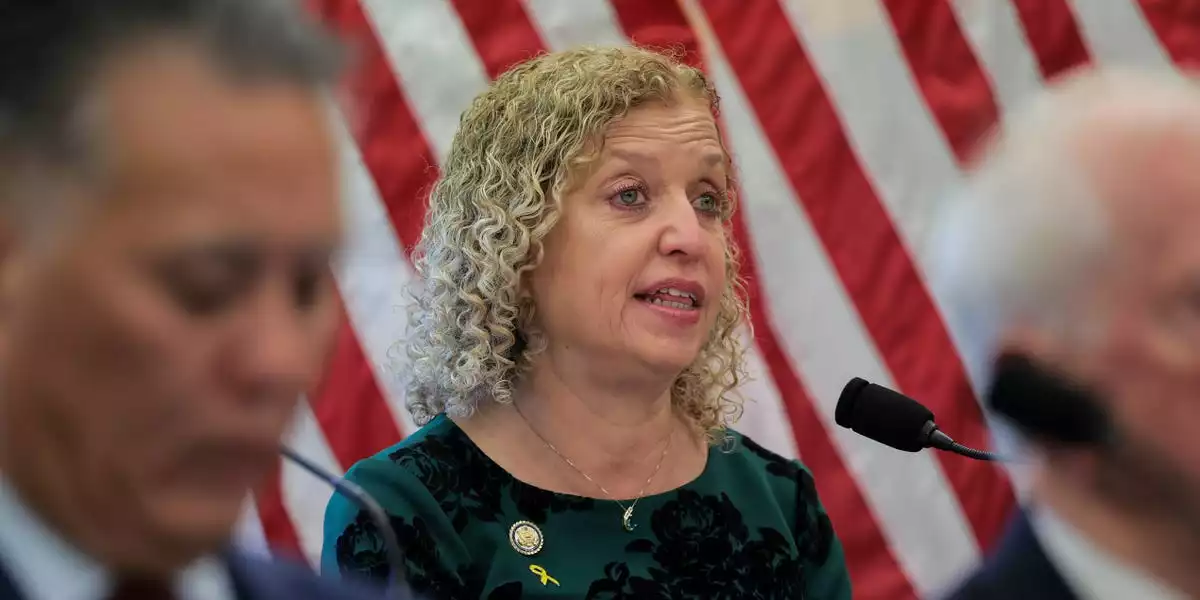

The Curl Conundrum: When Personal Style Collides with Corporate Policy
Debbie Wasserman Schultz’s recent podcast appearance offered more than a glimpse into the personal trials of a public figure; it provided a lens on the persistent, often unspoken, codes of appearance that shape American professional life. Her narrative—of campaign strategists lobbying for straighter hair and the media’s fixation on her “Frizzilla” curls—resonates far beyond politics. It exposes a subtle but consequential form of bias that, until recently, hovered beneath the radar of regulatory scrutiny and boardroom risk assessments.
Academic studies have quantified what many have long intuited: straight hair is still coded as “competent” and “professional,” while textured hair—especially for Black women—can trigger penalties in perception, hiring, and advancement. The emergence of the CROWN Act across 24 states marks a shift from cultural discomfort to codified protection, but the gap between statute and practice remains wide. In this climate, Wasserman Schultz’s embrace of her natural curls is less a personal flourish than a signal of a broader cultural inflection point—one that intersects with regulatory risk, HR technology, consumer markets, and the evolving mandates of diversity, equity, and inclusion.
Compliance, Culture, and the Algorithmic Minefield
What was once dismissed as a “soft” issue is now a hard compliance matter. For employers operating across state lines, grooming policies that fail to meet the strictest CROWN-aligned standards risk not just litigation and regulatory penalties, but also brand damage that can ripple through investor relations and consumer sentiment. Shareholder activism and ESG frameworks increasingly treat DEI—including appearance-based inclusivity—as material to valuation and reputation. The SEC’s recent push for granular human-capital disclosures will soon force companies to make their grooming and appearance policies public, subjecting them to unprecedented scrutiny.
Yet the risk is not confined to the analog world. As enterprises scale up AI-driven hiring—using computer vision to scan video interviews or parse headshots—there is a real danger that historical biases become codified at scale. A machine-learning model trained on legacy data may “learn” that straight hair signals professionalism, quietly filtering out candidates who don’t conform. This is no longer a theoretical risk: vendors of HR technology are already encountering RFPs that demand explicit safeguards against appearance-based discrimination. The rise of “bias-auditing-as-a-service” startups signals that the market is moving to close these algorithmic loopholes before they metastasize into systemic exclusion.
The Untapped Promise of the Textured-Hair Economy
If compliance is the stick, market opportunity is the carrot. Despite the fact that nearly 60% of the world’s population has wavy, curly, or coily hair, the consumer-products landscape remains stubbornly skewed toward straight-hair formulations. This mismatch is not just a moral failing—it is a commercial oversight. Multinationals that recalibrate their SKU mix to foreground curl-friendly products can unlock growth without significant capital expenditure. The acquisition multiples for textured-hair brands, such as Unilever’s purchase of SheaMoisture or Procter & Gamble’s investment in Pattern Beauty, routinely outpace those of legacy beauty lines, signaling that the premium on authenticity and inclusivity is real and rising.
Marketing, too, is undergoing a quiet revolution. Advertisers who feature authentic curly-haired talent are seeing measurable upticks in engagement, particularly among Gen Z consumers who prize inclusivity over aspirational sameness. Recent Nielsen BrandLift data confirms that campaigns normalizing curls generate a halo effect—not just with curl-wearers, but across the broader market. The message is clear: what was once niche is now mainstream, and authenticity is the new currency of trust.
Strategic Imperatives for the Modern Enterprise
For decision-makers, the implications are both urgent and actionable:
- Audit and Align: Dress and grooming codes should be harmonized with the most stringent legal standards, preempting a patchwork of compliance headaches.
- Bias-Proof the Tech Stack: All AI-driven hiring tools must undergo rigorous bias testing, with vendor contracts conditioned on third-party fairness certifications.
- Reimagine Product Portfolios: SKU-level analyses often reveal that textured-hair lines deliver higher margins and lower competitive saturation.
- Elevate Inclusive Branding: Creative that normalizes curls can measurably boost brand trust—even among consumers outside the target demographic.
- Prepare for Disclosure: Early, voluntary transparency on appearance inclusivity can shape the narrative before regulatory mandates arrive.
The convergence of cultural expectation, legal codification, and algorithmic scrutiny is recalibrating what it means to look “professional” in the modern workplace. Leaders who recognize hairstyle inclusivity as a strategic lever—not merely an HR footnote—will secure talent, capture new markets, and fortify their ESG standing well ahead of the curve. The era when a curl could cost a career is ending; those who move first will define what comes next.

 By
By
 By
By
 By
By

 By
By


 By
By