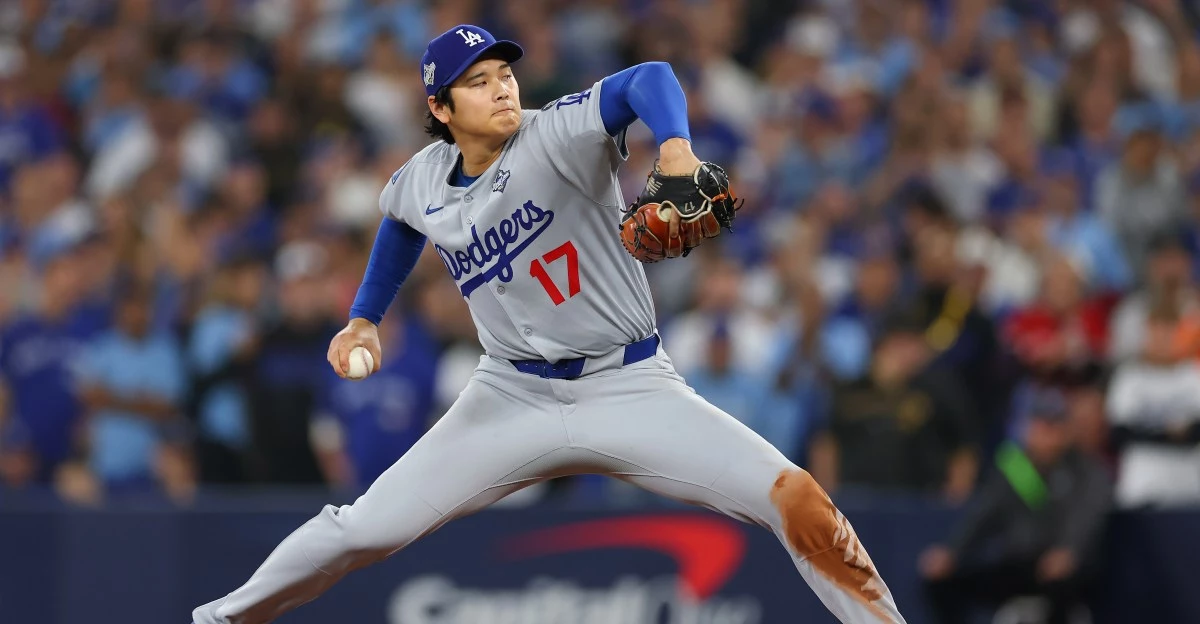

A New Playbook for Baseball’s Broadcast Future
Major League Baseball’s latest media rights shuffle is not just a business story—it’s a harbinger of how live sports, streaming, and legacy television are converging in real time. With the league’s next three seasons split across ESPN, NBCUniversal, and, for the first time, Netflix, the deal signals a deliberate departure from the era of single-network exclusivity. Instead, MLB has architected a multi-platform, multi-tiered distribution strategy, each partner receiving a tailored slice of the baseball pie, and each platform reflecting a distinct audience segment.
At the core, this is a calculated experiment in reach and resilience. ESPN retains its stronghold with a 30-game exclusive package, buttressed by robust out-of-market streaming. NBCUniversal, meanwhile, reclaims Sunday Night Baseball, shuffles noon “Sunday Leadoff” games to Peacock, and resurrects the NBC Sports Network for overflow—an unexpected twist that hints at cable’s lingering utility. The most headline-grabbing move, however, is Netflix’s entry: a limited but high-profile slate, including Opening Night and the Home Run Derby, acquired for a relatively modest $50 million per year.
The Economics and Strategy Beneath the Surface
This three-year contract is notably shorter than the decade-long deals typical in the NFL or NBA. The brevity is not an accident; it is a hedge against uncertainty and a bid for future flexibility. By 2026, the balance of power between linear TV and streaming may look radically different, especially with macro events like the U.S. men’s World Cup and potential collective bargaining turbulence on the horizon. MLB is buying itself optionality—an ability to re-price and re-align as the media landscape evolves.
Netflix’s fee, when measured per game, is a fraction of what legacy broadcasters pay. This signals that, for now, MLB views the streaming giant less as a revenue engine and more as a global marketing accelerant. The league is betting that Netflix’s reach—particularly among cord-cutters and international viewers—can seed new fandoms and extend baseball’s cultural relevance.
Each platform is cast in a specific role:
- ESPN: The destination for die-hard fans, leveraging its highlight infrastructure and out-of-market rights to offer comprehensive coverage.
- Peacock (NBCUniversal): Targeting casual, weekend viewers with a low-cost, ad-supported tier, while simulcasting on broadcast and cable to maximize ad revenue.
- Netflix: Designed to attract a global, digitally native audience that rarely engages with traditional sports broadcasts.
This segmentation mirrors broader trends in consumer video: the coexistence of premium cable, hybrid AVOD/SVOD, and pure SVOD, each subsidizing MLB’s rights income while insulating against the volatility of single-platform churn.
Technology: The Unseen Battleground
Underpinning this rights reset is a technological arms race. Baseball, with its pitch-by-pitch cadence, is especially sensitive to latency—a critical factor as micro-betting gains traction. Netflix will need to compress end-to-end delay to under seven seconds to compete in this new era of real-time engagement. The challenge is formidable, but the rewards are clear: success here could open the door to more ambitious live sports bids, not just for Netflix but for the entire streaming sector.
Production quality, too, is under scrutiny. While Peacock and Netflix already deliver scripted content in 4K HDR, live sports production must standardize these workflows to avoid jarring disparities. Meanwhile, MLB’s Hawkeye tracking data is ripe for innovation—personalized overlays, real-time stats, and interactive features that could redefine the viewing experience. Netflix, with its recommendation engine and penchant for “shoulder programming” (think Drive to Survive-style documentaries), is uniquely positioned to extend engagement beyond the broadcast window.
Industry Ripples and the Road Ahead
This tri-party agreement is more than a redistribution of games; it is a blueprint for how sports leagues can diversify distribution, manage risk, and future-proof their brands. The deal’s modularity—platform-specific sublicensing, shorter cycles, and differentiated inventory—offers a template for other leagues navigating the streaming wars’ maturity and the plateauing of subscriber growth in North America.
For advertisers, the fragmentation of rights creates more first-party data touchpoints, enabling precise targeting and creative versioning across linear and digital. For investors, the deal’s shorter tenor and diversified revenue streams (ads, micro-transactions, betting integrations) partially offset the risks of rights-fee inflation.
The ultimate test will be in execution. Netflix’s ability to convert casual viewers into sustained fans, NBCU’s dual-lane monetization, and ESPN’s defensive reconfiguration—all will be scrutinized in the coming seasons. The resurrection of cable assets, the integration of betting partnerships, and the potential for global streaming carve-outs signal that the story is far from over.
In the end, Major League Baseball’s media rights reset is a live-action experiment—one that will shape not just the future of baseball, but the next decade of sports media at large. The industry is watching, and the stakes have never been higher.

 By
By
 By
By
 By
By

 By
By
 By
By