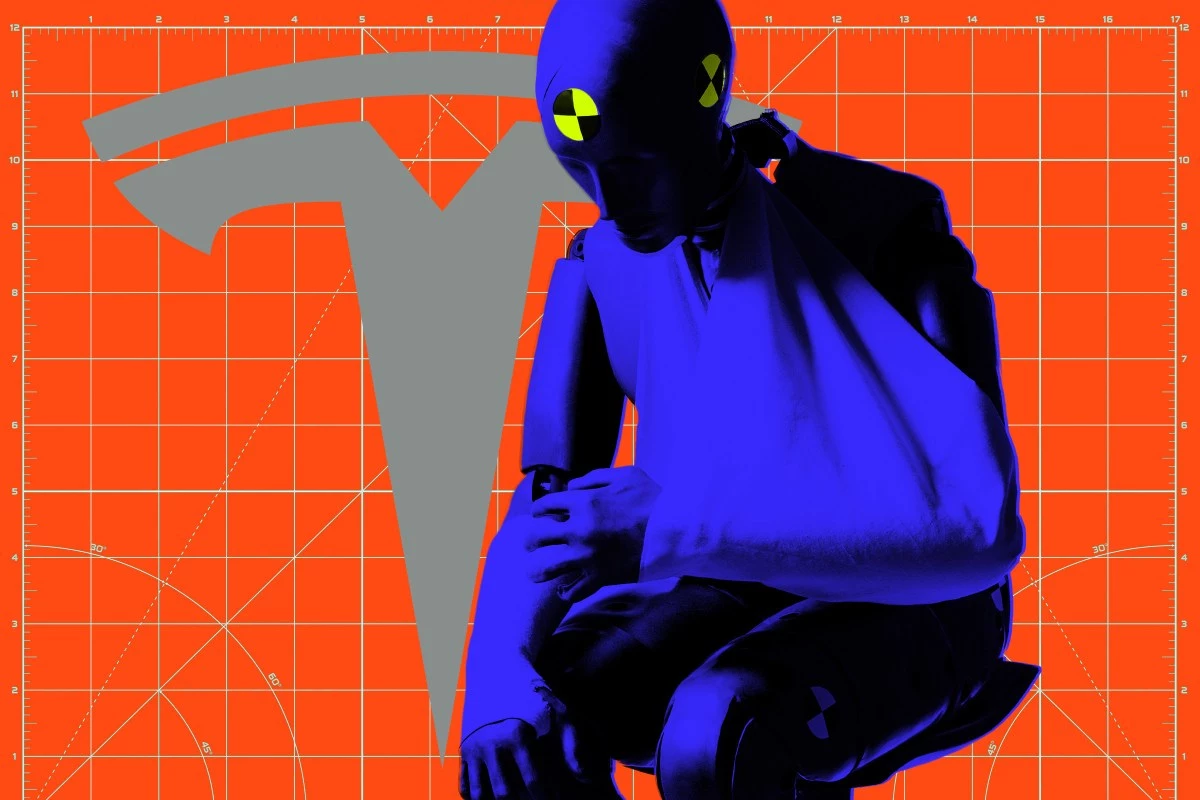

A Collision of Vision and Reality: Tesla’s Robotaxi Trials in Austin
Tesla’s ambitious foray into autonomous mobility has reached a critical inflection point. In Austin, a nascent fleet of 30–40 Robotaxis, operating within a tightly geofenced corridor, has already logged seven reported crashes since late June—four of them in a single week. While no injuries have been reported, the incidents range from animal strikes to property damage involving a bicyclist and a parked car. The crash rate—roughly one per 62,500 miles—is nearly double that of Waymo’s more mature fleet, despite the presence of human safety monitors in every Tesla vehicle.
This series of mishaps is more than a statistical hiccup. It is a real-world referendum on the technological, economic, and regulatory bets that have defined Tesla’s approach to autonomy—and a harbinger of the challenges that await any company seeking to lead the driverless revolution.
The Sensor Stack Gamble: Vision, Redundancy, and the Edge-Case Abyss
At the heart of Tesla’s strategy is a radical commitment to “Tesla Vision”—a camera-and-AI approach that eschews the sensor fusion paradigm favored by rivals. By removing LiDAR and radar, Tesla has sought to drive down hardware costs and accelerate deployment. Yet, this decision now appears to be exacting a toll: the absence of sensor redundancy is revealing itself not as a theoretical risk, but as a tangible operational liability.
- Waymo and Cruise have invested in multi-modal sensor arrays—combining LiDAR, radar, and HD cameras—to build high-fidelity environmental models. While this increases bill-of-materials costs and power consumption, it also delivers a level of fault tolerance that is proving critical in real-world operation.
- Tesla’s reliance on vast troves of human-driven fleet data, once touted as an unassailable advantage, is encountering the limits of machine learning generalization. Edge-case events—those rare, unpredictable scenarios that defy simulation—are surfacing even in Austin’s low-complexity, geofenced environment. The implication: billions of miles are not a substitute for robust annotation, scenario coverage, and validation tooling.
The presence of human safety drivers—ostensibly a temporary measure—now reads as an implicit admission that Tesla’s system is not yet ready for true Level-4 autonomy. This not only inflates operating expenses, but also undercuts the economic thesis of fully driverless mobility.
Economic Fault Lines: Market Expectations, Insurance, and Strategic Leverage
Tesla’s market capitalization has long reflected an expectation of autonomous ride-hailing dominance—a quasi-monopoly that would unlock vast new revenue streams. The recent spate of incidents, however, is forcing a recalibration. The performance gap with Waymo and Cruise is no longer academic; it is a material risk that could fragment the market and invite regulatory gatekeepers.
- Insurance and Liability: A crash every 62,500 miles is not merely a PR problem; it is a balance-sheet issue. Human-driven ride-hailing fleets typically see claims every 100,000–200,000 miles. Elevated incident rates will drive up insurance premiums and reserves, potentially eroding margins at a time when Tesla is already discounting vehicles to defend market share.
- Hardware Dilemma: Should Tesla be compelled—by regulation or insurance—to reintroduce LiDAR or radar, the cost structure underpinning its vision-only thesis could unravel. This would necessitate significant capital expenditures, invalidate forward guidance, and cede strategic ground to competitors who have already invested in sensor fusion.
- Competitive Moats: Waymo’s accumulation of over 100 million autonomous miles is becoming a self-reinforcing advantage, yielding richer datasets and greater regulatory confidence. Legacy automakers, sensing Tesla’s vulnerability, may now accelerate partnerships or acquisitions to secure access to proven sensor-fusion stacks.
Regulatory Pressure and the New Contours of AI Governance
Tesla’s selective disclosure of incident data has attracted the attention of the National Highway Traffic Safety Administration (NHTSA), which is now probing the company for late or incomplete crash reports. The stakes are high: historical precedents suggest that disclosure controversies can metastasize into years-long regulatory battles and multi-billion-dollar settlements.
- Safety Standards: Emerging frameworks such as ISO 26262 and UL 4600 increasingly demand provable fault tolerance and transparency. Tesla’s single-modality approach may struggle to meet these standards, especially as regulators move toward requiring statistical proof of safety—sub-0.1 crashes per 100,000 miles—in mixed-traffic environments.
- AI Alignment and Transparency: The debate over generative AI alignment is bleeding into mobility. European regulators, in particular, may soon classify Level-4 autonomous vehicles as “high-risk systems,” mandating algorithmic transparency and explainability—directly challenging Tesla’s penchant for confidentiality.
- Insurance as De Facto Regulator: Major reinsurers are positioned to impose telematics-based underwriting standards that could effectively dictate acceptable sensor configurations, preempting federal rulemaking and reshaping the competitive landscape.
As autonomous safety metrics migrate from soft corporate social responsibility to hard ESG screening criteria, Tesla’s incident streak could also tighten access to low-cost green capital, especially from European funds.
Charting the Road Ahead: Strategic Imperatives for the Autonomous Era
The early performance of Tesla’s Robotaxi fleet in Austin is a clarion call for the industry. Transparent safety validation, hardware redundancy, and proactive engagement with regulators and insurers are emerging as the true determinants of leadership in autonomous mobility. For automakers and technology suppliers, hedging against single-modality approaches and investing in data transparency are no longer optional—they are prerequisites for market access and societal trust.
As the regulatory and insurance frameworks around autonomy harden, the companies that can integrate AI safety governance, robust sensor stacks, and actuarial discipline will set the standards for the next era of mobility. Vision-only approaches, however bold, may find themselves relegated to niche or supervised applications—a sobering reminder that in the race for autonomy, the road to dominance is paved not just with ambition, but with demonstrable safety and trust.

 By
By
 By
By
 By
By
 By
By

 By
By
 By
By