
Injecting the Future: How Circulatronics Reimagines Brain-Computer Interfaces
In a move that feels less like incremental progress and more like a tectonic shift, a coalition of researchers from MIT, Wellesley College, and Harvard University has unveiled “Circulatronics”—a platform that could recast the boundaries of neurotechnology. By deploying sub-cellular-scale wireless electronics, known as SWEDs, directly into the bloodstream, the team has sidestepped the need for open-skull surgery, instead leveraging the body’s own immune system to deliver precision neuromodulation. The implications—technological, economic, and societal—are profound, hinting at a future where the brain is not merely treated, but networked.
The Sub-Cellular Revolution: Engineering at the Edge of Biology
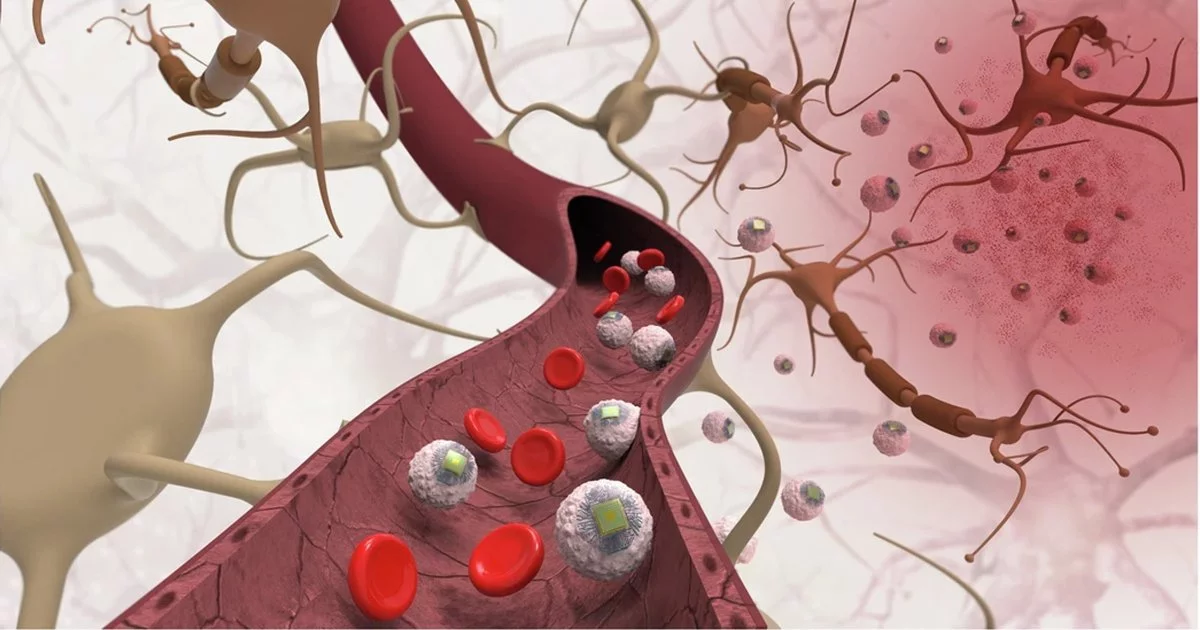
At the heart of Circulatronics lies a convergence of miniaturization and bio-compatibility. SWEDs, each measuring less than a micron, represent a leap beyond conventional implantables. Their diminutive size is not mere technical bravado; it is a calculated evolution. By fusing with monocytes—key immune cells—these devices gain a “stealth” mode, traversing the blood-brain barrier and homing in on inflamed neural tissue with a precision that is both biological and electronic.
This approach offers several key advantages:
- Reduced Foreign-Body Response: The sub-micron scale minimizes immune rejection and tissue scarring, a perennial challenge in neuro-implants.
- Capillary-Level Distribution: SWEDs can reach neural microenvironments previously inaccessible to larger devices.
- Wireless Modulation: Millimeter-wave RF harvesting enables each SWED to operate at ultra-low power (<10 µW), supporting dense, distributed neural networks.
The promise extends beyond the brain. The modular architecture suggests a future where similar devices could target inflammation in the heart, tumors, or autoimmune sites, transforming the very notion of what a “medical device” can be.
Rethinking Healthcare Economics: From Operating Room to Outpatient Clinic
The economic calculus of Circulatronics is as radical as its engineering. Traditional deep-brain stimulation (DBS) procedures, with their six-figure price tags and reliance on specialized surgical centers, have long been a barrier to scale. An injectable protocol, by contrast, has the potential to:
- Compress Total Cost of Care: By shifting interventions from the operating room to outpatient settings, overall expenses could fall by 40–50%.
- Redefine Reimbursement Models: As CMS explores new codes for remote therapeutic monitoring, devices like SWEDs could unlock recurring SaaS-style revenues, blurring the lines between hardware, software, and service.
- Challenge Regulatory Silos: The convergence of semiconductor fabrication, pharmaceutical-grade coatings, and sterile injectables will force regulators to rethink traditional device and drug pathways.
Supply chains, too, will feel the tremors. Sourcing sub-micron ASICs and biocompatible materials will require unprecedented collaboration between chip foundries, pharma giants, and advanced materials firms—a convergence that may catalyze new industry consortia and M&A activity.
Strategic and Societal Ripples: Neurotech as Infrastructure
The broader implications of Circulatronics extend well beyond the clinic. As the U.S. and China identify neuro-modulation as a strategic technology, the barrier to entry for cognitive enhancement and neuro-data collection is poised to drop. This democratization comes with both promise and peril:
- Talent Migration: Semiconductor engineers are increasingly crossing into life sciences, attracted by high-margin opportunities in bioelectronics.
- Data Sovereignty: As neural interfaces become ubiquitous, the governance of brain-derived data will demand frameworks as robust as GDPR—if not more so.
- New Business Models: Insurers may soon offer “neuro-maintenance” programs, while pharma companies explore combination therapies pairing SWEDs with biologics, extending the commercial life of mature drugs.
The competitive landscape is already shifting. While companies like Neuralink and Synchron have staked claims with surgical and stent-based approaches, the advent of injectable BCIs reframes the field, prompting incumbents to reposition toward complementary niches—high-bandwidth readout versus low-power stimulation, for instance.
Toward a Programmable Body: The Next Chapter in Bio-Digital Convergence
Circulatronics is more than a technological breakthrough; it is a harbinger of a new paradigm in medicine, where the body itself becomes a programmable network node. The path ahead is marked by regulatory milestones—FDA guidance, ISO standards, and first-in-human trials—but the trajectory is clear. As medtech, semiconductor, and telecom sectors converge, the center of gravity in neuro-care is poised to shift from the neurosurgical suite to the infusion clinic, and ultimately, to the cloud.
For those with the foresight to align capital, regulatory acumen, and cross-disciplinary talent, the rewards may be outsized. As Fabled Sky Research and its peers look to the horizon, the question is no longer whether the body can be networked—but how soon, and by whom.

 By
By
 By
By
 By
By

 By
By
 By
By

 By
By