
The Universe’s Maturity Curve: Rethinking Growth Through Cosmic Decline
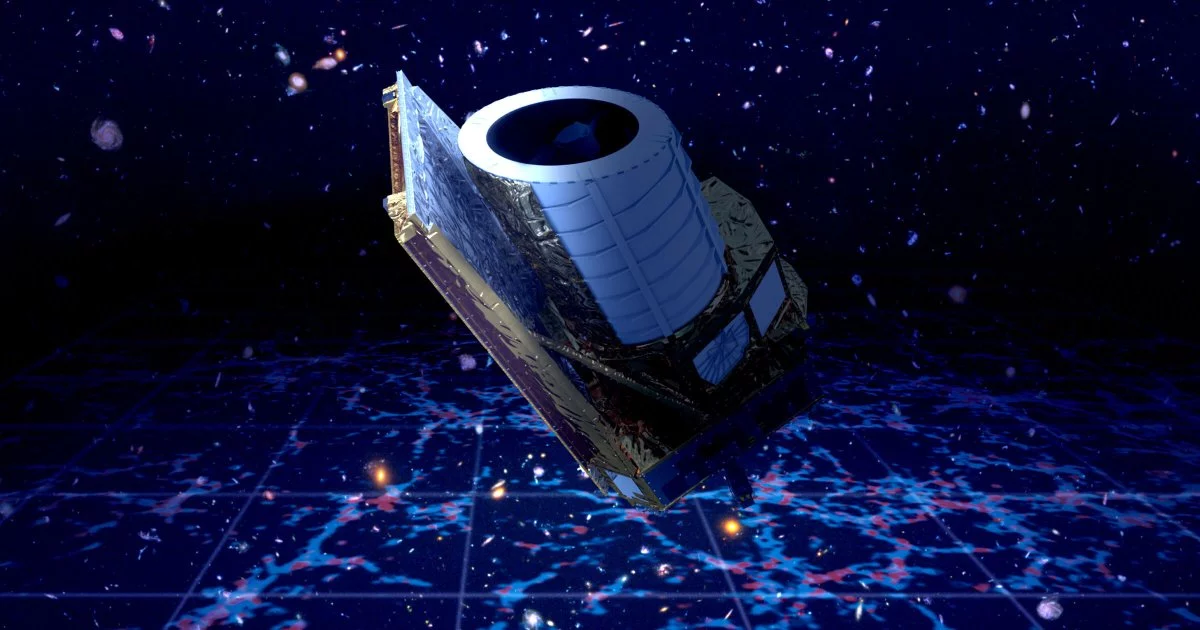
The cosmos, once a cauldron of relentless creation, is cooling—both literally and figuratively. In a sweeping audit of galactic health, a global consortium of 175 astronomers has produced the most comprehensive thermal map of the universe to date. By fusing data from the European Space Agency’s Euclid space telescope and the Herschel satellite, they have traced the arc of 2.6 million galaxies, revealing a universe that peaked in star-forming vitality some 10 billion years ago. Since then, the temperature of galactic dust—a proxy for stellar productivity—has dropped by about 10 degrees Celsius, settling near a frigid –238 °C. This cooling is not just a physical phenomenon; it’s a metaphor for the universe’s transition from youthful exuberance to mature restraint.
The implications of this finding ripple far beyond astrophysics. It reframes our understanding of growth, limits, and resource allocation—not just among the stars, but here on Earth, where industries and enterprises chase their own forms of expansion.
Technological Resonance: From Space-Borne Sensors to Enterprise AI
The technical achievements underpinning this galactic census are as significant as its cosmic conclusions. The Euclid and Herschel missions set new benchmarks in sensor innovation, deploying advanced infrared detector arrays and cryogenic cooling systems that operate at the edge of physical possibility. These breakthroughs are already seeding terrestrial applications:
- Hyperspectral Imaging: The precision of space-borne sensors accelerates advancements in medical diagnostics, agricultural monitoring, and semiconductor inspection.
- Quantum Computing: Cryogenic technologies developed for deep-space observation are foundational for next-generation quantum computers, where ultra-low temperatures are essential for stability and performance.
Managing the petabyte-scale datasets generated by these missions has also catalyzed a new era in data engineering. Techniques such as probabilistic cataloging and self-supervised learning, honed on sparse and noisy cosmic data, are now being adapted for commercial use:
- Retail Analytics: Mapping galactic heat becomes analogous to tracking foot-traffic heat maps in physical stores.
- Supply Chain Intelligence: Federated, multi-cloud architectures mirror the distributed data fusion needed for global logistics optimization.
Even the architecture of space telescopes—acting as autonomous edge devices that preprocess data before transmission—prefigures the rise of AI at the sensor in industrial automation and IoT deployments.
Strategic Lessons: Navigating the Plateau
The universe’s declining star-formation rate is a stark reminder that even systems of seemingly infinite scale are bound by natural limits. This insight resonates profoundly with business leaders and policymakers:
- Finite Energy Narrative: Just as the cosmos is past its prime, enterprises must confront the reality that exponential growth—whether in compute, energy, or market share—cannot persist indefinitely. Stress-testing models for saturation and plateau scenarios is now a strategic imperative.
- Materials and Supply Chains: The growing demand for cryogenic instrumentation in both astronomy and quantum technology signals potential bottlenecks in helium-3, rare-earth superconductors, and ultra-low-temperature electronics.
- Data as a Leading Indicator: Astronomers’ use of dust temperature as a longitudinal KPI for galactic health offers a template for businesses to convert obscure operational signals—like machine harmonics or sentiment shifts—into predictive metrics.
Boards and executive teams can draw on this cosmic narrative to frame their own net-zero and sustainability strategies, underscoring the urgency of resource stewardship in an era of diminishing returns.
Forward Momentum: Innovation Amidst Cosmic Cooling
The audit of the universe’s vitality is not a requiem, but a call to action. The tools and frameworks developed to chart the cosmos’s decline are already catalyzing new waves of innovation. For decision-makers, the path forward is clear:
- Invest in Dual-Use Technologies: Prioritize R&D in sensing and cooling platforms that serve both fundamental science and commercial quantum or space applications.
- Recruit Cross-Disciplinary Talent: Astrophysics PhDs—adept at wrangling noisy, multiscale data—are uniquely equipped to drive breakthroughs in enterprise AI and analytics.
- Reframe Growth Narratives: Use the cosmic example to shift investor messaging from unchecked expansion to intelligent scaling and stewardship, aligning with ESG and sustainable finance trends.
- Forge Public-Private Alliances: Early engagement with agencies like ESA and NASA can secure access to next-generation sensor platforms and preferential IP licensing.
The universe may be aging, but its lessons are evergreen. By internalizing the reality of finite growth and leveraging the technological spin-offs of cosmic research, organizations can position themselves for resilience and relevance—on Earth and beyond. In the quieting of the stars, there is a blueprint for enduring innovation.

 By
By
 By
By


 By
By


 By
By