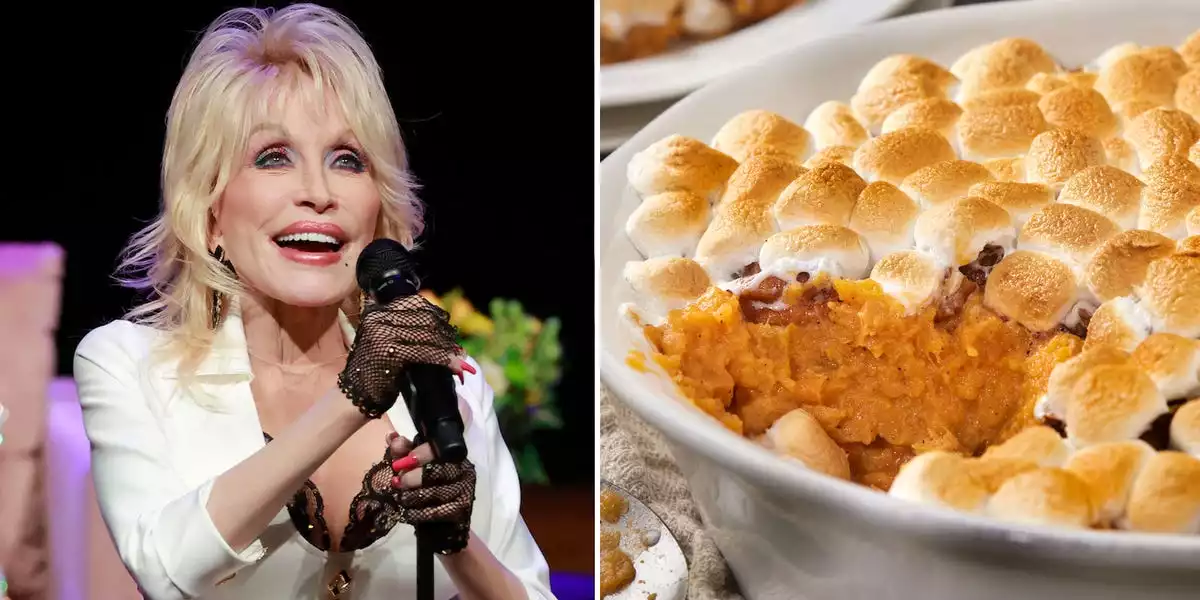

The Sweet-Potato Casserole Effect: How Dolly Parton’s Cookbook Signals a New Era in Culinary Commerce
The American kitchen, long a stage for nostalgia and innovation, has found a new protagonist in Dolly Parton. With the launch of “Good Lookin’ Cookin’: A Year of Meals,” Parton and her sister Rachel Parton George have orchestrated a masterstroke of brand expansion—one that transcends the mere boundaries of a celebrity cookbook. At the heart of this culinary debut is a single, unassuming recipe: the sweet-potato casserole. Its viral journey across social media is more than a seasonal delight; it is a case study in the modern alchemy of intellectual property, digital community-building, and commerce.
From Songbook to Cookbook: Celebrity IP as a Platform
Decades of musical stardom have bestowed Parton with a rarefied cultural capital, but “Good Lookin’ Cookin’” marks a strategic leap—a conversion of entertainment equity into tangible, scalable assets. The cookbook is not just a collection of recipes; it is a launchpad for a multi-channel ecosystem:
- Physical and Digital Expansion: The print edition opens doors for e-books, apps, and even streaming content, inviting fans to interact with the Parton brand in new, tactile ways.
- Consumer Packaged Goods (CPG) Licensing: Ingredient partnerships—think “Dolly’s Sweet Potato Kit”—are poised to populate grocery aisles and seasonal end-caps, transforming recipes into retail experiences.
- Experiential Events: The prospect of pop-up tastings and virtual cooking classes blurs the line between home and stage, creating new sponsorship opportunities for kitchenware makers and grocers.
In this context, the viral sweet-potato casserole becomes more than a dish; it is a proof point for the power of celebrity IP to generate recurring revenue and cultural relevance.
The Content-to-Commerce Flywheel: Data, Discovery, and Delight
The modern cookbook is no longer a static artifact. It is a node in a dynamic, data-driven ecosystem that connects discovery to purchase in a seamless loop:
- Digital Discovery: Social platforms and food blogs serve as amplifiers, turning a single recipe into a movement. Friendsgiving posts and viral videos function as real-time A/B tests, validating product-market fit while driving cookbook sales and cross-merchandise uptake.
- First-Party Data Capture: QR codes and companion apps embedded in the cookbook allow for the collection of granular user preferences. This intelligence enables hyper-personalized promotions—imagine a push notification for discounted pecans at your local grocer, or a music bundle that pairs dinner with Dolly’s greatest hits.
- Emotional Utility in Uncertain Times: As inflation nudges consumers toward home-based experiences, affordable and comforting recipes become a form of emotional utility. The Parton brand, with its multigenerational appeal, is uniquely positioned to capitalize on this shift, lowering acquisition costs across age brackets and deepening household penetration.
Strategic Ripples: Retail, Media, and the Future of Gastronomic IP
The implications of this culinary pivot extend far beyond the kitchen. For retailers and CPG executives, the rise of “recipe IP” offers a blueprint for bundling ingredients, cookware, and digital access under a single SKU—elevating average order value and driving loyalty. Social listening tools can now inform just-in-time procurement, ensuring that the next viral dish is always in stock.
Media and streaming platforms, meanwhile, are eyeing multi-format deals that blend cookbook rights with exclusive video content and live events. The next frontier lies in generative AI: engines that remix Parton’s recipes to cater to dietary niches, broadening reach without sacrificing authenticity.
For technology and data firms, the opportunity is equally tantalizing. Mapping user engagement from recipe tutorials to grocery purchases unlocks predictive models for cross-selling—from kitchen appliances to pantry staples. The emergence of NFT-based loyalty programs tied to limited-edition recipes hints at a future where digital collectibles and secondary-market royalties become part of the culinary experience.
The Convergence of Storytelling, Supply Chains, and Data Science
The viral ascent of a single sweet-potato casserole is not an isolated phenomenon—it is a harbinger of a broader structural trend. Gastronomic intellectual property, once an afterthought, is now a high-ROI asset class where narrative, supply-chain agility, and data converge. Enterprises that master the art of moving seamlessly from recipe discovery to cart conversion—leveraging celebrity, technology, and omni-channel strategy—will define the next chapter of food commerce.
In this evolving landscape, the Parton brand’s foray into the culinary world stands as both a playbook and a provocation. The kitchen, it seems, is the new frontier for storytelling—and the sweet-potato casserole, its unlikely standard-bearer.

 By
By
 By
By

 By
By
 By
By

 By
By
 By
By