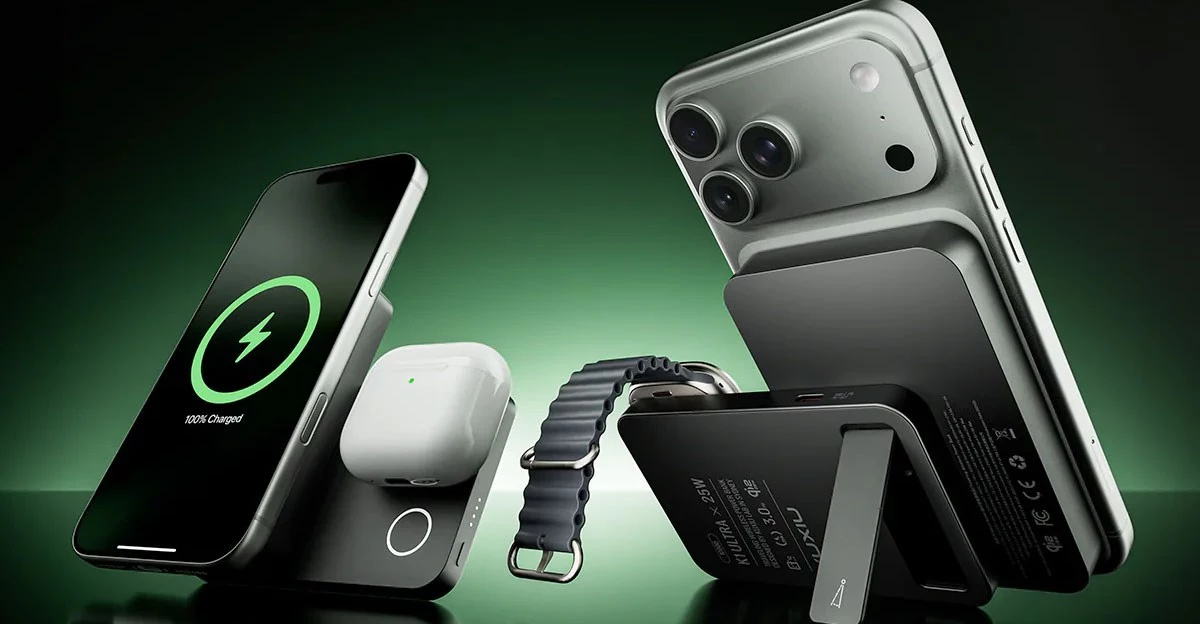

The K1 Ultra: Wireless Charging’s Leap Toward Parity and Ecosystem Centrality
In the ever-evolving landscape of mobile technology, the unveiling of Kuxiu’s K1 Ultra wireless power bank marks a pivotal moment—not just for charging accessories, but for the broader trajectory of mobile device ecosystems. With its robust 10,000 mAh capacity, split-and-swivel architecture, and adherence to the Qi 2.2 wireless charging standard, the K1 Ultra signals a maturation of wireless power from a niche convenience to a viable, even preferable, alternative to wired charging. This evolution is not merely technical; it is strategic, economic, and deeply intertwined with the shifting priorities of both consumers and industry stakeholders.
Qi 2.2 and the End of the Wired/Wireless Divide
The K1 Ultra’s embrace of the Qi 2.2 specification—raising peak wireless charging to 25 W—represents a watershed. Historically, wireless charging has lagged behind its wired counterparts, hamstrung by lower wattage ceilings and inefficiencies that rendered it a secondary option for power-hungry users. With the K1 Ultra, wireless power finally edges into the territory of mid-range wired Power Delivery (PD) solutions, narrowing the performance gap that has long hindered MagSafe-style ecosystems.
Key technical inflections include:
- 25 W Wireless Ceiling: Wireless charging now approaches the speeds of mainstream wired solutions, making cable-free convenience a compelling default for iPhone 16/17 and Pixel 10 Pro XL upgraders.
- Backward Compatibility: By supporting Qi 2.0/2.1, the K1 Ultra lowers adoption friction, inviting a wider installed base to participate without forced obsolescence.
- Split-and-Swivel Design: The dual-surface, mechanically complex architecture anticipates a future where users juggle not just phones, but wearables, AR glasses, and satellite communicators—heralding a shift from single-device charging to personal area networks.
Yet, the march toward universal high-speed wireless power is not without its trade-offs. The K1 Ultra’s 5 W cap for peripherals such as Apple Watch and AirPods underscores persistent thermal constraints. Without active cooling, the dream of 25 W output across heterogeneous devices remains aspirational—a challenge that will define the next wave of innovation in this space.
Price, Positioning, and the New Accessory Arms Race
Kuxiu’s pricing strategy is as aggressive as its engineering. The K1 Ultra’s list price cut—from $99.99 to $79.99, with a $59.99 launch promotion—compresses margins but expands the funnel at a critical Q4 refresh window. This move is not just about volume; it is a calculated play to seize mindshare before OEM-branded alternatives flood the market. The company’s direct-to-consumer (D2C) emphasis, with web-only preorders and real-time demand signaling for new colorways, enables granular data capture and higher customer lifetime value—a model increasingly favored by accessory disruptors.
Competitive signals to watch:
- Accessory Premiumization: Apple’s MagSafe Battery Pack remains at a $99 price point. Kuxiu’s undercut positions the K1 Ultra as the “prosumer value” choice, exerting downward pressure on average selling prices while leveraging design differentiation to insulate against commoditization.
- Component Demand: The shift toward Qi 2.2 will ripple through the supply chain, boosting demand for high-permeability ferrite sheets, advanced GaN power stages, and next-gen thermal interface materials. Suppliers poised to meet these needs stand to benefit as wireless charging standards accelerate.
Strategic Implications for the Next Wave of Mobile Computing
The K1 Ultra’s launch is not merely a product release—it is a harbinger of strategic realignment across the mobile value chain. Device OEMs, liberated from the tyranny of USB-C PD speed races, may pivot marketing narratives toward the seamlessness of cable-free power. Mobile operators and retailers, meanwhile, gain new bundling opportunities, offsetting battery-life anxieties tied to 5G and on-device AI with premium charging solutions.
For decision-makers, several forward-looking considerations emerge:
- Ecosystem Timing: Qi 2.2 accessories are likely to outpace full smartphone fleet adoption by up to nine months, giving peripheral vendors a critical window to lock in brand loyalty.
- Software Differentiation: As hardware margins compress, expect a pivot toward energy-management dashboards and subscription-based battery analytics—adjacent revenue streams that remain largely untapped.
- Supply Chain Resilience: With regulatory scrutiny on battery provenance intensifying, dual-sourcing and localized assembly will become essential hedges against geopolitical volatility.
As lithium and cobalt prices soften, Kuxiu’s price cuts reflect not just tactical opportunism but a broader recalibration of margin structures across the category. Regulatory winds, especially from the EU’s circular economy directives, will further favor multi-device chargers that maximize lifecycle utility per cell.
The K1 Ultra, then, is more than a power bank—it is a bellwether for the wireless future. Those who calibrate their strategies to this new reality will find themselves not merely keeping pace, but shaping the contours of untethered mobile computing’s next chapter.

 By
By
 By
By
 By
By
 By
By

 By
By

 By
By