
Microgravity Cuisine: Engineering the Next Frontier of Human Comfort in Orbit
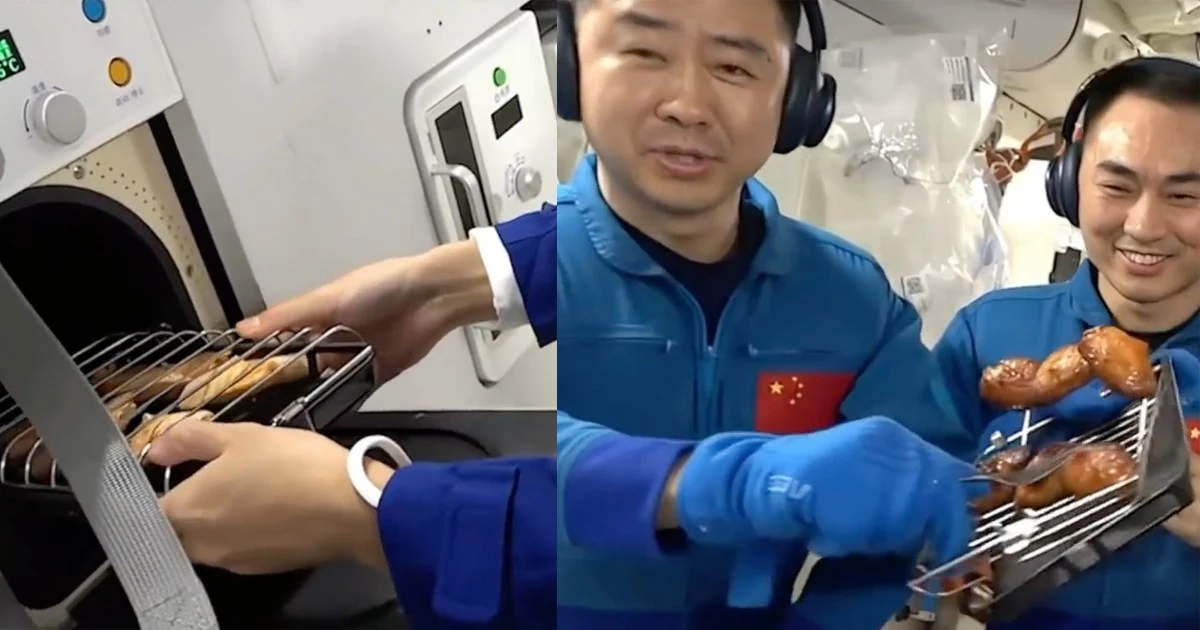
The viral footage of Chinese taikonauts roasting chicken wings aboard the Tiangong space station is more than a culinary curiosity—it is an emblem of technological ambition and a harbinger of shifting priorities in orbital life. While the International Space Station (ISS) still relies on rehydratable pouches, Tiangong’s embrace of a microgravity oven underscores a profound evolution: the transformation of space habitats from austere laboratories into livable, psychologically nourishing environments. This shift is not merely symbolic. It is a calculated, multidimensional maneuver that intertwines engineering prowess, crew wellbeing, and the economics of the emerging space ecosystem.
Engineering Ingenuity: The Science of Cooking in Space
Cooking in space is a formidable challenge, demanding mastery of thermal-fluid dynamics in an environment where gravity’s guiding hand is absent. The Tiangong oven’s success is rooted in three key engineering breakthroughs:
- Active Convection Control: In microgravity, heat does not rise; it stagnates. To evenly brown meat, engineers devised forced airflow systems and flow-field shaping, coupled with fine-grained sensors and redundant safety interlocks. This ensures that every morsel is cooked safely and uniformly—no small feat in a sealed, high-stakes environment.
- Containment and Cleanliness: Grease and particulates, harmless on Earth, become existential threats in orbit, where a stray droplet can foul optics or electronics. The oven’s cage-like tray and multi-stage filtration, integrated with Tiangong’s Environmental Control and Life Support System, represent a new standard in contamination control.
- Power Management: Cooking draws significant, pulsed power loads. Tiangong’s robust power conditioning—demonstrated by rapid docking cycles and seamless energy hand-offs—signals a maturing infrastructure ready to support not just science, but daily living.
These technical advances are not isolated achievements. They are blueprints for dual-use innovation, with clear pathways to terrestrial applications in consumer appliances, electric vehicle battery safety, and even semiconductor clean-room filtration.
Human Factors: The Psychology and Economics of Orbital Living
Beyond the hardware, the act of cooking in space is a subtle but powerful intervention in crew psychology. Sensory stimulation—aromas, textures, the ritual of meal preparation—combats the “menu fatigue” that erodes morale and cognitive function on long-duration missions. By empowering taikonauts to actively prepare meals, Tiangong shifts them from passive consumers to engaged habitat managers, a behavioral template essential for future Mars-class expeditions.
This evolution in crew autonomy has broader economic and strategic implications:
- Space-Qualified Consumer Hardware: China’s portfolio of orbital appliances—ovens, 3D printers, exercise equipment—positions domestic manufacturers for both “down-gravity” (premium IoT kitchen devices) and “outward” (commercial station tenders, lunar habitats) markets.
- Soft Power and Talent Magnetism: Viral, lifestyle-oriented content reframes spaceflight as aspirational living, attracting STEM talent and venture capital to the national innovation agenda.
- Competitive Signaling: As NASA pivots to commercial low-Earth orbit destinations, China’s demonstration of crew comfort and rapid docking pressures U.S. station operators to prioritize livability, accelerating investment in life-support automation and adjacent supplier opportunities.
Strategic Ripples: From Protein Supply Chains to Remote Work Analytics
The implications of Tiangong’s culinary experiment ripple far beyond the galley. Consider:
- Space Tourism and Gastronomy: A functioning oven enables premium culinary experiences, lowering barriers for high-margin payloads—fresh ingredients, branded menus, even live-streamed “space cooking shows.”
- Protein Innovation: Hydrated beef in orbit foreshadows closed-system cellular agriculture, with patentable advances in microgravity bioreactors that could revolutionize both terrestrial and extraterrestrial meat production.
- Risk and Insurance: Demonstrated fire safety informs actuarial models for future private stations and lunar bases, shaping the economics of orbital infrastructure.
Non-obvious connections abound. The precision thermal control required for space ovens parallels the needs of EV battery safety; volatile organic compound filtration in orbit aligns with semiconductor clean-room standards; and behavioral telemetry from confined crews offers insights for remote workforce analytics—a burgeoning HR technology frontier.
The New Table Stakes: Consumer-Grade Experience in Orbit
What may appear as a whimsical moment of comfort food is, in fact, a multidimensional proof-of-concept: a synthesis of reliable thermal control, enhanced crew wellbeing, and strategic market signaling. For decision-makers—whether suppliers of advanced sensors and alloys, food conglomerates eyeing microgravity R&D, or regulators navigating dual-use export dilemmas—the message is clear. The future of space is not just about survival, but about thriving. Consumer-grade experiences are rapidly becoming the new table stakes for competitive advantage in low-Earth orbit and, ultimately, for the industrial commons that will define humanity’s next chapter beyond our atmosphere. Ignore this inflection point at your peril; the kitchen, it seems, is now as critical as the laboratory in the race for orbital preeminence.

 By
By


 By
By
 By
By

 By
By
 By
By