
When Algorithms Become Icons: AI Costumes and the New Face of Tech Pop Culture
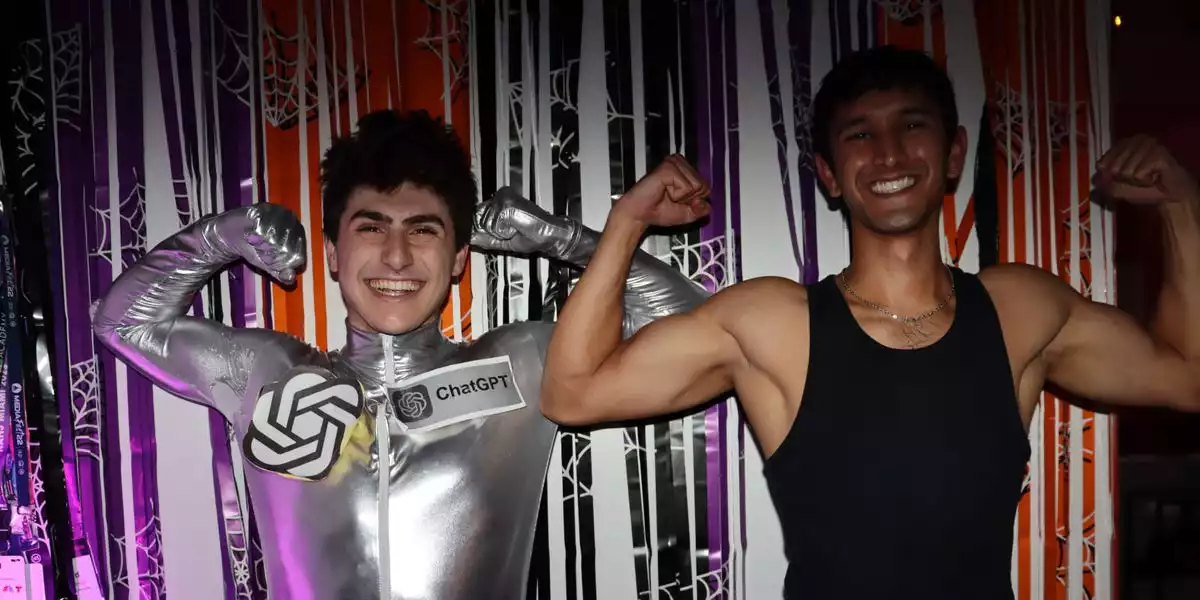
The autumnal ritual of Halloween, once the exclusive domain of superheroes, witches, and movie monsters, has found itself invaded by a new breed of masquerader: the generative AI. This year, Google Trends has recorded an unexpected spike in searches for “ChatGPT costume,” with similar curiosity swirling around Claude and Midjourney. What began as a technical revolution is now manifesting in the most tangible of ways—on the bodies of early adopters, who have turned themselves into walking, talking billboards for the tools that, until recently, were the preserve of coders and computational linguists.
From Productivity Tool to Pop-Culture Phenomenon
What makes this moment remarkable is not just the speed at which generative AI has entered the public consciousness, but the manner in which it has done so. Halloween, that annual barometer of cultural resonance, has become an unlikely laboratory for measuring the emotional reach of technology. Costumes are, after all, a form of social polling—a zero-cost, high-visibility declaration of what matters to people right now. The willingness to “become” ChatGPT or Claude for a night signals a level of emotional investment typically reserved for the likes of Marvel or Disney.
This is a seismic shift for an industry that, until recently, measured its success in benchmarks and business contracts rather than meme velocity or cosplay frequency. The consumerization of AI—its migration from the server rack to the sidewalk—suggests that the sector’s brand equity is no longer confined to the technical elite. The result is a widening gap in cultural literacy: while tech insiders instantly recognize a Claude costume, the general public may still be catching up, quantifying just how much headroom remains on the adoption S-curve.
The Branding Opportunity: From Unlicensed Swag to Strategic Storytelling
The scarcity of official AI-themed merchandise has prompted a flourishing of homemade, user-generated knock-offs. This grassroots enthusiasm is both a blessing and a challenge. On one hand, companies enjoy a surge of free marketing; on the other, they risk losing control of their brand narrative. The transition from open fan art to licensed collectibles took Funko nearly a decade, but the velocity of the AI sector suggests that such cycles could compress to mere quarters.
For platform players, the message is clear: there is untapped value in formalizing these cultural expressions. Limited-edition merchandise, bundled with premium subscriptions, could convert fandom into recurring revenue. But the opportunity extends beyond apparel. As model performance converges across vendors, the soft power of brand identity—mascots, logotypes, even the distinctive “voice” of a chatbot—will become the new battleground. Claude’s quirky personality, for example, is no longer just a UX flourish; it is a strategic asset, one that may soon drive M&A activity as firms seek to acquire narrative IP as fiercely as they once sought algorithmic advantage.
The Road Ahead: Phygital Experiences and Cultural KPIs
The proliferation of AI costumes is not just a quirky footnote—it is an early-warning signal for executives across industries. Retailers should anticipate a new licensing category, with big-box stores likely to stock AI-themed apparel by next fall. Media and entertainment companies, meanwhile, may find AI characters becoming canonical in shared universes, accelerating the convergence of games, film, and interactive storytelling. Even enterprise HR stands to benefit, as the normalization of AI in social rituals lowers employee resistance to internal chatbot rollouts.
Strategically, the moment demands a recalibration of metrics. Alongside technical benchmarks, companies should begin tracking cultural KPIs—meme velocity, cosplay mentions, and other proxies for “brand stickiness.” These soft metrics, once dismissed as frivolous, are fast becoming predictors of virality-driven customer acquisition costs. And as public awareness grows, so too does the need for ethical messaging; playful costumes must not obscure unresolved concerns around bias, IP usage, or job displacement.
Perhaps most intriguing is the potential for physical-digital convergence. Imagine a costume adorned with a scannable QR code, summoning a personalized chatbot session—an experience that bridges offline enthusiasm with on-platform engagement. Here, the boundary between user and avatar, between the digital and the tangible, grows ever more porous.
The 2023–24 Halloween cycle has rendered visible what was once invisible: the transformation of generative AI from codebase to cultural artifact. For those attuned to these signals—whether at Fabled Sky Research or elsewhere—the task now is to translate soft-power cues into strategic action. The next wave of competitive advantage will belong to those who understand that in the age of AI, brand is not just what you build; it’s what people choose to become.

 By
By
 By
By

 By
By
 By
By
 By
By

 By
By