
The Parent as Chief Education Officer: Safety, Autonomy, and the New Home Learning Economy
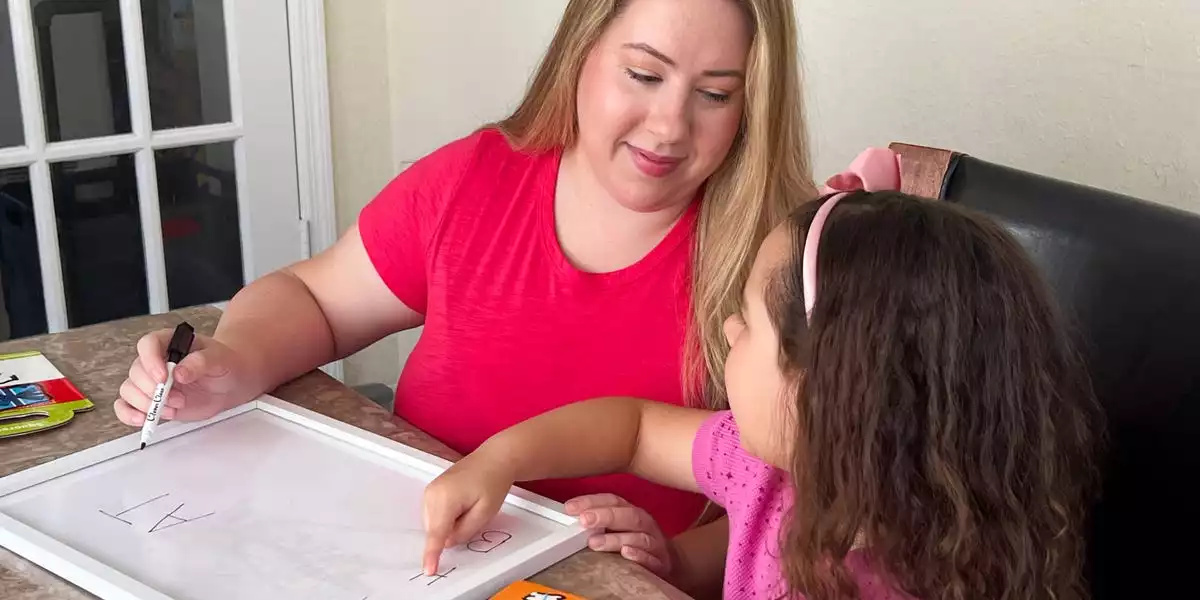
In a quiet but seismic shift, the American household is emerging as a potent locus of educational innovation—driven not by institutional mandate, but by the urgent calculus of parental anxiety, technological empowerment, and the reconfiguration of work-life boundaries. When a single parent withdraws her kindergartner from the neighborhood school, she is not merely opting out—she is, in effect, founding a micro-school, curating a curriculum, and assuming the mantle of Chief Education Officer. This phenomenon, once fringe, now signals a broader reordering of priorities and power within the $800 billion U.S. K-12 sector.
Safety as a Market Catalyst and the Consumerization of Learning
The specter of school violence has transformed safety from a background concern into a primary determinant of educational choice. Gallup’s annual surveys now show “physical security” trailing only academic quality in parental priorities—a shift that has catalyzed a bifurcated response. On one side, districts and vendors race to deploy gunshot detection systems, AI-powered surveillance, and real-time threat analytics. On the other, an “exit market” is quietly swelling: parents, unconvinced by institutional fixes, are voting with their feet and their wallets.
This migration is enabled by the consumerization of curriculum. Direct-to-parent sales of modular, standards-aligned digital content soared 18% last year—double the growth rate of traditional ed-tech licensing. The modern homeschooler is no longer reliant on dog-eared textbooks or opaque state packets. Instead, platforms like Khan Academy, IXL, and Outschool offer adaptive engines, micro-credentials, and freemium access, empowering parents to assemble personalized “learning stacks” with the fluency of a product manager. The barrier to entry is no longer pedagogical expertise, but rather the ability to navigate a proliferating ecosystem of tools and resources.
The Home as a Hybrid Learning and Security Hub
The normalization of remote work—now a fixture for a third of the American labor force—has expanded the practical pool of parents able to supervise daytime learning. This, in turn, has fueled the rise of secondary markets: co-ops, micro-schools, and teacher-share platforms that monetize the surplus capacity of credentialed educators. The home classroom is evolving into a node within a distributed network of micro-institutions, each leveraging technology to blend synchronous instruction, peer collaboration, and real-time assessment.
For technology vendors, this presents a rare adjacency. Safety-motivated parents are early adopters of home IoT bundles: closed-circuit cameras, parental-control routers, and AI-enabled activity logs transform the home into a secure, data-rich learning environment. The opportunity is not merely to bolt on features, but to offer integrated “Peace-of-Mind-as-a-Service” subscriptions—bundling security hardware, adaptive curriculum, and synchronous video under a single, interoperable platform. Interoperability standards such as LTI and OneRoster are becoming critical, lowering friction for parents assembling multi-provider stacks and positioning vendors for scale.
Economic Ripples and Policy Realignments
The rise of home-centric education is not merely a pedagogical story—it is an economic and policy inflection. Education-Savings-Account legislation in eight states now allows public funds to follow the student, transforming state governments from monopolistic buyers into voucher-backed retail customers. This has created a structural tailwind for direct-to-consumer ed-tech platforms, particularly those operating in voucher-eligible states. Investors are beginning to eye “learning infrastructure REITs” that repurpose underutilized retail or school real estate into micro-school pods and community hubs.
Meanwhile, the shifting enrollment landscape threatens to render hundreds of public elementary schools marginal, freeing up municipal square footage for alternative uses—from co-working spaces to healthcare clinics. For incumbent school networks, the imperative is to treat home-schoolers not as defectors, but as an addressable segment. Hybrid enrollment models—licensing specialized STEM or language programs to home learners—can preserve funding and extend institutional brand reach in an era of declining in-person attendance.
Policymakers, for their part, face a stark feedback loop: the safety-driven homeschooling surge is a private-sector referendum on public-sector efficacy. Failure to restore confidence in school security risks accelerating fiscal leakage as voucher outflows rise and the center of gravity shifts further from the traditional classroom.
The individual act of withdrawal—one parent, one child—now reverberates as a macro signal. The convergence of consumer technology, safety imperatives, and flexible labor is forging a new, home-centric learning economy. For executives at the intersection of content, hardware, and financial services, the window to define this market is narrow, but the stakes—both human and commercial—are profound.


 By
By
 By
By
 By
By
 By
By


 By
By