
Tesla’s Strategic Crossroads: From Electric Vehicles to the Age of Autonomy
In the rarefied air of Silicon Valley boardrooms, few figures command the gravitational pull of Elon Musk. Yet, during Tesla’s recent Q3 earnings call, the CEO’s ultimatum—his continued leadership contingent on shareholder approval of a new, potentially $1 trillion compensation package—sent tremors through the global capital markets. This audacious proposal, tethered to targets like 20 million annual vehicle deliveries and the mass production of one million “Optimus” humanoid robots, signals a profound metamorphosis for Tesla: from an electric-vehicle juggernaut to a multi-domain autonomy powerhouse.
The Technological Pivot: Robots, AI, and the Limits of Transferable Expertise
Tesla’s storied ascent has always hinged on vertical integration—melding power electronics, battery innovation, and proprietary AI into a seamless stack. The company’s ambition to repurpose its Dojo supercomputer and Full Self-Driving (FSD) vision models for humanoid robots is, on paper, an elegant extension of this philosophy. By leveraging existing AI infrastructure, Tesla aims to compress R&D cycles and leapfrog into a nascent, potentially $150 billion market for autonomous labor.
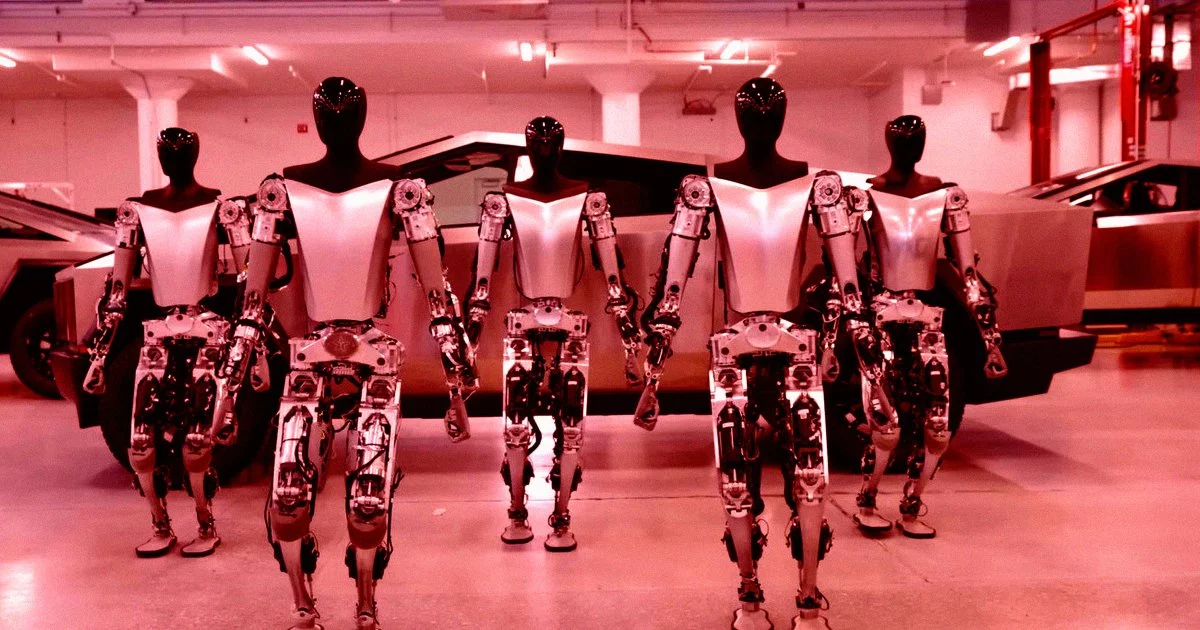
Yet, the leap from road-bound autonomy to dexterous, bipedal manipulation is anything but trivial. Real-world robotics demands mastery of real-time force feedback, dynamic balance, and complex grasp planning—domains where legacy players like Boston Dynamics and Amazon’s robotics division hold decades of hard-won expertise. Tesla’s current tally—fewer than a few dozen validated Optimus units against a 5,000-unit 2023 target—underscores the chasm between aspiration and execution. The promise of a “production-intent” Optimus by early 2025, with mass production by 2026, is met with investor skepticism, given the company’s history of ambitious but slippery timelines.
Capital, Governance, and the Risks of Mega-Incentives
At the heart of Musk’s compensation gambit lies a fundamental question of governance. A $1 trillion stock-based package would constitute the largest wealth transfer in corporate history, raising the specter of significant shareholder dilution—potentially increasing outstanding shares by 10% at current valuations. In an era of rising interest rates and tightening capital, investors are increasingly wary of “option value” bets that demand patience and faith in distant milestones.
Tesla’s cost of capital has already widened by nearly 180 basis points since 2021, and the estimated $8–10 billion required to scale a humanoid robot line must now compete with other capital-intensive priorities: share buybacks, battery plant expansions, and the ambitious Mexico Gigafactory. The board’s approval of such an outsized package could paradoxically erode its leverage, binding Tesla’s fate even more tightly to Musk’s personal brand and vision—an arrangement that may prove brittle in volatile macroeconomic conditions.
Industry Dynamics: Regulation, Competition, and the AI Moat
Tesla’s pivot arrives as the global EV market plateaus, with Chinese OEMs compressing margins and European demand softening. The strategic shift toward higher-margin software and robotics echoes Apple’s services playbook, but without the insulation of a locked-in installed base. Meanwhile, labor shortages in logistics, elder care, and manufacturing create tantalizing addressable markets for humanoid robots—yet no manufacturer has cracked the code for reliable, high-volume production above 10,000 units per year.
Regulatory scrutiny looms large. As generative-AI safety frameworks tighten, any large-scale deployment of humanoid robots will fall under the same algorithmic accountability regimes currently aimed at advanced language models. Musk’s allusion to a “robot army” hints at dual-use applications, potentially drawing Tesla into the orbit of defense procurement and oversight—a convergence that could reshape both the company’s risk profile and the regulatory landscape itself.
The Strategic Imperative: Navigating the Next Technology Cycle
For boardrooms and policymakers alike, Tesla’s compensation drama is a cipher for deeper strategic realignments. The proposed package is less about remuneration than about codifying a leap into multi-domain autonomy—spanning consumer, industrial, and defense robotics. The implications ripple outward:
- Corporate strategists must scenario-plan for a Tesla that is less an EV pure-play and more a diversified autonomy conglomerate, with all the attendant risks and opportunities.
- Investors face the challenge of modeling dilution and capital allocation trade-offs, weighing the uncertain economics of first-generation humanoids against traditional returns.
- Regulators are called to harmonize oversight across vehicles, robots, and satellite-enabled command networks, while grappling with the societal impacts of mass automation.
- Technology leaders must recognize that talent and capital will flow toward the boldest narratives—those who fail to match Tesla’s integrated stack may need to seek alliances or acquisitions to remain relevant.
As the boundaries between mobility, AI, and robotics dissolve, the market’s verdict on Tesla’s next act will hinge not just on vision, but on execution, discipline, and the ability to navigate an increasingly complex regulatory and competitive terrain. The stakes—economic, technological, and societal—have never been higher.

 By
By

 By
By

 By
By
 By
By