
When the Cloud Falters: Home Security and the Fragility of Digital Trust
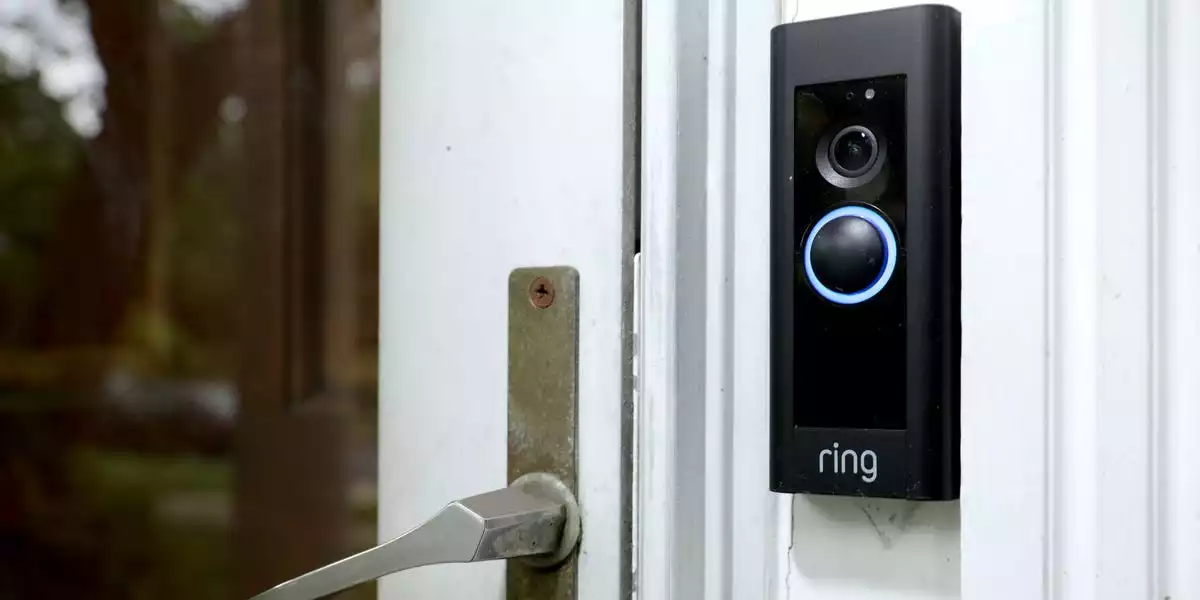
On a humid June morning, the invisible scaffolding of the digital economy—Amazon Web Services’ Domain Name System—buckled in the Northern Virginia region. What began as a localized technical failure quickly propagated outward, disabling not only Amazon’s own sprawling constellation of services but also hobbling thousands of dependent third-party platforms. The outage’s reach was as swift as it was indiscriminate: Starbucks’ mobile orders vanished at peak hours, Robinhood traders found themselves locked out during market volatility, and, most alarmingly, millions of Ring home-security users lost access to their camera feeds and remote alarms at the very moment they most needed assurance.
This was not merely a hiccup in convenience. For Ring, Amazon’s billion-dollar home-security subsidiary, the outage struck at the core of its promise: to be the silent sentinel in moments of vulnerability. Jamie Siminoff, Ring’s founder and recently reinstated VP of Product, moved quickly to acknowledge the lapse, reaffirming the company’s customer-centric ethos and characterizing the event as an aberration in AWS’s otherwise robust reliability record. Yet the incident exposed a deeper, systemic fragility—one that transcends any single provider or platform.
—
The New Anatomy of Risk: Cloud Concentration and Mission-Critical IoT
What was once a world of simple doorbells has evolved into a labyrinthine network of always-on sensors, facial-recognition engines, and automated first-responder interfaces. The stakes for uptime are no longer measured in abstract “Nines” of availability but in the seconds that separate safety from catastrophe. The outage illuminated the uncomfortable truth that home-security SaaS now straddles the boundary between consumer convenience and life-safety infrastructure, a realm traditionally governed by rigorous standards and regulatory oversight.
Key technical fault lines were laid bare:
- Single-Region Dependencies: The failure’s epicenter in a single AWS region cascaded outward through DNS propagation, revealing how centralized control planes—despite the proliferation of edge hardware—still create a fragile “hub-and-spoke” topology.
- Latent Stack Complexity: What began as a DNS glitch at Layer 3 quickly masked downstream failures in authentication, video streaming, and serverless workflows. The incident underscored the intricate interdependence of microservices, API gateways, and third-party identity providers.
- Observability Gaps: Traditional monitoring dashboards proved inadequate. The need for causal-graph analytics—capable of tracing failures across layers and services—has never been more acute.
For digital-first enterprises, the episode is a clarion call: resilience can no longer be a back-office concern. The architecture of trust must be as robust as the architecture of code.
—
Economic Reverberations: Brand Equity, Liability, and the Illusion of Invulnerability
The financial fallout from such outages is both immediate and insidious. Cart conversions on Amazon retail sites stalled; Starbucks lost the lucrative morning rush; Robinhood’s latency during volatile trading windows translated to lost opportunity—costs that rarely surface on profit-and-loss statements but quietly erode customer lifetime value and brand equity.
More ominously, as smart-home devices become underwriting inputs for property insurers, service downtime could begin to influence actuarial models. If outages correlate with increased claims, liability may shift toward OEMs, fundamentally altering the risk calculus for device makers and service operators.
For hyperscale cloud providers, the event rekindles questions about concentration risk. AWS, whose quarterly narrative is built on reliability leadership, now faces renewed scrutiny from investors and activists alike. The balance between capital expenditure for expansion versus redundancy is no longer an abstract debate; it shapes the very contours of cloud pricing power and market trust.
—
Strategic Imperatives: Resilience as Differentiator in the Smart-Home Era
The path forward demands more than technical remediation. It requires a strategic reimagining of how digital services underpin physical safety:
- For Platform Owners: Active-active multi-region architectures and selective multi-cloud overlays must become standard for safety-critical paths, even if data-gravity concerns favor single-provider ecosystems.
- For Device Makers: Edge autonomy is paramount. Local AI inference and on-device credential caching should ensure that basic alarm functions persist, even during wide-area network failures.
- For Cloud Providers: Differentiated reliability SLAs and hybrid edge offerings will become key levers in courting consumer-IoT vendors seeking to hedge against single-provider risk.
- For Regulators and Insurers: The classification of home-security SaaS as “critical digital service” may soon be inevitable, bringing with it mandatory incident reporting and minimum uptime thresholds akin to telecom standards.
Forward-looking organizations are already commissioning cloud concentration audits, investing in DNS failover, and accelerating edge compute adoption. The industry’s most prescient actors are pushing for cross-sector reliability consortiums and scenario-based stress testing—measures that echo the rigor of financial system oversight.
As the digital and physical worlds converge, the June AWS outage stands as a stark reminder: the architecture of trust is as vital as the architecture of code. Strategic resilience—through redundancy, edge autonomy, and transparent communication—will define the winners in a world where smart-home ecosystems are no longer mere conveniences, but critical infrastructure.

 By
By
 By
By
 By
By
 By
By


 By
By