
The New Geometry of Conflict: How Drones and Data Are Redrawing the Energy Battlefield
The war between Ukraine and Russia, once defined by artillery duels and territorial lines, has entered a new, less visible phase—one where energy infrastructure becomes both target and weapon, and where the boundaries between military and commercial technology blur into a single, volatile theater. Since August, Ukraine has launched over two dozen precision drone strikes against Russian oil refineries and terminals, targeting assets that underpin nearly a fifth of Russia’s GDP. The consequences ripple far beyond the battlefield, reshaping global energy flows, insurance markets, and the very calculus of geopolitical risk.
Drone Warfare’s Asymmetric Edge: From Garage Labs to Strategic Leverage
Ukraine’s campaign against Russian refineries is more than a tactical nuisance—it is a masterclass in asymmetric pressure. The drones deployed, many of them indigenous or adapted from commercial platforms, now boast ranges exceeding 700 kilometers and carry multi-warhead payloads. This democratization of standoff strike capability, once the exclusive province of advanced cruise missiles, has upended the cost-benefit equation of infrastructure defense.
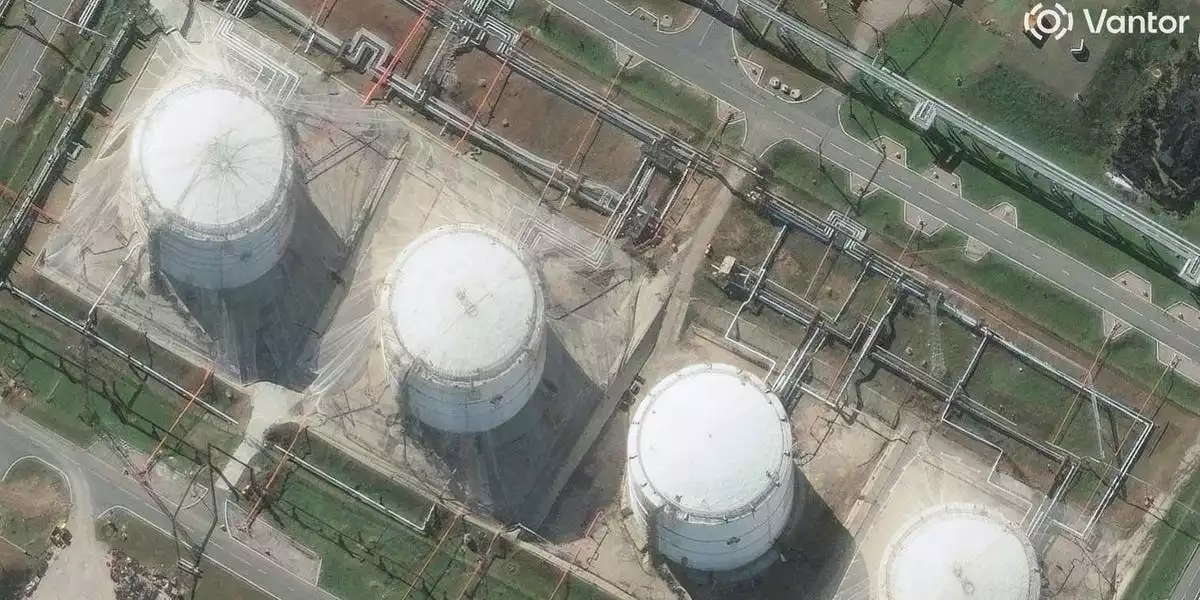
Russian responses are telling. Satellite imagery from Vantor reveals a patchwork of anti-drone netting and metal “cages” draped over refineries like the Kuybyshevskiy in Samara. These last-mile defenses, while visually striking, offer only partial protection—especially as AI-guided, swarming drones and tandem warhead designs evolve. What we are witnessing is a rapid-fire cycle of innovation and counter-innovation: metal mesh today, centimetric-wave jamming and directed-energy weapons tomorrow.
The prominence of commercial satellite intelligence in this conflict cannot be overstated. Real-time, high-resolution imagery—once the exclusive domain of superpowers—is now available to governments, corporations, and even the public. This collapse of the intelligence gap accelerates both the pace of targeting and the speed of attribution, with profound implications for transparency, accountability, and escalation.
Energy Markets in Flux: Supply Shocks and Shifting Risk Premiums
The economic reverberations of Ukraine’s strikes are as significant as their military effects. With as much as 7–10% of Russian refining capacity potentially offline into 2025, the supply of middle distillates—diesel and jet fuel—across Eastern Europe tightens. Russian crude, shunned by some markets, is rerouted to smaller “teapot” refineries in Asia, often at steep discounts. This dynamic, coupled with rising insurance risk premia for Black Sea and Baltic cargoes, is quietly inflating end-user prices and reshaping global trade routes.
Behind these market movements lies a deeper fiscal vulnerability for Moscow. Every lost dollar of refined-product margin chips away at regional budgets already strained by the costs of mobilization. Yet, paradoxically, high global oil prices (Brent above $80) still provide Russia with a financial lifeline, incentivizing OPEC+ to consider deeper supply cuts to defend price floors. For Western oil majors and trading houses, the strikes accelerate a pivot away from Russian-linked products, dovetailing with decarbonization commitments—not just for ESG optics, but as a matter of operational security.
Strategic Innovation and the New Playbook for Critical Infrastructure
Ukraine’s doctrine of “long-range sanctions”—using drones to degrade Russia’s energy infrastructure—offers a template for other middle powers seeking to counter larger adversaries without conventional parity. By targeting refineries, Kyiv constrains Russia’s military logistics, siphons federal tax revenue, and forces the redeployment of advanced air-defense assets away from the front lines. The reciprocal nature of this campaign is stark: Russia’s retaliatory barrages on Ukraine’s power grid expose mutual vulnerabilities, raising the specter of humanitarian crises and the risk of NATO being drawn further into the conflict.
For global energy and logistics executives, the lessons are immediate and sobering:
- Asset Hardening: Layered drone-defense systems are no longer optional; they are as essential as cyber firewalls for banks.
- Supply Chain Resilience: Scenario planning for refinery shocks and corridor disruptions must become routine, with hedging strategies and alternative sourcing gaining new urgency.
- Risk Modeling: War-risk insurance, force-majeure clauses, and ESG-plus-security screening are converging into a single, integrated risk framework.
- Tech Regulation: The regulatory landscape for commercial satellite imagery and dual-use drone components is tightening, demanding proactive compliance strategies.
- Capital Allocation: The fragility of centralized refineries strengthens the case for distributed renewables, green hydrogen, and advanced biofuels—sectors likely to attract both policy incentives and risk-adjusted capital.
The energy war unfolding in Eastern Europe is not just a regional conflagration; it is a harbinger of how networked technologies, commercial intelligence, and agile capital are rewriting the rules of conflict and commerce. As Fabled Sky Research and other analysts observe, those who internalize the security-supply-tech nexus early will not only safeguard critical assets but also seize the initiative in an energy landscape defined by volatility, innovation, and relentless adaptation.

 By
By
 By
By
 By
By
 By
By
 By
By

 By
By