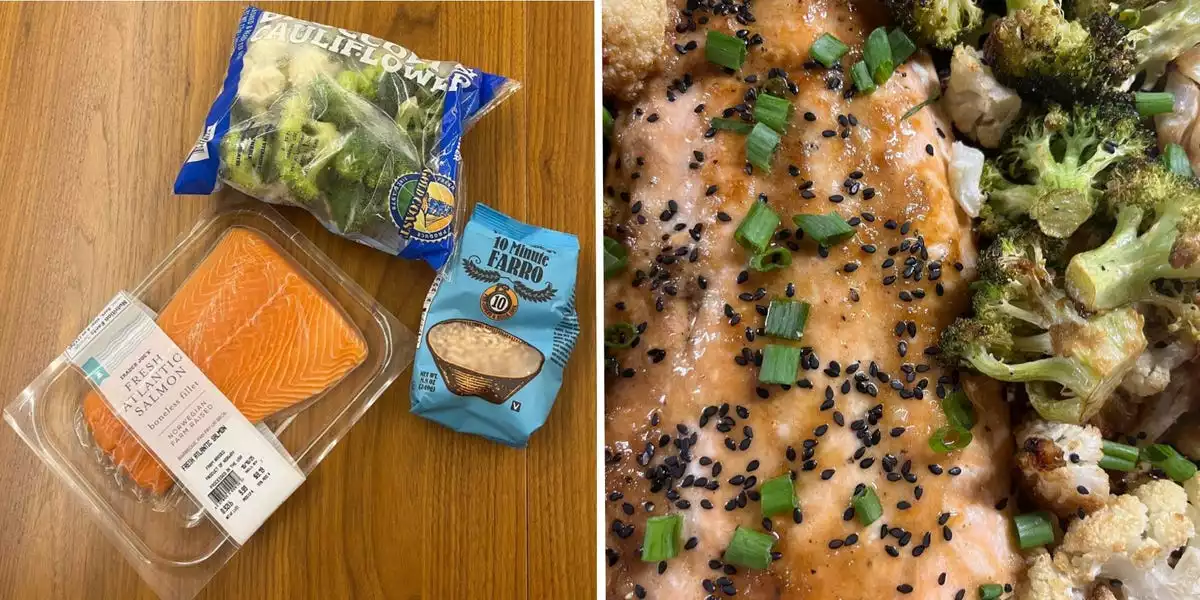

The Sheet-Pan Salmon Phenomenon: Where Consumer Ingenuity Meets Retail Disruption
In the fluorescent-lit aisles of American supermarkets, a quiet revolution is unfolding. The sheet-pan salmon dinner—anchored by quick-cooking farro and a rotating cast of seasonal vegetables—has transcended its status as a mere recipe. It has become a lens through which to view the evolving intersection of food retail, consumer technology, and the economics of health. This meal, with its Mediterranean-diet credentials and sub-thirty-minute prep time, is not just a weeknight staple; it is a microcosm of how value-conscious shoppers are dismantling the old dichotomy of “cheap versus healthy.”
Trader Joe’s, with its par-cooked farro and competitively priced frozen produce, has inadvertently positioned itself as a platform orchestrator in this movement. The retailer’s private-label strategy, coupled with the convenience of partially prepared ingredients, is siphoning wallet share from both legacy grocers and premium meal-kit providers. The result? A recalibration of what it means to eat well, efficiently, and affordably.
Micro-Innovations in Convenience: The Technology Behind the Trend
Beneath the meal’s apparent simplicity lies a tapestry of technological and supply-chain innovation. Par-cooked grains, once the preserve of commercial kitchens, now grace retail shelves thanks to industrial sous-vide and flash-steaming techniques. These “micro-applications” of convenience technology fundamentally alter the time economics of home cooking, transforming a bag of farro into a vessel of reclaimed minutes.
Frozen herb cubes—garlic, ginger, and beyond—offer a glimpse of the precision-dosing future. These controlled-dose flavor capsules are the vanguard of a coming era, where smart kitchens may dispense printable seasonings or IoT-enabled spice cartridges, tailoring taste to the individual and the moment. The recipe’s modularity—swap in tofu for salmon, barley for farro, any vegetable for another—aligns seamlessly with the logic of algorithmic recommendation engines. Retailers armed with loyalty-card data can now push dynamic, real-time bundles, optimizing for freshness, margin, and personalized nutrition.
But innovation is not without consequence. The extended shelf life of pre-cooked grains and frozen flavor cubes reduces food waste, yet shifts the environmental burden to plastic packaging. As carbon-accounting standards tighten, the race is on for compostable, high-barrier films that can reconcile convenience with sustainability.
Economic Realignment: Private Label Power and the Meal-Kit Squeeze
The economic implications of this trend ripple far beyond the dinner table. Trader Joe’s par-cooked farro, at roughly $1.40 per serving, undercuts branded competitors by up to 25%. In an inflationary era, private label has become a bulwark, forcing traditional CPG giants to confront a stark choice: cannibalize their own premium lines with value sub-brands, or risk ceding market share to nimbler rivals.
Meal-kit providers, once heralded as the future of home dining, now find themselves outflanked. The sheet-pan salmon dinner, at an all-in cost of around $6, makes the $9–$12 price tag of subscription kits look untenable. Unless these players integrate partially prepared SKUs or develop white-label partnerships with grocery chains, their convenience advantage will continue to erode.
Protein inflation adds another layer of complexity. With salmon prices subject to the vagaries of aquaculture disease and feed cost volatility, the recipe’s protein-agnostic design—welcoming shrimp, tofu, or chicken thighs—acts as a consumer hedge, insulating basket sizes from price shocks.
The New Home Kitchen: Functional Nutrition, Regenerative Grains, and Smart Appliances
This culinary trend dovetails with broader shifts in American life. The “muscle-centric longevity” movement has pushed high-protein dinners into the mainstream, with 35–40 grams per serving now a benchmark for health-conscious consumers. Retailers who surface whole-food solutions, rather than just supplements, are poised to capture spend from the burgeoning nutraceutical market.
Meanwhile, the post-pandemic stabilization of remote work—averaging 2.5 days per week—has cemented elevated at-home meal occasions. Batch-cooking recipes that yield six to eight servings are not just economical, but rational. Appliance makers are beginning to respond, embedding sheet-pan-optimized convection profiles and AI-powered cooking cameras into their hardware—an opportunity still ripe for further innovation.
Farro, the ancient grain at the heart of this trend, offers a compelling ESG narrative. Its low input requirements and compatibility with regenerative agriculture allow retailers to credibly tout carbon reductions and water savings, especially compared to resource-intensive staples like brown rice.
As the humble sheet-pan dinner continues to gain traction, it signals more than a passing fad. It is a harbinger of how industrial food-processing miniaturization, private-label ascendancy, data-driven personalization, and sustainability-linked procurement are converging—reshaping not only what we eat, but how we shop, cook, and think about food. For industry leaders attuned to these signals, the next wave of growth will be found not in the margins of culinary trivia, but in the heart of the modern kitchen.

 By
By
 By
By
 By
By
 By
By
 By
By