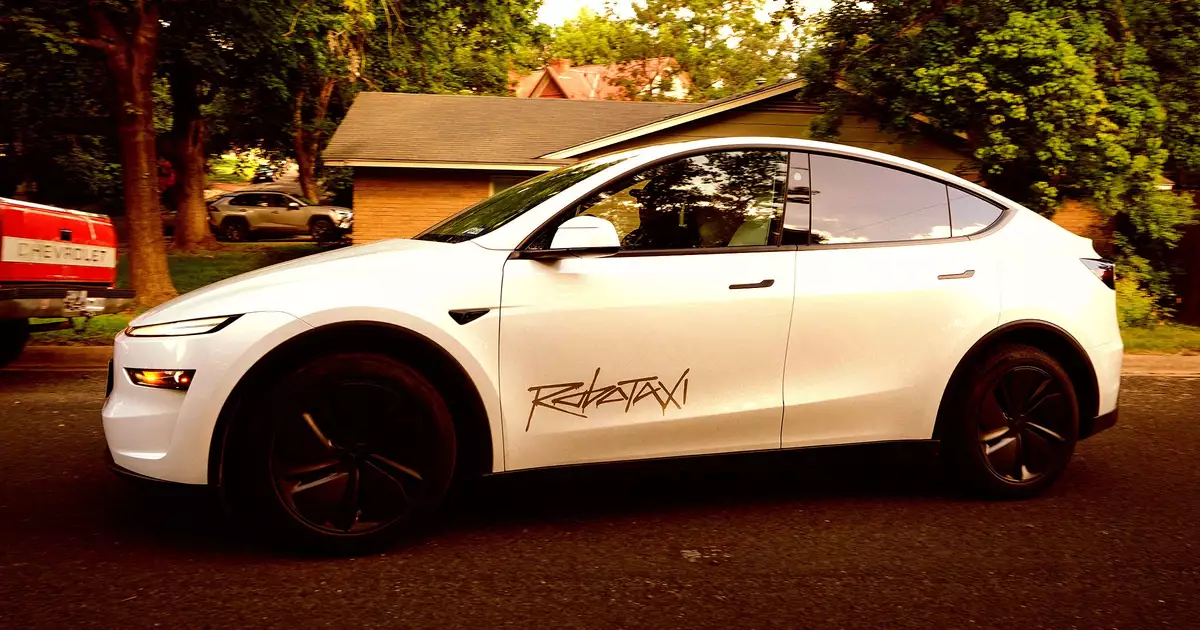

Crashes in the Shadows: Tesla’s Robotaxi Gambit and the Anatomy of Autonomy Risk
Tesla’s robotaxi pilot in Austin, Texas, is less a quiet experiment than a high-stakes trial by fire—a microcosm for the unresolved tensions at the heart of autonomous mobility. In a fleet of just 10 to 20 retrofitted Model Ys, at least three crashes have been reported, one resulting in injuries. Yet, the public record is a patchwork of redactions, cloaked in “business confidential” secrecy. No formal investigation by the National Highway Traffic Safety Administration (NHTSA) has been triggered. Instead, Tesla has expanded the pilot by 50 percent and begun offering limited public rides, albeit with a safety driver on board. The company’s approach—part audacious, part opaque—lays bare the ambiguities of autonomous vehicle (AV) development and the regulatory lacunae that persist in the United States.
The Blurred Boundaries of Autonomy and Disclosure
Tesla’s “single stack” autonomy architecture, a term that suggests seamless integration, has become a marketing mantra. But beneath the surface, the distinction between supervised driver-assist (SAE Level 2) and true driver-out autonomy (Level 4+) remains both technically and ethically consequential. The current Austin fleet, despite the “robotaxi” label, operates squarely at Level 2: a safety driver remains in control, and the system is not designed for unsupervised operation. This boundary blurring is more than semantics—it shapes validation protocols, hardware-in-the-loop (HIL) testing, and the rigor of functional safety metrics.
Each crash, in this context, is a trove of edge-case telemetry—data that could inform not only Tesla’s own systems but also the broader AV ecosystem. Yet, Tesla’s penchant for secrecy means these learning opportunities are largely lost to the public and regulators. By contrast, rivals like Waymo and Cruise have begun to position transparency as a competitive advantage, publishing detailed safety reports and incident data. Investors, increasingly attuned to AI governance risks, now view opaque data practices as a red flag—especially as the EU’s AI Act and new California AV reporting bills loom on the horizon. The cost of non-transparency may soon be measured in both regulatory access and the expense of retrofitting audit-grade data pipelines.
Economic Pressures and the Race for Autonomous Revenue
Tesla’s urgency is not merely technological—it is existential. Global electric vehicle (EV) average selling prices are falling, squeezed by Chinese competitors and shifting consumer demand. The promise of high-margin software—robotaxi services, Full Self-Driving (FSD) subscriptions—has become central to Tesla’s equity narrative. But a higher-than-disclosed incident rate threatens this thesis, with direct implications for insurance pricing and the actuarial models underpinning Tesla’s in-house insurance arm. Rising premiums could erode the lifetime value of autonomy products, while reputational risk may increase the cost of capital, affecting access to green bonds and sustainability-linked loans that have fueled Tesla’s manufacturing ambitions.
Meanwhile, the regulatory environment remains a moving target. Reporting obligations for Level 2 systems were softened under 2020 Department of Transportation rule-making, creating a grey zone that Tesla currently exploits. Yet, any transition toward Level 4 autonomy would remove this shield, exposing the company to deeper scrutiny and potential reclassification—a scenario that CFOs and risk managers across the mobility and insurance sectors must now model with increasing urgency.
Strategic Choices and the Future of Autonomous Mobility
Tesla’s strategy—vertical integration, rapid scaling, and a penchant for secrecy—stands in stark contrast to the ecosystem-oriented, transparency-driven approaches of competitors. The company’s speed-over-substantiation ethos is both a differentiator and a latent Achilles’ heel. As hardware requirements intensify—compute-heavy platforms, proprietary chips, and the specter of supply chain bottlenecks—Tesla faces the dual challenge of scaling both software and hardware at a moment when regulatory patience is wearing thin.
For decision-makers, several imperatives emerge:
- Transparency as an Asset: Real-time, independently audited safety dashboards can pre-empt regulatory tightening and build consumer trust.
- Portfolio Hedging: Scenario-planning for abrupt regulatory shifts is essential, particularly for warranty reserves and capital allocation.
- Strategic Alignment: Suppliers must weigh the risks of Tesla’s closed architecture against the flexibility of multi-OEM platforms.
- Timetable Realism: Boards should discount aggressive autonomy timelines, modeling phased monetization and adjusting KPIs accordingly.
- Talent Migration: The race for functional safety engineers and AI governance experts will intensify, with cross-industry implications.
The concealed crash reports from Tesla’s Austin pilot are not a mere footnote in the company’s storied narrative; they are a lens onto the systemic pressures shaping the future of autonomous mobility. For those navigating this landscape—be they automakers, regulators, or investors—the premium now lies in disciplined transparency, robust safety economics, and a measured approach to scaling. These are the factors that will ultimately separate enduring mobility franchises from speculative ventures, as the industry moves from promise to proof.

 By
By
 By
By
 By
By
 By
By

 By
By
 By
By
 By
By